
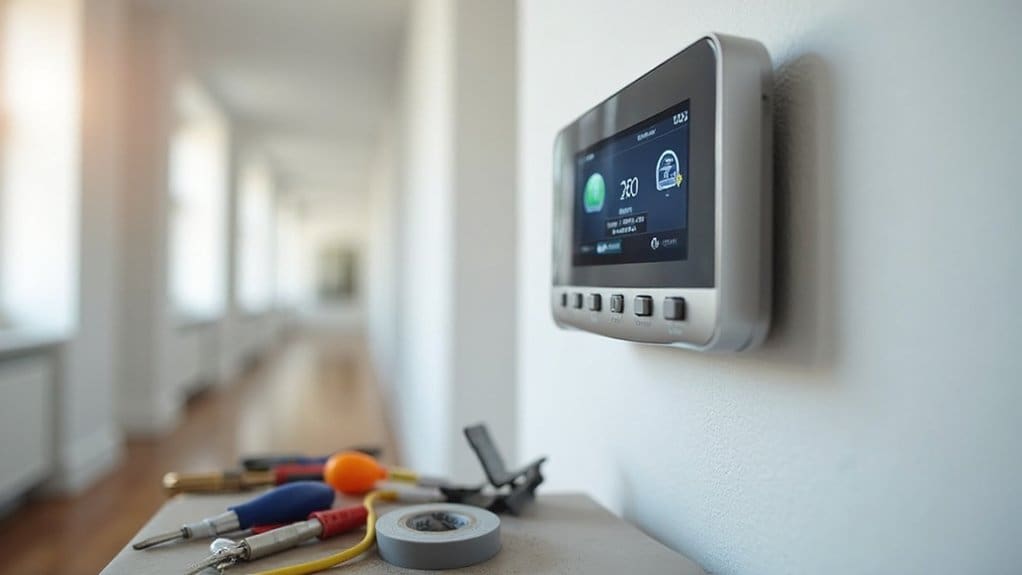
You’ll need a specialized thermostat designed specifically for heat pump systems since standard models can’t properly control the reversing valve that switches between heating and cooling modes, potentially causing your system to waste energy by frequently activating expensive auxiliary heat. Top options include the Ecobee Smart Thermostat Premium, Nest Learning Thermostat, and budget-friendly Amazon Smart Thermostat. Look for reversing valve control, two-stage operation, and emergency heat functions. Proper placement away from direct sunlight and heat sources will maximize your system’s performance and efficiency.
Key Takeaways
- Heat pumps require specialized thermostats with reversing valve control and two-stage operation capability for proper heating/cooling mode switching.
- Top models include Ecobee Smart Thermostat Premium, Nest Learning Thermostat, Amazon Smart Thermostat, and Sensi Touch 2 for compatibility.
- Install thermostats on interior walls away from direct sunlight, drafts, vents, and heat sources at 4-5 feet height.
- Essential features include emergency heat function, adjustable temperature swing settings, remote access, and smart home integration capabilities.
- Optimize efficiency by setting auxiliary heat lockout at 20-25°F and compressor lockout around -13°F for extreme weather conditions.
Why Heat Pumps Require Specialized Thermostats
While traditional HVAC systems operate on a simple on-off cycle, heat pumps function through a more complex process that requires precise control to maintain efficiency. Your standard thermostat can’t properly manage a heat pump’s unique dual-mode operation, which switches between heating and cooling modes using a reversing valve system.
Heat pumps need thermostats that understand their specific operating characteristics. A special thermostat designed for heat pump compatibility controls the reversing valve that changes refrigerant flow direction, allowing the same system to provide both heat and cooling. Without proper thermostat control, your heat pump may frequently cycle on auxiliary heat, dramatically reducing energy efficiency.
Temperature swing settings become essential since heat pumps work best with gradual temperature adjustments rather than sudden changes. Standard thermostats lack the programming to prevent unnecessary auxiliary heat activation, which can double your energy costs. You’ll need specialized controls to maximize your heat pump’s efficiency potential.
Top Smart Thermostat Models for Heat Pump Compatibility
Now that you understand why heat pump systems need specialized controls, let’s examine the best smart thermostat options that deliver proper heat pump compatibility.
The Ecobee Smart Thermostat Premium tops our list for heat pump applications. You’ll get satellite sensors for whole-home comfort, 4-day weather forecasting, and seamless integration with Alexa and Siri. It’s programmable features optimize your heating and cooling cycles efficiently.
For budget-conscious homeowners, the Amazon Smart Thermostat offers excellent value under $100. This smart home device senses occupancy and uses Alexa’s hunches to reduce energy consumption, delivering faster payback on your investment.
The Nest Learning Thermostat combines attractive design with advanced functionality. You’ll appreciate its adaptive faceplate sensor, external room sensors for multi-room control, and intuitive Eco Modes that maximize energy savings.
If you prefer hands-on thermostat interaction, consider the Sensi Touch 2. Its simple controls work perfectly with heat pumps while maintaining compatibility with popular smart home platforms.
Essential Features to Look for in Heat Pump Thermostats
Before investing in a heat pump thermostat, you’ll need to verify it includes several indispensable features that standard thermostats lack. The reversing valve control is essential for managing refrigerant flow between heating and cooling modes in heat pump systems. You’ll also want two-stage operation capability, which allows your system to adapt efficiently to varying temperature demands while optimizing energy consumption.
The emergency heat function is paramount during extreme weather when your heat pump can’t maintain adequate heating and cooling performance. Look for adjustable temperature swing settings that let you customize activation ranges, enhancing overall energy efficiency.
Smart thermostats offer additional advantages including remote accessibility, learning capabilities, and integration with home automation systems. These features help you monitor and control your pump remotely while adapting to your schedule patterns. Ensure any thermostat you choose specifically supports heat pump compatibility rather than conventional HVAC systems.
Proper Placement and Installation Guidelines
Correct thermostat placement determines whether your heat pump system delivers consistent comfort and operates at peak efficiency. You’ll want to mount your thermostat on an interior wall in a central location that represents your home’s average temperature. This positioning guarantees accurate temperature readings throughout your living space.
Avoid placing the thermostat where direct sunlight or drafts can interfere with its sensors. Keep it away from windows, vents, and exterior doors that create temperature fluctuations. Your thermostat needs proper airflow around it, so don’t install it behind furniture or near other obstructions that block air circulation.
Mount the unit at 4-5 feet from the floor for easy access and maximum performance. Choose a spot that’s easily accessible but away from heat sources like lamps or appliances. This strategic placement allows your heat pump thermostat to monitor conditions accurately and maintain consistent comfort while maximizing energy efficiency.
Optimizing Energy Efficiency With Advanced Thermostat Settings
Advanced thermostats liberate substantial energy savings through precise control of your heat pump’s auxiliary heating system and compressor operation. You’ll optimize energy efficiency by adjusting your auxiliary heat lockout temperature to 20-25°F, preventing unnecessary energy-intensive backup heating while maintaining comfort.
Your thermostat settings should include a lower compressor lockout temperature around -13°F, allowing your heat pump system to operate efficiently in extreme cold without triggering auxiliary heat. Advanced models like the Honeywell Prestige iAQ offer customizable bypass options that fine-tune performance during severe weather conditions.
The outdoor temperature sensor’s placement significantly impacts temperature readings accuracy. Whether you choose wired or wireless sensors affects how precisely your thermostat responds to outdoor conditions. Proper sensor positioning guarantees your heat pump operates at ideal efficiency levels.
These advanced thermostat settings work together to minimize energy consumption while maximizing comfort, reducing your heating costs throughout winter months.
Frequently Asked Questions
Does a Heat Pump Need a Special Thermostat?
Yes, you’ll need a specialized thermostat for ideal heat pump performance. Standard thermostats lack thermostat compatibility with reversing valves and two-stage operation. Heat pump thermostats offer enhanced thermostat programming features and thermostat energy efficiency.
Where Is the Best Place to Put a Heat Pump Thermostat?
Where’s your home’s sweet spot? For ideal thermostat placement, you’ll want an interior wall away from sunlight, drafts, and vents. Strategic thermostat installation at five feet high in a central location guarantees perfect thermostat positioning for accurate temperature control.
Should You Use a Smart Thermostat With a Heat Pump?
You should use a smart thermostat with your heat pump for enhanced energy efficiency considerations and remote access capabilities. Guarantee compatibility with existing equipment and proper emergency heat settings for ideal temperature control algorithms.
How Do I Know Which Thermostat to Buy?
Like choosing the perfect key for your home, you’ll want thermostat compatibility with heat pumps, considering performance requirements, energy efficiency goals, installation ease, programmability options, wireless connectivity needs, touchscreen preferences, budget constraints, and warranty coverage.
Conclusion
You’ve learned that heat pump thermostats aren’t just temperature controllers—they’re conductors orchestrating a complex energy symphony. Like a skilled musician who knows when to play forte and when to rest, your smart thermostat learns your home’s rhythm. The EPA reports that proper thermostat programming can slash heating costs by 10-23%. When you install that specialized heat pump thermostat and configure those advanced settings, you’re not just upgrading equipment—you’re composing your home’s energy masterpiece.