
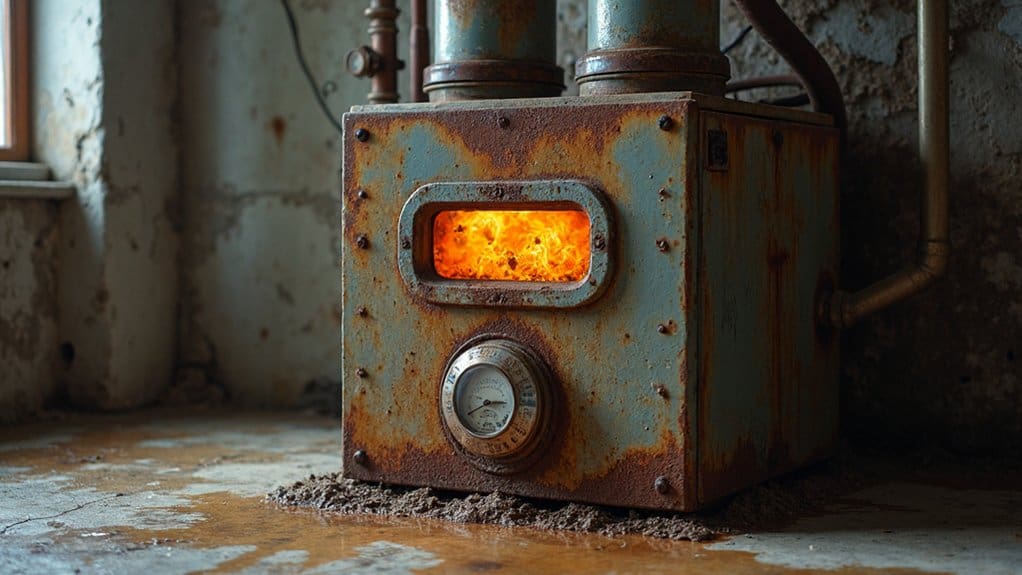
You’ll need a new furnace if it’s over 15-20 years old, causes rising energy bills despite consistent usage, requires frequent costly repairs, or creates uneven heating throughout your home. Watch for warning signs like strange noises, unusual odors, excessive dust, constant running without reaching set temperatures, yellow pilot lights, or flame issues. These symptoms indicate declining efficiency, safety risks, and approaching system failure that emergency repairs can’t resolve. Understanding these warning signals helps you make informed decisions before facing dangerous winter breakdowns.
Key Takeaways
- Your furnace is 15-20 years old and shows declining efficiency with higher utility bills and uneven temperatures.
- Repair costs exceed 50% of a new system’s price, indicating frequent expensive breakdowns signal replacement time.
- Yellow pilot light flames or unusual odors suggest dangerous combustion issues requiring immediate furnace replacement.
- Rising energy bills despite consistent usage indicate your older system is working harder and losing efficiency.
- Temperature inconsistencies and poor air circulation show your furnace lacks capacity for proper heating distribution.
Your Furnace Is More Than 15-20 Years Old
When your furnace reaches the 15-20 year mark, it’s time to seriously consider replacement. Most furnaces simply weren’t designed to operate efficiently beyond this timeframe, regardless of brand or model.
As furnaces age, they lose their ability to heat your home effectively while consuming more energy. You’ll notice higher utility bills and uneven temperatures throughout your house. Well-maintained units might push slightly past the 20-year mark, but they’re living on borrowed time.
The math becomes clear when you consider repair frequency. Older systems break down more often, requiring costly fixes that add up quickly. Instead of throwing money at an aging system, investing in a new furnace makes financial sense.
A professional furnace installation gives you modern efficiency standards, reliable performance, and warranty protection. When exploring replacement options, you’ll discover today’s units offer superior heating capacity while reducing energy consumption considerably.
Rising Energy Bills Despite Consistent Usage
Beyond age-related decline, your furnace sends another clear warning signal through your monthly utility bills. If you’ve noticed steadily climbing Energy Bills despite maintaining consistent heating habits, your furnace is likely operating inefficiently and struggling to maintain ideal performance.
Older systems lose their efficiency over time, forcing them to work harder and consume more energy to heat your home adequately. When your gas furnace or electric heating system begins demanding notably more fuel to achieve the same comfort levels, it’s consuming your budget unnecessarily.
This declining efficiency often indicates your furnace is approaching the end of its functional lifespan. Rather than continuing to absorb these escalating costs, consider furnace replacement as a strategic investment. Installing a new HVAC system with high-efficiency ratings can dramatically reduce your monthly heating expenses while providing reliable, consistent warmth throughout your home during cold seasons.
Frequent and Costly Repair Calls
Your furnace’s repair history tells a compelling story about its remaining lifespan. When repair calls become frequent and expensive, you’re facing clear warning signs that replacement is necessary.
If you’re scheduling multiple repair visits within months, your furnace is telling you it’s failing. These frequent breakdowns indicate internal components are wearing out faster than they can be fixed. More importantly, when repair costs exceed 50% of a new system’s price, continuing repairs becomes financially irresponsible.
Costly furnace repair bills that keep recurring represent money thrown at a losing battle. You’ll find yourself trapped in an expensive cycle where each fix only buys temporary relief before the next breakdown occurs. Instead of enduring ongoing repair headaches and mounting costs, investing in a new, reliable system eliminates these problems entirely.
Stop pouring money into an aging furnace that’ll continue failing. Choose replacement over endless repairs for long-term peace of mind.
Uneven Heating Throughout Your Home
Another telltale sign that screams furnace replacement is uneven heating throughout your home. If some rooms feel like an icebox while others are uncomfortably hot, your furnace is struggling to distribute heat evenly. You’ll find yourself constantly adjusting the thermostat, trying desperately to maintain comfort in every room – but it’s a losing battle.
This temperature inconsistency typically indicates your older heating system lacks the capacity to properly circulate air throughout your living space. No amount of HVAC repair can fix a fundamentally undersized or worn-out system that can’t handle your home’s heating demands.
Upgrading to a new system designed for better airflow and temperature control will solve these comfort issues. A modern, higher-efficiency heating system provides consistent temperatures in every room, eliminating hot and cold spots. Don’t forget that many new systems also integrate seamlessly with air conditioning for year-round comfort control.
Strange Noises or Unusual Odors
Strange sounds emanating from your furnace serve as clear warning signals that replacement time has arrived. When you hear banging, rattling, or screeching noises, these Strange Noises indicate failing internal components that force your system to work harder than normal. Persistent or loud sounds typically mean your furnace is nearing its operational end.
Equally concerning are unusual odors coming from your unit. Burning, musty, or gas-like smells pose serious safety risks to your household. These warning signs shouldn’t be ignored or postponed.
When your furnace produces these alarming symptoms, a professional HVAC technician should evaluate whether repairs are feasible or if replacement might be the safer, more cost-effective solution. Don’t wait until complete system failure leaves you without heat during winter months.
Addressing these issues through furnace replacement guarantees your family’s safety and well-being while preventing potentially dangerous situations from developing in your home.
Excessive Dust and Poor Indoor Air Quality
When dust accumulates more frequently throughout your home despite regular cleaning, it’s often a clear indication that your furnace can’t properly filter the air circulating through your living spaces. Older furnace systems struggle to maintain good indoor air quality, allowing dirt, rust, soot, and dust particles to spread throughout your home. This contaminated air can trigger respiratory issues and create an unhealthy living environment for your family.
A new furnace installation dramatically improves your home’s air quality through advanced filtration systems. Modern units feature larger filters and higher-quality fans that capture more airborne particles, reducing harmful particulate levels considerably. You’ll notice cleaner surfaces, fewer allergens, and fresher indoor air during heating season.
Beyond dust concerns, aging furnaces pose serious safety risks, including potential carbon monoxide leaks. Upgrading to a new system guarantees cleaner, healthier air while protecting your family from dangerous gas exposure.
Your Furnace Runs Constantly But Struggles to Heat
If your furnace runs continuously throughout the day yet fails to reach your thermostat’s set temperature, you’re dealing with a system that’s lost its heating capacity. This constant operation signals your HVAC equipment can no longer effectively distribute heat throughout your home.
When your furnace struggles this way, it’s working overtime just to maintain basic comfort levels. You’ll notice some rooms remain uncomfortably cold while others become overheated, creating an unbalanced environment that no amount of adjustment can fix.
This inefficient operation dramatically increases your energy bills since the system consumes more power while delivering less heat. An energy efficient furnace shouldn’t need to run constantly to maintain your desired temperature.
Unlike your air conditioner that cycles on and off regularly, a failing furnace runs nonstop without achieving results. This continuous cycling indicates your system has reached its operational limit and needs immediate replacement to restore proper heating performance.
Yellow Pilot Light or Flame Issues
Beyond performance problems, your furnace may display visual warning signs that demand immediate attention. A yellow, flickering, or unstable pilot light signals incomplete combustion, which can release deadly carbon monoxide into your home. Your pilot light should burn with a steady blue flame—anything else indicates serious trouble.
You’ll also need to watch for flame issues like yellow flames, lifting flames, or floating flames. These problems suggest an improper air-fuel mixture or other combustion defects that create dangerous conditions. Don’t ignore these warning signs or continue operating your furnace, as you’re risking your family’s safety.
If these flame issues persist despite professional repairs, it’s time to replace your heating system entirely. While you might consider switching to a heat pump for improved efficiency, the priority is removing the hazardous equipment immediately. Your safety depends on addressing these visual warning signs without delay.
Outdated Safety Features and Technology
Most furnaces installed before 2005 operate without critical safety features that today’s homeowners take for granted. These older systems lack electronic ignition, carbon monoxide sensors, and advanced control systems that monitor performance and detect potential hazards. Without these modern safeguards, you’re relying on outdated technology that can’t alert you to dangerous situations.
Signs that indicate your furnace needs upgrading include:
- No carbon monoxide detection – Your family remains vulnerable to this silent killer
- Manual pilot lights – Constant flame creates ongoing fire and gas leak risks
- Absence of automatic shutoff systems – Malfunctioning components continue operating dangerously
Outdated furnaces have faulty components that compromise safety and performance daily. Modern units provide peace of mind through cutting-edge safety innovations and reliable monitoring systems. Don’t wait for a dangerous situation to develop. Contact us today to schedule an appointment and learn how our installation process can protect your family with today’s advanced safety technology.
Frequently Asked Questions
How Do You Know When It’s Time to Get a New Furnace?
You’ll know it’s time when you notice unusual noises, pilot light issues, or corrosion indicators on your aging system. Poor energy efficiency ratings and rising bills also signal replacement needs before complete failure.
How Old Should a Furnace Be Before It Is Replaced?
You should replace your furnace after 15-20 years, regardless of its efficiency rating or annual maintenance schedule. Consider energy efficient upgrades and proper heating unit size when selecting a replacement to maximize performance and savings.
How Much Does It Cost to Replace an Entire Furnace?
Your wallet’s about to feel lighter—you’ll spend $3,000-$7,000 replacing your furnace. Get a detailed cost estimate considering installation timeline, maintenance requirements, and energy efficiency considerations before committing to this significant home investment.
Is It Worth Fixing a 20 Year Old Furnace?
You shouldn’t fix a 20-year-old furnace due to declining furnace efficiency, escalating repair costs, and potential safety concerns. Replacing it offers better energy savings and reliability, making replacement more cost-effective than continued repairs.
Conclusion
You’ve seen the warning signs, but here’s the truth: most homeowners wait until complete failure before replacing their furnace, costing them thousands more in emergency repairs and sky-high energy bills. The theory that “fixing is always cheaper than replacing” proves false when you’re dealing with an aging system showing multiple symptoms. Don’t let denial drain your wallet—if you’re experiencing several of these issues, it’s time to invest in a new, efficient furnace installation.