
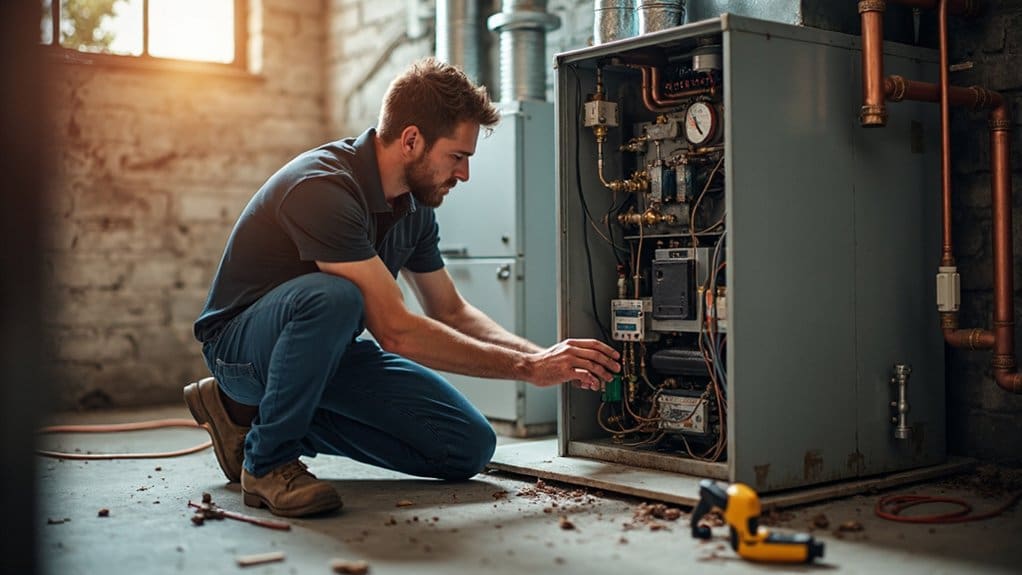
You’ll spend anywhere from $100 to $3,500 on furnace repairs in 2025, with most homeowners paying between $300 and $600 for common issues like ignitor failures or blower motor problems. Minor electrical and thermostat repairs typically cost $100-$300, while major component replacements like heat exchangers can reach $850-$3,500. Labor rates range from $50-$150 per hour, with emergency services costing more. Understanding these pricing factors will help you make informed decisions about your heating system investments.
Key Takeaways
- Minor furnace repairs like thermostat issues cost $100-$300, while major repairs like heat exchanger replacement range $850-$3,500.
- Technician labor rates vary from $50-$150 per hour for standard repairs, with emergency services costing $140-$210 per hour.
- Gas and oil furnace repairs typically cost $100-$480, while electric system repairs are slightly lower at $100-$380.
- Common component replacements include blower motors ($750-$2,500), circuit boards ($600-$1,200), and transformers (around $450).
- Annual maintenance and tune-ups cost $80-$200, helping prevent costly major repairs through proactive furnace care.
Average Furnace Repair Costs by Service Type
When your furnace starts acting up, you’ll face repair costs that vary significantly depending on what’s actually wrong with the system. Minor electrical problems or thermostat malfunctions typically run $100-$300, making these the most affordable fixes you’ll encounter.
Intermediate furnace repair costs jump to $300-$600 when you’re dealing with ignitor failures or blower motor replacement costs. These mid-range repairs often involve components that affect your system’s core functionality.
Major repairs present the steepest expenses, ranging from $850-$3,500. Heat exchanger replacement costs and combustion chamber repairs fall into this category, along with circuit board replacements. Gas furnace replacement costs become worth considering when multiple major components fail simultaneously.
Understanding these furnace repair cost ranges helps you make informed decisions about furnace repair or replacement. When the cost of a new system approaches what you’d spend on extensive repairs, replacement often proves more economical than continued heat exchanger repair attempts.
Common Furnace Component Replacement Costs
How much will you pay when specific furnace components break down? Understanding individual furnace components and their replacement costs helps you budget for potential HVAC repair expenses.
Your blower motor, responsible for circulating air throughout your home, will cost $750-$2,500 to repair or replace. Heat exchanger replacement cost ranges from $100-$1,500, though extensive damage often makes furnace replacement more economical. Circuit board repairs typically run $600-$1,200, as this component controls your system’s electrical functions.
Thermostat issues cost $200-$1,200 to address, depending on whether you need basic repairs or smart thermostat installation. Transformer repairs generally cost around $450 when electrical components fail.
Don’t forget routine maintenance items like your furnace filter, which costs under $50 but prevents costly breakdowns. These furnace repair cost estimates vary based on your system’s age, brand, and local labor rates. Getting multiple estimates guarantees you’ll pay fair prices for necessary repairs.
Furnace Repair Costs by Fuel Type
Your furnace’s fuel type directly impacts both repair and replacement costs, with electric systems typically offering the most budget-friendly repair options at $100-$380. Gas furnace repairs range from $100-$480, while oil furnace repairs cost the same $100-$480 range. The fuel type affects repair complexity since each heating system uses different components and technology.
When considering furnace replacement cost, gas systems require $2,000-$5,200, while propane units cost slightly more at $2,200-$5,700. Your HVAC contractor will explain how fuel type serves as one of the primary cost factors influencing both repair and replacement pricing.
Electric furnace systems often have simpler mechanical components, contributing to lower average cost for repairs. However, gas and oil systems involve more complex combustion processes, potentially requiring specialized parts and expertise. Understanding these fuel-type differences helps you budget appropriately for your heating system maintenance and prepare for future repair expenses.
Labor Rates and Service Call Fees
Beyond the cost of replacement parts, labor rates and service call fees represent a substantial portion of your total furnace repair bill. Most HVAC technician services charge between $50 to $150 per hour, with minimum billing requirements of $100 to $200 regardless of job duration.
You’ll pay premium rates for difficult repairs involving components like heat exchanger replacement, draft inducer motors, or blower motor work due to their complexity and time requirements. Emergency furnace repair during nights, weekends, or holidays costs considerably more—expect $140 to $210 per hourly rates.
Location affects your costs greatly. Metropolitan areas typically charge higher labor rates than rural regions due to increased overhead and demand. Master HVAC technicians command higher fees than general technicians, but their expertise often saves money through faster, more accurate diagnostics and repairs.
Service call fees cover the technician’s travel time and initial assessment, so bundling multiple repairs during one visit maximizes value.
Annual Maintenance and Tune-Up Costs
While emergency repairs can strain your budget, regular furnace maintenance offers a cost-effective approach to keeping your heating system running smoothly. Annual furnace maintenance protects your investment and prevents costly breakdowns through proactive care.
Tune-up and inspection: $80 to $200 for thorough performance checks and adjustments
Annual maintenance plans: $150 to $450 that include regular service and repair discounts
Filter replacement: $100 to $175 yearly to maintain proper airflow and efficiency
Cleaning services: $70 to $300 to remove debris and improve system performance
Professional maintenance extends your furnace’s lifespan considerably by identifying minor issues before they become major problems. Regular tune-ups guarantee optimal efficiency, reducing energy costs and preventing unexpected failures during peak heating season. This proactive approach saves money long-term compared to reactive repairs.
Factors That Affect Furnace Repair Pricing
Several key variables determine how much you’ll pay for furnace repairs, making it essential to understand these cost drivers before scheduling service.
Your furnace’s fuel type profoundly impacts repair costs. Electric units typically cost less to fix than natural gas, propane, or oil systems that require specialty parts. The age of furnace plays a vital role—older units need more frequent repairs and often require hard-to-find, custom components that increase parts cost.
Repair complexity directly affects your bill. Simple fixes cost less than extensive repairs requiring special-order components. Labor costs vary based on accessibility of components. If your repair technician can’t easily reach the blower motor or other parts, you’ll pay more for additional labor time.
Your maintenance history matters too. Regular tune-ups reduce future repair frequency. Location of furnace within your home affects accessibility, while emergency service calls typically cost considerably more than scheduled appointments.
When to Repair vs. Replace Your Furnace
Understanding repair costs helps you make the bigger decision: should you fix your current furnace or invest in a replacement? The decision hinges on several key factors that’ll determine your most cost-effective path forward.
Consider these critical evaluation points:
- Repair cost vs. replacement cost: If repairs exceed one-third of replacement cost, it’s time to replace your furnace
- Furnace age and efficiency: Units over 20 years old with declining furnace efficiency should be replaced for better energy savings
- Overall furnace condition: Systems at 75% of their expected lifespan rarely justify major repairs
- Safety concerns: Always consult a qualified HVAC contractor to assess safety risks before deciding
Replacing an older, inefficient unit can save you around $200 annually in energy costs. Since furnace repairs are often needed before winter, don’t delay your decision. A professional HVAC contractor can evaluate your system’s condition and help determine whether repair or replacement offers the best long-term value.
Frequently Asked Questions
How Much Does the Average Furnace Repair Cost?
You’ll typically pay $150-$500 for average furnace repairs. Costs vary from basic furnace filter replacement costs to major furnace heat exchanger replacement costs, furnace blower motor repair expenses, and furnace thermostat installation fees affecting your budget.
How Much Does a New Furnace Cost in 2025?
You’ll pay $2,000-$5,700 for new furnaces in 2025, depending on fuel type. Consider professional installation costs, financing options available, energy efficiency upgrades, smart thermostat integration, and brand reputation factors when budgeting for replacement.
What Is the Most Expensive Part to Fix on a Furnace?
You’ll find blower motor failure costs the most, ranging $750-$2,500. Heat exchanger replacement follows at $500-$1,500. Gas valve replacement, inducer motor issues, and ignitor module repair also create expensive bills compared to cheaper flame sensor cleaning.
How Much Does It Cost to Replace a Furnace for a 2000 Sq Ft House?
You’re looking at shelling out $2,500-$6,500 for furnace replacement, depending on furnace energy efficiency ratings, furnace installation complexity, furnace brand reputation, and potential furnace ductwork modifications your 2,000-square-foot home requires.
Conclusion
You’ll face furnace repair costs averaging $150-$500 for most common issues, but here’s what’s striking: 78% of emergency furnace breakdowns occur during the coldest months when repair costs spike by 25-40%. Don’t wait until winter hits to address minor problems. You’re better off investing in annual maintenance at $80-$200, which can prevent costly emergency repairs and extend your furnace’s lifespan. Schedule that tune-up before peak season arrives and you’ll save money long-term.