
You should replace your furnace if it’s over 15-20 years old, your energy bills have increased 25% or more without rate changes, or your home takes noticeably longer to heat up. Warning signs include strange noises like banging or grinding, frequent on-off cycling, uneven heating throughout rooms, and recurring costly repairs. Poor air quality with excess dust, visible rust or corrosion, and a yellow pilot light also signal replacement time. Understanding these indicators will help you make the right decision before emergency failure strikes.
Key Takeaways
- Replace your furnace if it’s 15-20 years old and operating inefficiently, increasing energy costs significantly.
- Consider replacement when energy bills increase 25% year-over-year without rate changes or usage increases.
- Replace immediately if you notice a yellow pilot light, which indicates dangerous carbon monoxide production.
- Time for replacement when repair costs exceed several hundred dollars annually or approach half replacement cost.
- Replace if your furnace takes noticeably longer to heat your home or struggles to maintain consistent temperatures.
Your Furnace Is Over 15-20 Years Old
Most gas furnaces reach the end of their useful life between 15-20 years, even with regular maintenance. If your heating system has crossed this threshold, it’s time to seriously consider replacement rather than continuing costly repairs.
Furnaces older than 20 years operate far less efficiently than modern units, directly impacting your home’s energy costs. You’ll notice higher utility bills as your aging system works harder to maintain comfortable temperatures. These older units also break down more frequently, leaving you without reliable heating when you need it most.
Upgrading to a high-efficiency furnace can dramatically reduce your energy expenses while providing consistent, reliable heating throughout your home. Before making the final decision, schedule an assessment with a qualified HVAC technician. They’ll evaluate your current system’s condition and help determine whether replacement makes financial sense compared to ongoing repair costs. Don’t wait until complete failure forces an emergency replacement.
Energy Bills Have Increased Dramatically
Beyond the natural decline that comes with age, your furnace may be sending you another clear signal through your monthly utility bills. When energy bills spike dramatically compared to the same period last year, it’s often your heating and cooling system crying for help.
Higher energy costs don’t just strain your budget—they reveal declining energy efficiency in your furnace. Your furnace may need professional attention to restore optimal, ideal performance, but sometimes it’s simply time to replace an aging system that’s beyond repair.
Consider these warning signs that indicate replacement over repair:
- Energy bills increased 25% or more year-over-year without rate changes
- Frequent cycling on and off throughout the day
- Uneven heating requiring constant thermostat adjustments
- Strange noises during operation indicating mechanical wear
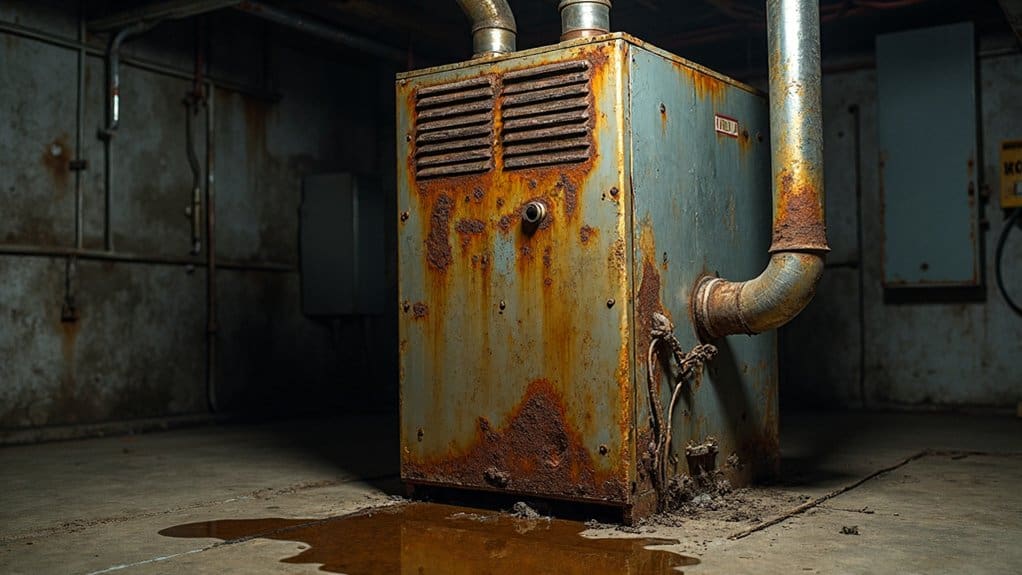
- Visible rust, corrosion, or component deterioration
Professional service can diagnose efficiency issues, but when repair costs approach replacement value, investing in a new, energy-efficient furnace makes financial sense.
Your Home Takes Too Long to Heat Up
When your home takes noticeably longer to reach comfortable temperatures, you’re witnessing a telltale sign of furnace decline. This delay means your furnace is working harder than necessary to circulate warm air throughout your living space.
If you’ve noticed consistent delays in heating the home to your desired temperature, especially during winter months, your furnace isn’t operating at peak performance. This inefficiency forces the system to run longer cycles, driving up energy costs and potentially causing additional damage to internal components.
Don’t ignore these warning signs. Prolonged heating times indicate your furnace struggles to distribute adequate heat, which affects your comfort and wallet. Among home appliances, furnaces show clear symptoms when they’re failing.
Contact an HVAC technician immediately for professional diagnosis. They’ll determine whether repair or replacement offers the best solution. Addressing this issue promptly prevents further deterioration and guarantees your heating system operates efficiently.
Strange Noises Coming From Your Furnace
Strange sounds emanating from your furnace signal serious mechanical problems that demand immediate attention. Your malfunctioning furnace produces these warning sounds when internal components break down or become unbalanced, indicating your system’s declining health.
Don’t dismiss these strange noises as minor annoyances. They’re urgent signals that your furnace might need professional intervention before costly damage occurs.
Common furnace warning sounds include:
- Banging – indicates loose or broken internal components
- Rattling – suggests hardware loosening or ductwork issues
- Whistling – signals airflow restrictions or filter problems
- Grinding – warns of motor bearing failure
- Screeching – indicates belt or blower motor problems
Ignoring these sounds leads to escalating furnace repair costs and potential system failure. When persistent noises plague your heating system, contact a qualified HVAC professional immediately. They’ll determine whether targeted repairs can restore function or if complete furnace replacement offers the most cost-effective solution for your home’s comfort needs.
Frequent Cycling On and Off
Your furnace’s erratic behavior extends beyond unusual sounds to include problematic cycling patterns that threaten your system’s longevity. When your furnace turns on and off repeatedly, it’s signaling serious underlying issues that demand immediate attention.
This frequent cycling often indicates an oversized unit, thermostat problems, or dangerous overheating conditions. Your system ends up working harder than necessary, driving up utility bills while causing accelerated wear. The constant starting and stopping puts tremendous stress on components, leading to frequent repairs and shortened equipment life.
Professional diagnosis is essential to identify the root cause. Warning Signs like persistent cycling shouldn’t be ignored, as they worsen over time and result in costlier damage. When cycling becomes chronic despite repairs, your Furnace Needs replacement consideration. These issues rarely resolve themselves and continuing to operate a malfunctioning system often means it’s Time for a Furnace upgrade before complete failure occurs.
Yellow Pilot Light Instead of Blue
Among all furnace warning signs, a yellow pilot light represents one of the most serious safety hazards you’ll encounter. When your furnace seems to be operating normally but displays this warning sign, it’s time for immediate action. A yellow pilot light indicates potential carbon monoxide production, which occurs when your furnace burns fuel incompletely due to insufficient oxygen or damaged heat exchangers.
Here’s what you need to know about yellow pilot lights:
- Normal color: Pilot lights should burn bright blue, indicating complete combustion
- Danger signal: Yellow flames suggest incomplete burning and possible carbon monoxide production
- Invisible threat: Carbon monoxide is odorless and colorless, making detection difficult without proper equipment
- Fatal consequences: This poisonous gas can cause serious illness or death when inhaled
- Professional requirement: Any unusual colors coming from the furnace demand immediate HVAC inspection
Don’t ignore this critical safety warning—it’s clearly one of the signs it’s time to call professionals immediately.
Uneven Heating Throughout Your Home
When you notice certain rooms in your home staying consistently colder or warmer than others, your furnace is likely struggling to distribute heat properly throughout your living space. This uneven heating creates obvious signs it’s time to evaluate your system’s performance and efficiency.
If you’re constantly adjusting your thermostat to maintain comfort, your old furnace may lack the capacity to handle your home’s heating demands. Poor airflow from a failing furnace fan or undersized equipment can’t circulate heated air effectively, leaving some areas uncomfortably cold while others become too warm.
These temperature inconsistencies reduce energy efficiency and indicate your HVAC system isn’t functioning ideally. Even a properly maintained furnace will eventually struggle with age-related wear. When professional inspection reveals significant distribution problems, you’ll likely need to replace the entire system rather than attempting costly repairs that only provide temporary solutions.
Frequent and Costly Repairs
Beyond distribution issues, mounting repair bills often signal it’s time to replace your furnace entirely. When you’re constantly calling technicians and spending hundreds or thousands on fixes, these are clear signs it’s time to evaluate your options.
There comes a point where investing in repairs becomes financially impractical compared to purchasing a new furnace. Signs you should ponder replacement include:
- Repairs needed more than once every couple of years
- Repeatedly replacing major components like blower motors or heat exchangers
- Individual repair costs exceeding several hundred dollars
- Multiple system failures within a short timeframe
- Annual repair expenses approaching half your unit’s replacement cost
Professional HVAC technicians can perform cost-benefit analyses to determine whether continued repairs make sense. If your furnace requires frequent attention and expensive parts, it’s likely nearing its end. Time to mull replacement becomes obvious when repair costs consistently outweigh keeping your aging system running efficiently.
Poor Air Quality and Excess Dust
Your furnace might be stirring up more than just warm air if you’ve noticed excessive dust settling around vents or floating through your home. This dust buildup often signals that your system’s struggling with dirty filters and ductwork that can’t effectively trap particles anymore.
Poor indoor air quality becomes a serious concern when neglecting furnace maintenance becomes routine. Clogged filters restrict airflow, forcing your unit to work harder while allowing dust and debris to circulate freely throughout your living spaces. You’ll notice reduced air circulation and increased allergens affecting your family’s comfort and health.
While regular filter changes and professional duct cleaning can temporarily improve performance, persistent dust issues might indicate your furnace has reached its limits. If you’re constantly battling poor air quality despite maintenance efforts, it’s time to evaluate replacement. A new, properly sized system will provide cleaner air and more efficient filtration for your home.
Visible Rust, Cracks, or Corrosion
Although metal furnaces are built to last decades, visible deterioration like rust, cracks, or corrosion signals that your system’s structural integrity has been compromised. These warning signs indicate it might be time to replace your furnace before serious problems develop.
When you spot structural damage on your gas furnace, it’s a sign that something’s seriously wrong. Here are critical issues to watch for:
- Rust formation – Indicates moisture infiltration and metal breakdown
- Visible cracks – Can lead to dangerous gas leaks and safety hazards
- Corrosion spots – Shows chemical deterioration of essential components
- Soot buildup – Suggests inefficient burning and potential carbon monoxide risks
- Flaking metal – Demonstrates advanced structural weakness
Continuing to operate a deteriorating furnace creates dangerous conditions and costly repairs. If you notice these problems, it might be time to start planning for replacement. Professional evaluation will determine whether repair’s possible or if it’s time to invest in a new system.
Frequently Asked Questions
What Are Signs You Need a New Furnace?
You’ll need a new furnace when you notice increased energy bills, strange furnace noises, inconsistent heating, reduced airflow, irregular thermostat behavior, and excessive dust accumulation. These warning signs indicate your system’s failing efficiency.
What Is Considered a Furnace Emergency?
You’re facing a furnace emergency when there’s sudden temperature drop, unusual furnace noises, pilot light issues, your furnace won’t turn on, strange odors, or complete system breakdown requiring immediate professional attention.
What Is the Typical Lifespan of a Furnace?
Your furnace’s clock ticks steadily toward replacement. You’ll find the average operating duration spans 15-20 years, though furnace longevity factors like maintenance affect your typical replacement interval and ideal furnace lifespan expectations considerably.
Is It Worth Fixing a 20 Year Old Furnace?
You shouldn’t fix a 20-year-old furnace due to poor energy efficiency, escalating repair costs, and potential safety concerns. System upgrades offer replacement benefits that outweigh continued maintenance. Consider your maintenance history when deciding.
Conclusion
Don’t wait until you’re sending smoke signals to your neighbors for warmth! If you’ve spotted these warning signs, it’s time to replace your furnace. You’ll save money on energy bills, enjoy consistent heating, and breathe cleaner air. Stop throwing good money after bad on endless repairs. Your family deserves a reliable heating system that won’t leave you shivering when winter arrives. Make the smart investment in a new furnace today.