
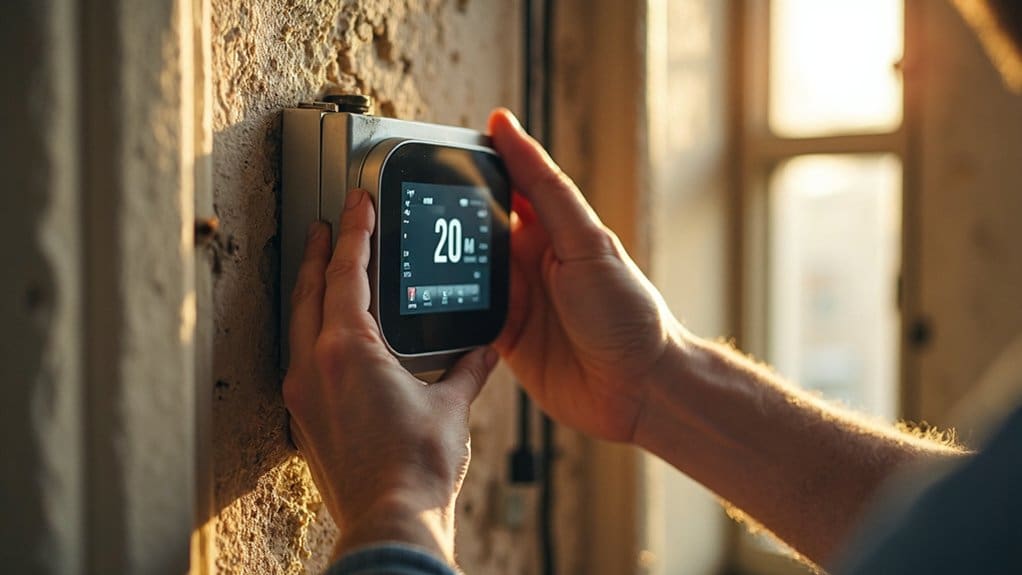
You can successfully upgrade your vintage home’s thermostat by first evaluating your existing wiring configuration and HVAC compatibility. While older houses often lack modern electrical infrastructure like C-wires, digital programmable and smart Wi-Fi thermostats offer significant benefits including 5-15% energy savings, remote access, and automated scheduling. Choose wireless models or minimalist designs that preserve your home’s historic character while providing modern climate control. Professional installation secures proper integration with antiquated heating systems like radiators, preventing compatibility issues that DIY approaches might miss in vintage properties with complex challenges.
Key Takeaways
- Assess existing wiring configuration and check for a C-wire to determine compatibility with different thermostat types.
- Consider wireless or minimalist thermostat designs that preserve historic architectural integrity while providing modern climate control features.
- Professional installation is recommended for vintage homes due to complex wiring challenges and antiquated HVAC systems.
- Smart thermostats offer energy savings of 5-15% plus remote access, scheduling, and home automation integration capabilities.
- Limited ductwork and older heating systems like radiators may restrict upgrade options and require specialized retrofitting expertise.
Why Vintage Homes Need Modern Thermostat Upgrades
While your vintage home’s charm lies in its original architectural details, its outdated mechanical thermostat likely works against your comfort and budget. That old thermostat lacks the precision and programmability needed to efficiently manage modern HVAC systems, leading to temperature inconsistencies and wasted energy.
Upgrading to a programmable or smart thermostat can slash your utility bills by 5-15% through automated scheduling that matches your daily routine. Unlike mechanical units that maintain constant temperatures regardless of occupancy, modern thermostats learn your patterns and adjust accordingly.
Smart thermostats offer game-changing features like remote access, geofencing, and home automation integration. You’ll control your home’s climate from anywhere while the system automatically adjusts when you leave or return home.
This cost-effective upgrade dramatically improves your vintage home’s energy efficiency without compromising its historic character. You’ll enjoy enhanced comfort, lower bills, and intelligent climate control that your old thermostat simply can’t provide.
Common Climate Control Challenges in Older Houses
However, installing that modern thermostat in your vintage home presents unique obstacles that newer constructions don’t face. Your old house likely operates with outdated HVAC equipment that wasn’t designed for today’s smart technology integration.
Many vintage homes lack proper ductwork since they were built before central air conditioning became standard. This forces you to work around existing heating and cooling systems that may include radiators, window units, or retrofitted equipment that doesn’t communicate well with modern controls.
Leaky, poorly insulated ducts create additional headaches. Even with a new thermostat, you’ll struggle with energy waste and temperature inconsistencies throughout your home. Poor humidity control compounds these issues, leaving rooms feeling sticky and uncomfortable despite your HVAC system running constantly.
Perhaps most challenging is preserving your home’s historic character while upgrading climate control. You’ll need creative solutions that modernize comfort without compromising architectural integrity.
Mechanical vs. Digital vs. Smart Thermostats: Understanding Your Options
Before you can tackle the installation process, you’ll need to choose the right thermostat type for your old house’s unique requirements. Mechanical thermostats use bimetallic strips to sense temperature changes and offer basic control for your heating and cooling system. They’re simple but lack advanced features.
Digital programmable thermostats provide automated scheduling and increased programming options, helping you optimize energy usage while maintaining comfort. These units work with various HVAC systems and offer better precision than mechanical versions.
Smart Wi-Fi thermostats deliver the most advanced features, including remote control capabilities and energy usage data. You can integrate them with home automation systems for enhanced convenience. However, they require stable internet connections and may need professional installation in older homes lacking proper wiring.
Consider your heating and cooling system’s compatibility, existing wiring configuration, desired smart home integration, and preferred user interface when making your decision. Complex installations may require professional help.
Assessing Your Vintage Home’s Current Wiring and Electrical System
Once you’ve selected your ideal thermostat type, you’ll need to examine your vintage home’s existing electrical infrastructure to verify compatibility. Old homes often feature outdated wiring that can’t support modern thermostats without modifications.
Start by removing your current thermostat’s cover to inspect the wire configuration. Count the wires and note their colors—this determines which replacement units you can install. Most traditional systems use four to five wires, but smart thermostats typically require a common wire (C-wire) for continuous power.
If your HVAC system lacks a C-wire, you’ll face limitations. Basic digital models might work with existing wiring, but Wi-Fi-enabled units need that additional connection. Without it, you’ll require electrical modifications or a power adapter.
Don’t guess about compatibility—incorrect wiring can damage your new thermostat or HVAC system. Consider consulting an HVAC professional who can assess your traditional systems and recommend the safest installation approach for your vintage home’s unique electrical setup.
HVAC System Compatibility for Historic and Older Properties
While your wiring assessment provides the electrical foundation, your vintage home’s HVAC system itself presents unique compatibility challenges that require careful evaluation. Historic heating and air conditioning systems weren’t designed for today’s smart thermostats, creating complex integration issues that demand specialized expertise.
HVAC Challenges facing older homes include:
- Limited or nonexistent ductwork that restricts your thermostat upgrade options and may require creative solutions to avoid damaging original architectural features
- Antiquated heating systems like radiators or gravity furnaces that don’t communicate with modern digital controls, potentially leaving you without proper climate management
- Space constraints in walls and mechanical areas that make running new control wires nearly impossible without compromising your home’s historical integrity
You’ll need professional HVAC technicians experienced in historic retrofitting to navigate these compatibility issues. They’ll recommend thermostat solutions that work harmoniously with your vintage system while preserving your home’s character and ensuring reliable temperature control.
Energy Savings Potential With Programmable Temperature Controls
Despite the complexity of retrofitting your historic home’s HVAC system, installing programmable temperature controls delivers substantial energy savings that quickly justify the investment. The EPA estimates you’ll reduce energy usage by 5-15% through automated temperature settings that match your daily schedule.
You’ll eliminate the common problem of forgetting manual adjustments throughout the day, which often leads to wasted energy. Smart thermostats take this efficiency further by learning your patterns and making micro-adjustments automatically.
Beyond immediate savings, programmable controls provide valuable data on your HVAC system’s performance and maintenance needs. This information helps you identify additional efficiency improvements and prevent costly breakdowns.
The upgrade from your old manual thermostat is surprisingly simple and cost-effective, making it an ideal first step toward reducing monthly utility bills. If you’re considering zoned climate control for different areas of your vintage home, programmable thermostats become essential components for optimizing energy usage throughout your property.
Smart Features That Work Best in Traditional Home Layouts
When choosing smart thermostat features for your traditional home, geofencing technology offers the most practical benefits by automatically detecting when you’re approaching or leaving the property. This control technology eliminates energy waste from heating or cooling empty rooms while ensuring comfort upon your return.
Smart vents and zoning systems excel in older homes with unique layouts, delivering precise temperature control where you need it most. These systems work around existing ductwork limitations that plague many vintage properties.
Voice control integration transforms daily comfort management, while advanced sensors monitor indoor air quality, humidity, and occupancy patterns. Remote smartphone access keeps you connected to your home’s climate system anywhere.
Consider these emotional benefits of upgrading:
- Peace of mind knowing your historic home stays protected from temperature extremes
- Pride in modernizing your vintage property while preserving its character
- Relief from eliminating hot and cold spots that’ve frustrated you for years
Preserving Aesthetic Appeal While Adding Modern Technology
Although smart thermostats bring undeniable convenience to your daily routine, installing them in a historic home requires careful consideration of how the technology will blend with your property’s original character. Your new thermostat should complement vintage aesthetics rather than clash with period details.
Choose wireless models that won’t require invasive wiring changes, preserving your home’s historic integrity. Conceal components strategically and position the unit where it minimizes visual impact on architectural features. Many modern thermostats offer sleek, minimalist designs that can blend seamlessly with traditional interiors.
Consider models compatible with Apple HomeKit and other smart home platforms for enhanced functionality without compromising style. You can integrate voice control and remote access features while maintaining your home’s timeless charm. Some units even connect with air filtration systems for thorough climate management.
Consulting renovation specialists who understand historic properties guarantees you’ll select solutions that balance modern convenience with preservation requirements.
Professional Installation vs. DIY Approach for Vintage Homes
The decision between professional installation and DIY approaches becomes particularly pivotal when working with vintage homes and their unique electrical systems. While DIY thermostat installation works well for basic digital or Wi-Fi models in homes with straightforward wiring, vintage homes often present complex challenges that require expert knowledge.
Professional HVAC technicians understand how to integrate modern temperature control with older heating systems while preserving your home’s historic character. They’ll identify compatibility issues, handle missing C-wires, and guarantee proper functionality without disrupting original features.
If you’re considering DIY installation, research these critical factors:
- Your heating system’s wiring configuration – Complex setups can lead to costly mistakes
- System compatibility requirements – Mismatched components could damage equipment
- Electrical safety concerns – Uncertain wiring poses risks to both you and your home
To choose the best approach, honestly assess your technical skills against your home’s complexity. Professional installation provides peace of mind and safeguards your vintage home’s integrity.
Integrating New Thermostats With Existing Heating and Cooling Systems
Successfully connecting your new thermostat to your vintage home’s heating and cooling system requires careful attention to electrical compatibility and system communication protocols. Your older home’s wiring may not support modern HVAC features, requiring modifications to accommodate advanced thermostat functions.
When upgrading HVAC controls, you’ll need to verify that your new thermostat can properly communicate with existing equipment. Vintage systems often use different voltage requirements and wire configurations than contemporary models anticipate. Smart thermostats with settings based on automated schedules and remote access capabilities may struggle to integrate seamlessly with older heating and cooling units.
Professional assessment guarantees your thermostat installation won’t disrupt system performance. An HVAC expert can identify necessary wiring updates and confirm compatibility before installation begins. They’ll also optimize system integration to maximize energy efficiency while maintaining reliable climate control. Proper integration prevents operational issues and ensures your vintage home benefits from modern thermostat technology without compromising your existing heating and cooling system’s functionality.
Frequently Asked Questions
How to Convert Old Thermostat to Smart?
You’ll need to check wire compatibility, turn off power, and follow DIY installation tips. Smart thermostats offer energy efficiency benefits through programmable schedules and wireless connectivity options for remote control via smartphone apps.
Can You Replace an Old Style Thermostat to a Digital?
Picture your old dial thermostat transforming into a sleek digital display. You can absolutely replace it with modern programmable features, advanced temperature sensor upgrades, and wireless connection options for smart home integration and enhanced control.
Is It Better to Have a New Thermostat or Old Thermostat?
You’ll benefit more from a new thermostat than an old one. New models offer superior energy efficiency, precise temperature monitoring, and smart features, while old thermostats rely on manual operation and lack accuracy.
How Do I Know if a Thermostat Is Compatible With My System?
Check your thermostat’s wiring configuration by counting the wires and identifying their colors. Wire compatibility determines installation complexity, so verify your system’s voltage, control type, and whether you’ve got a C-wire before purchasing.
Conclusion
You’ve discovered the delicate dance of modernizing your vintage home’s climate control while maintaining its classic charm. By carefully considering compatibility, wiring requirements, and aesthetic appeal, you’ll create comfortable living spaces that blend old-world character with contemporary convenience. Whether you’re choosing sleek smart features or simple digital displays, proper planning prevents problems and preserves your property’s precious personality. Trust the transformation process—your upgraded thermostat will deliver dependable temperature control for decades ahead.