
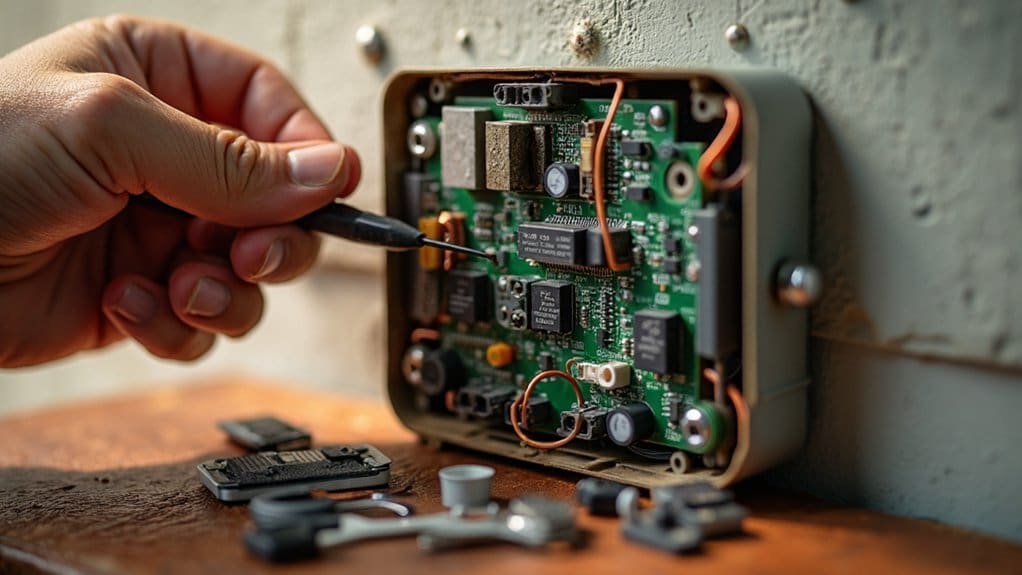
You’ll face unique challenges when repairing heat pump thermostats because these dual systems require specialized wiring configurations that standard HVAC thermostats can’t handle. The R-RC jumper configuration is critical for proper power distribution, and using incorrect C-wire connections often causes system failures. Heat pump reversing valves add complexity that requires compatible thermostats designed for dual heating and cooling operations. Understanding these specialized requirements will help you tackle even the most complex repair scenarios.
Key Takeaways
- Heat pump systems require specific R-RC jumper configurations to ensure proper power distribution between heating and cooling modes.
- Installing separate thermostats for each system eliminates wiring conflicts and prevents power distribution issues in dual systems.
- Standard single-system thermostats cannot handle heat pump reversing valves, requiring specialized dual-system compatible models instead.
- Professional electrical testing identifies loose connections while system calibration ensures accurate temperature readings across all modes.
- Call experts when systems repeatedly fail temperature targets, trip breakers frequently, or show sensor calibration problems.
Understanding Heat Pump Thermostat Configurations for Dual Systems
The complexity of heat pump thermostat configurations becomes apparent when you’re dealing with dual systems that operate both heating and cooling functions. Your HVAC setup requires specialized wiring that accommodates separate components for air conditioning and heating operations.
You’ll need to understand that heat pump systems demand different thermostat configurations compared to standard single-system setups. The R-RC jumper configuration becomes critical for proper power distribution and mode control. If you’re adding cooling wires to a thermostat originally designed for heating only, you’ll likely encounter power-up failures.
Your wiring choices matter greatly. Using the furnace’s C-wire instead of the air conditioner’s C-wire can create operational problems. Remember that single thermostats aren’t compatible with managing two independent HVAC systems effectively. You’ll need separate thermostats for each system to guarantee reliable pump operation and proper temperature control throughout your dual heating and cooling setup.
Common Wiring Issues in Heat Pump Thermostat Installations
When you’re installing a heat pump thermostat, you’ll quickly discover that improper wiring creates the majority of system failures. You can’t simply connect both your air conditioning and heating system wires to a single thermostat without encountering power issues.
Your AC system requires Y, G, and RC wires, while your heating system needs R, W, and C connections. The thermostat demands an R-RC jumper for correct power flow, but combining both systems’ wiring prevents adequate power distribution. You’ll find your thermostat won’t power up or control either system effectively.
The reversing valve in your heat pump system adds complexity that standard thermostats can’t handle when managing dual configurations. Even the Honeywell RTH6580WF, designed for single HVAC system control, fails when overloaded with multiple system connections.
An HVAC professional will recommend installing separate thermostats for each system. This approach eliminates wiring conflicts and guarantees each heat pump system operates independently with proper control.
Diagnosing Temperature Control Problems in Dual Zone Systems
Beyond single-system wiring complications, dual-zone heat pump systems present their own unique temperature control challenges that require systematic diagnosis. When one zone can’t reach the desired temperature while another overheats, you’ll need specialized Troubleshooting Tips for these complex HVAC Systems.
Start by verifying your thermostat is set correctly for each zone. Heat Pump Problems often stem from incompatible thermostats that can’t coordinate dual heating and cooling systems effectively. Check if you’re experiencing Heat Pump Blowing Cold air in one zone while the other operates normally.
You’ll need to inspect power sources, airflow restrictions, and damper functionality in both zones. Faulty dampers can prevent proper air distribution, creating temperature imbalances. Test each zone independently to isolate the problem area.
Consider upgrading to an advanced dual-zone thermostat designed for coordinated control. However, complex dual-zone issues often require professional HVAC technicians who understand the intricate relationships between multiple heating and cooling systems.
Professional Repair Techniques for Heat Pump Thermostat Malfunctions
Although homeowner troubleshooting can resolve basic issues, complex heat pump thermostat malfunctions demand professional repair techniques that require specialized tools and advanced diagnostic skills. When your thermostat settings aren’t properly controlling heating or cooling between indoor and outdoor units, it’s time to contact a professional HVAC technician who can diagnose the problem accurately.
Professional heat pump troubleshooting involves sophisticated repair methods:
- Advanced electrical testing – Technicians use multimeters and voltage testers to identify loose wiring connections affecting heat mode operation
- System calibration – Precise recalibration of temperature sensors guarantees accurate readings between zones
- Control board replacement – Damaged circuit boards require specialized components and programming knowledge
- Refrigerant system integration – Ensuring proper communication between thermostat and refrigerant controls
- Comprehensive system testing – Full operational verification across all heating and cooling modes
Don’t risk further damage attempting complex repairs yourself. Schedule an appointment with qualified professionals who possess the expertise to restore your dual zone system’s seamless performance safely and efficiently.
When to Call an Expert for Advanced Heat Pump Thermostat Issues
Certain heat pump thermostat problems exceed the scope of DIY repairs and signal the need for professional intervention. When your system repeatedly fails in reaching the set temperature despite functioning components, it’s best to contact an HVAC technician. Complex dual-system configurations require specialized knowledge to properly integrate cooling and heating functions through a single thermostat interface.
You’ll need professional attention if the circuit breaker trips frequently, indicating electrical issues that could damage your equipment. Similarly, when sensors fail to accurately read indoor conditions or restrict airflow detection, expert diagnosis becomes essential. Poor air quality readings or inconsistent system cycling suggest calibration problems requiring professional tools.
Heat pumps with separate components demand precise wiring configurations that only trained technicians should modify. Don’t attempt advanced repairs when compatibility issues arise between your thermostat and dual systems. Professional service guarantees your heat pump serviced correctly, preventing costly damage while maintaining ideal performance and energy efficiency.
Preventative Maintenance for Optimal Heat Pump Thermostat Performance
While professional repairs address complex issues, consistent maintenance guarantees most heat pump thermostat problems from developing in the first place. Your thermostat controls both heating and cooling functions, making regular maintenance essential for year-round comfort and safety.
Essential maintenance tasks include:
- Replace air filters monthly – Clean filters guarantee proper airflow to your indoor air handler and blower motor, preventing system strain that affects thermostat accuracy
- Keep outdoor unit debris-free – Remove leaves, dirt, and obstructions that restrict outdoor air circulation and heat exchange efficiency
- Schedule annual professional tune-ups – HVAC technicians check refrigerant levels and calibrate thermostat settings so everything will function correctly
- Monitor for unusual signs – Watch for ice buildup, strange noises, or temperature inconsistencies that signal developing issues
- Test defrost mode operation – Verify your system automatically defrosts during winter conditions
Following these practices means you won’t need to worry about unexpected breakdowns, and your heat pump thermostat will deliver reliable performance like any quality air conditioner system.
Frequently Asked Questions
How to Tell if a Heat Pump Thermostat Is Bad?
You’ll notice thermostat temperature readings don’t match actual temps, frequent thermostat battery replacement needs, thermostat display issues, thermostat programming glitches, faulty thermostat wiring connections, thermostat sensor malfunctions, or thermostat relay problems indicating replacement time.
How Do I Reset a Heat Pump Thermostat?
You’ll reset your thermostat by replacing thermostat batteries first, then reconfiguring thermostat settings through the menu. Try resetting thermostat schedule, updating thermostat programming, and testing thermostat functionality to resolve display problems completely.
What Is the Most Common Problem With Heat Pumps?
Ironically, heat pumps designed for efficiency face low efficiency as their most common problem. You’ll encounter refrigerant level issues, airflow obstructions, compressor failure, thermostat calibration problems, sensor malfunctions, and defrost cycle problems that undermine performance.
What Is the Main Disadvantage of a Dual Fuel System?
You’ll face higher installation costs as dual fuel systems’ main disadvantage. Complex control systems increase maintenance complexity, requiring increased need for professional servicing. These systems create potential reliability issues and difficulty in troubleshooting compared to single systems.
Conclusion
You’ll find that maintaining your dual system heat pump thermostat isn’t as complicated as it seems. Like a conductor directing an orchestra, you’re orchestrating multiple zones to work in harmony. You’ve learned the warning signs, understand when you can troubleshoot yourself, and know when it’s time to call professionals. Regular maintenance checks will keep your system running smoothly, ensuring you’ll enjoy consistent comfort throughout your home year-round.