
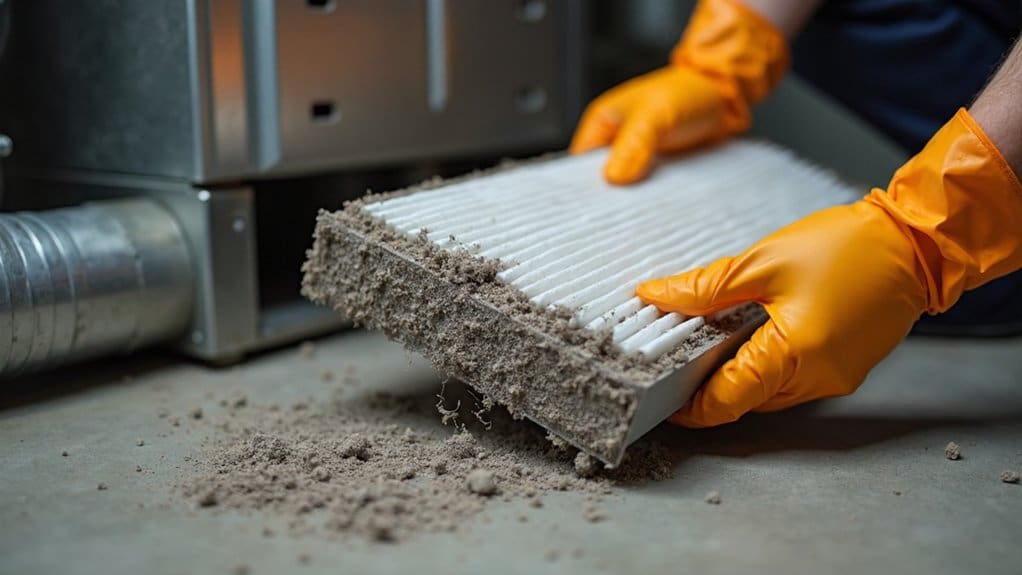
You should replace your furnace filter every 1-3 months for standard 1-2 inch filters, while thicker 3-6 inch filters can last 6-12 months. Your filter protects expensive HVAC components from dust and debris damage while improving indoor air quality. Replace it more frequently if you have pets, higher occupancy, or live near construction areas. Watch for signs like uneven heating, frequent cycling, or visible dust on vents indicating immediate replacement needs. The specifics below will help you optimize your maintenance schedule.
Key Takeaways
- Furnace filters protect HVAC components from contamination damage and extend equipment life while improving indoor air quality.
- Replace 1-2 inch filters every 1-3 months, 3-4 inch filters every 6-9 months, and 5-6 inch filters every 9-12 months.
- Homes with pets, high occupancy, or poor outdoor air quality require more frequent filter replacements than standard schedules.
- Uneven heating, frequent system cycling, dusty vents, and musty odors indicate immediate filter replacement is needed.
- Always turn off the furnace before replacement and ensure new filter’s airflow arrows point toward the furnace.
What Does a Furnace Filter Do and Why Is It Essential?
When you fire up your furnace, the filter serves as the first line of defense against dust, debris, and other airborne particles that could wreak havoc on your HVAC system. Your furnace filter’s primary job isn’t cleaning air for you to breathe—it’s protecting expensive system components from contamination damage.
Air filters trap contaminants before they can clog blowers, coils, and other critical parts that keep your heating and cooling running smoothly. When you neglect filter replacement, that dirty filter becomes a liability. Clogged filters restrict airflow, forcing your system to work harder and potentially causing short cycling or overheating.
While improved indoor air quality is a welcome side benefit, think of filter changes as essential home maintenance that prevents costly HVAC repairs. Regular filter replacement keeps contaminants out of your system’s delicate components, ensuring reliable operation and extending equipment life. It’s a simple task that saves you money long-term.
How Often Should You Change Your Furnace Filter Based on Type and Thickness?
Now that you understand why regular filter replacement protects your HVAC investment, the next question becomes timing—specifically, how often you should swap out that filter. Your furnace filter replacement schedule depends primarily on filter thickness and type, though several factors influence when you’ll need to change furnace filter media.
Filter thickness directly impacts longevity:
- 1-2 inch filters: Replace every 1-3 months for ideal HVAC air filter performance
- 3-4 inch filters: Change furnace filter every 6-9 months due to increased surface area
- 5-6 inch filters: Replace every 9-12 months with their superior capacity
- Pleated filters: Last longer than fiberglass but cost more upfront
Your specific filter needs vary based on home size, occupancy, pets, and indoor air quality. Larger homes circulate more air, making furnace filters work harder. Different filter types with varying MERV ratings also affect replacement frequency. Always check manufacturer recommendations, but adjust your schedule based on these environmental factors for optimal performance.
Key Factors That Determine Filter Replacement Frequency
While filter thickness provides a baseline replacement schedule, several environmental and household factors markedly accelerate or extend how often you’ll actually need to change your furnace filter.
Your home’s occupancy level directly impacts replacement frequency. More people means more dust, skin cells, and airborne particles that clog filters faster. Pet ownership considerably increases replacement needs since animal dander and hair accumulate quickly in your HVAC system.
Outdoor air quality affects how Often Should You Change filters. Homes near construction sites, busy roads, or areas with poor air quality require more frequent changing furnace filters maintenance. Climate matters too – dusty or windy regions demand more attention.
Your home’s size influences system runtime. Larger spaces require harder HVAC work, cycling air more frequently through filters. Change Your Furnace Filter based on actual conditions rather than generic schedules. Changing becomes necessary when filters appear visibly dirty, regardless of timeline recommendations.
Signs Your Filter Needs Immediate Replacement and Consequences of Neglect
Although timing recommendations provide helpful guidelines, your furnace filter’s actual condition tells the real story of when replacement becomes critical. You’ll often notice these warning signs before your scheduled replacement date arrives.
When your filter becomes dirty, it restricts airflow and forces your system to work harder, directly impacting energy efficiency. This increased strain raises utility bills and accelerates component wear. Poor filtration also degrades your home’s air quality, potentially triggering respiratory issues for family members with allergies or asthma.
Watch for these immediate replacement indicators:
- Uneven heating or cooling throughout rooms
- Frequent system cycling on and off
- Visible dust accumulation on vents
- Musty odors or increased humidity levels
Neglecting to change the filter creates a cascade of problems requiring expensive furnace maintenance. Installing a new filter promptly prevents water damage from blocked drainage and extends your system’s lifespan. When unsure, consult an HVAC contractor for professional assessment.
Step-by-Step Process for Changing Your Furnace Filter Properly
Replacing your furnace filter becomes straightforward when you follow the proper sequence and take necessary safety precautions. First, turn off your furnace to guarantee safety during this important task. Locate the blower compartment, typically found near the bottom of your unit or along the return air duct.
Remove the existing filter by sliding it out carefully. Before disposal, conduct a visual inspection to assess dirt accumulation and confirm replacement necessity. Note the filter’s dimensions printed on the frame—you’ll need this exact size filter for correct fit.
When you buy a new filter, check that specifications match your system requirements. Insert the replacement filter with airflow arrows pointing toward the furnace. Ensure it sits flush within the compartment without gaps around edges.
Changing your furnace filter is one of the easiest maintenance tasks you can perform. Always check your filter monthly and change your air filter according to manufacturer recommendations for perfect system performance.
Frequently Asked Questions
Why Do I Have to Change My Furnace Filter so Often?
You’re changing filters frequently because filter material impact affects filter lifespan. Regular filter maintenance frequency prevents filter clogging, ensuring filter effectiveness monitoring, ideal air quality impact, energy efficiency effects, and HVAC system longevity through proper filter replacement schedule.
What Happens if I Don’t Change the Filter on My Furnace?
You’ll experience buildup of dirt, increased energy costs, reduced air quality, and decreased system efficiency. Your overworked blower motor faces compromised airflow, impaired heating performance, potential fire hazard, accelerated equipment wear, and diminished indoor comfort.
Why Is It Important to Change Air Filters on a Regular Schedule?
Dirty filters reduce airflow by 15%. Regular filter replacement schedules guarantee energy efficiency improvements, indoor air quality enhancement, allergy reduction, pet dander removal, dust accumulation minimization, and HVAC system lifespan extension through airflow optimization.
Do More Expensive Furnace Filters Really Make a Difference?
Yes, expensive filters dramatically improve filter performance indicators through superior filter material composition and higher filter efficiency ratings. You’ll see reduced filter maintenance costs, longer filter replacement timelines, and enhanced filter impact on air quality.
Conclusion
You’ll dramatically improve your home’s air quality by staying consistent with filter changes. Here’s a striking reality: according to the EPA, indoor air can be 2-5 times more polluted than outdoor air, and a dirty furnace filter is often the culprit. Don’t let your filter become a breeding ground for contaminants that you’re breathing daily. Set a reminder, check monthly, and replace as needed. Your lungs and HVAC system will thank you.