
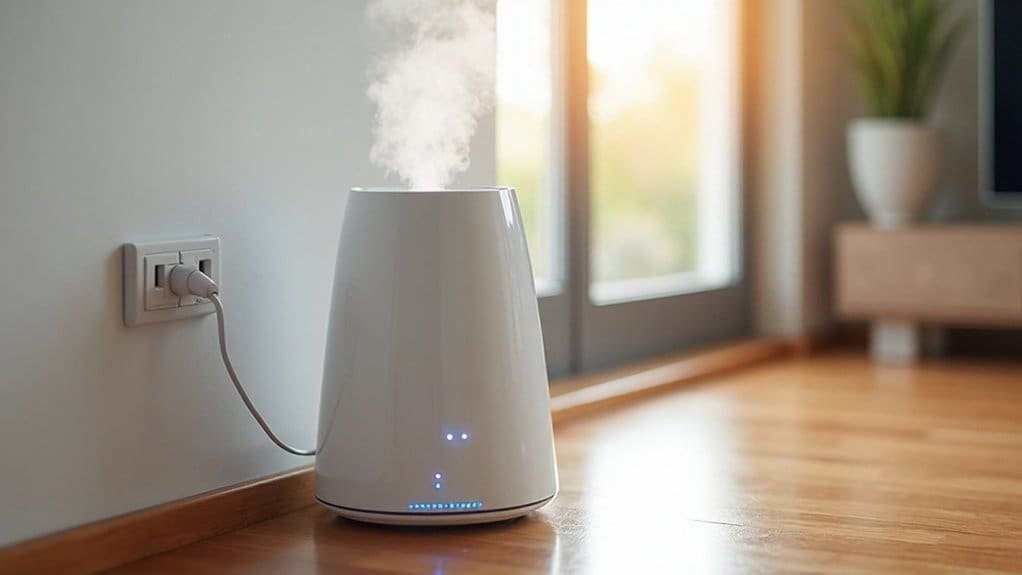
You can slash your heating bills by up to 30% with proper humidifier installation. Energy-efficient models maintain 35-45% humidity levels, making your home feel 4°F warmer at lower temperatures. This lets you reduce your thermostat setting and save 2-4% on heating costs per degree. Whole-house systems integrated with your HVAC distribute up to 50 gallons daily more efficiently than portable units. Understanding the right type and capacity will maximize your savings potential.
Key Takeaways
- ENERGY STAR® certified humidifiers can reduce heating costs by 2-4% for every degree you lower your thermostat.
- Whole-house humidifiers integrated with HVAC systems are more energy-efficient than running multiple portable units throughout your home.
- Maintaining 35-45% humidity levels makes your home feel up to 4°F warmer at lower thermostat settings.
- Steam humidifiers offer the highest energy efficiency among humidifier types, though they require professional drain access installation.
- Bypass humidifier models consume less energy than fan-powered versions while effectively distributing moisture through existing ductwork.
What Causes Dry Air in Your Home During Winter Months
When winter arrives, several factors work together to strip moisture from your home’s air. You’ll notice this dry air problem becomes more pronounced during the heating season when you’re battling both indoor and outdoor elements.
Your closed windows and doors block fresh air circulation, trapping stale, moisture-depleted air inside. Meanwhile, your furnace works overtime, constantly pulling humidity from the air as it heats your home. Each time it cycles on, it’s removing precious moisture that keeps your indoor environment comfortable.
If you’re enjoying crackling fires in your fireplace, you’re unknowingly contributing to the problem. These cozy flames consume oxygen and moisture, further reducing your home’s humidity levels.
This seasonal challenge affects most homeowners during colder months, making winter the prime time for addressing dry air issues. Understanding these causes helps you recognize why your home feels uncomfortably dry and why your heating bills climb higher.
How Energy-Efficient Humidifiers Lower Your Heating Costs
Why does adding moisture to your air translate into real savings on your heating bills? When you maintain proper humidity levels between 35-45%, your home feels up to 4°F warmer without actually raising the temperature. This allows you to turn down your thermostat and save up to 4% on heating costs.
The science is simple: moist air holds heat better than dry air, making your body feel warmer at lower temperatures. By turning down your thermostat just 1 degree with a whole-house humidifier, you’ll reduce your heating bill by 2-4%.
Energy-efficient whole-house humidifiers integrated with your HVAC system use greatly reduced electricity than portable units – reducing energy consumption by an estimated 3.4 terawatts annually nationwide. ENERGY STAR®-certified models are particularly effective, collectively saving homeowners $390 million in energy costs each year by maximizing heating efficiency through ideal moisture levels.
Types of Energy-Efficient Humidifiers and Their Power Consumption
Four main types of energy efficient humidifiers offer distinct advantages for reducing your home’s power consumption while maintaining ideal moisture levels.
Ultrasonic humidifiers top the efficiency list, using high-frequency vibrations to create vapor while consuming marginally less energy than warm-mist or cool-mist alternatives. You’ll appreciate their quiet operation and minimal electricity usage.
Whole-house humidifiers integrated with your HVAC system typically use less energy than running multiple portable units throughout your home. You can choose between bypass models, which are more energy-efficient, or fan-powered versions that consume more electricity but distribute humidity more effectively.
Steam humidifiers represent the most energy-efficient option available, though they require drain access and higher installation costs. When shopping, look for ENERGY STAR®-certified models that can save up to 426.7 kWh annually compared to less efficient alternatives. Consider your home’s layout, installation requirements, and long-term energy savings when selecting the right type for your needs.
Choosing the Right Humidifier Size and Capacity for Your Home
After selecting your preferred humidifier type, you’ll need to determine the correct size and capacity to match your home’s specific moisture requirements. Whole-house humidifiers work best for thorough coverage, delivering 12 to 24 gallons of moisture daily based on your home’s square footage. If you’re targeting specific areas, portable units offer 1 to 6 gallons per day for single rooms.
Proper sizing prevents over-humidification while ensuring adequate moisture distribution throughout your space. An undersized humidifier will strain to meet demand, reducing efficiency and increasing energy consumption. Conversely, an oversized unit wastes energy and creates excess humidity.
Consider consulting a professional to evaluate factors like your home’s insulation, climate conditions, and layout. They’ll recommend the ideal capacity for maximum efficiency. Choose an energy-efficient model with ENERGY STAR® certification—these humidifiers save up to 426.7 kWh annually compared to standard units, drastically reducing your utility bills.
Whole-House Humidifier Installation Benefits and Considerations
When you’re ready to maximize your home’s humidity control while minimizing energy costs, whole-house humidifiers offer unmatched efficiency and convenience. These systems integrate directly with your HVAC system, distributing moisture evenly throughout your entire living space rather than targeting individual rooms.
An energy-efficient whole-house humidifier can add up to 50 gallons of moisture daily, dramatically improving your indoor air quality. By maintaining ideal humidity levels between 35-45%, you’ll make your air feel warmer, allowing you to reduce your thermostat setting and save up to 4% on heating costs per degree lowered.
Beyond energy savings, proper humidity control protects your wood furnishings, floors, and other materials from damage caused by excessively dry air. The EPA estimates that upgrading to energy-efficient models can generate substantial annual energy cost savings, making whole-house humidifier installation a smart long-term investment for both comfort and efficiency.
Essential Features to Look for in Energy-Efficient Humidifiers
The right energy-efficient humidifier features can make the difference between a mediocre investment and exceptional long-term savings. When shopping for your next unit, you’ll want to prioritize features that maximize performance while minimizing energy consumption.
Look for these essential energy-efficient features:
- ENERGY STAR certification – These models save up to 426.7 kWh annually compared to non-certified alternatives, directly reducing your utility bills.
- Adjustable fan speeds with humidistats – This combination provides precise humidity control while preventing energy waste from over-humidification.
- Quiet operation technology – Perfect for bedroom installations where peaceful sleep matters as much as comfort.
- Filter sensors with antimicrobial protection – These features maintain ideal performance by indicating replacement timing while preventing bacterial growth that can reduce efficiency.
These features work together to deliver consistent comfort while keeping your energy costs low and your indoor air quality high.
Maximizing Your Humidifier’s Energy Savings Through Proper Maintenance
While investing in an energy-efficient humidifier sets the foundation for lower utility bills, you’ll only achieve maximum savings through consistent maintenance practices.
Regular cleaning and filter replacement are indispensable steps to maintain peak efficiency. Clean tanks and components prevent microbial growth that reduces performance and forces your system to work harder, ultimately increasing energy bills. You can save up to 426.7 kWh annually by keeping your whole-home humidifier properly maintained compared to neglecting an inefficient model.
Monitor your humidity levels closely and adjust settings to maintain the ideal 40-50% range. This optimization maximizes energy-saving benefits while preserving comfort. Don’t forget to schedule annual professional maintenance checks – technicians can identify efficiency issues you might miss.
These simple maintenance habits guarantee your humidifier operates at maximum efficiency, delivering the energy savings you expected when you made your initial investment.
Frequently Asked Questions
Does a Humidifier Increase the Electricity Bill?
Yes, you’ll see some electricity increase, but choosing energy-efficient models maximizes humidifier efficiency. Proper humidity control actually creates energy savings by letting you lower your thermostat, since humid air feels warmer than dry air.
Can Installing a Humidifier Help to Reduce Heating Costs?
Want lower heating bills? Yes, you’ll reduce heating costs with proper humidifier sizing and effective humidity control. Energy efficient models make air feel warmer, letting you lower your thermostat 1-2°F comfortably.
How Much Will My Electric Bill Go up With a Dehumidifier?
Your electric bill will increase $30-$70 monthly with a dehumidifier. Dehumidifier power consumption ranges from 280-850 watts, costing $0.10-$0.30 hourly. Choose ENERGY STAR models for better humidifier energy efficiency and lower humidifier operating costs.
Do Dehumidifiers Help With AC Bills?
You’ll discover something surprising about humidity control and your AC costs. Dehumidifiers dramatically improve your air conditioner’s operating efficiency by managing environmental factors, allowing you to raise thermostat settings while maintaining comfort and reducing bills.
Conclusion
You’ll discover that investing in an energy-efficient humidifier pays dividends beyond comfort. As the saying goes, “an ounce of prevention is worth a pound of cure” – maintaining proper humidity levels prevents costly heating bills while protecting your health and home. You’re not just buying a humidifier; you’re investing in long-term savings. With proper installation, sizing, and maintenance, you’ll enjoy lower utility bills while breathing easier all winter long.