
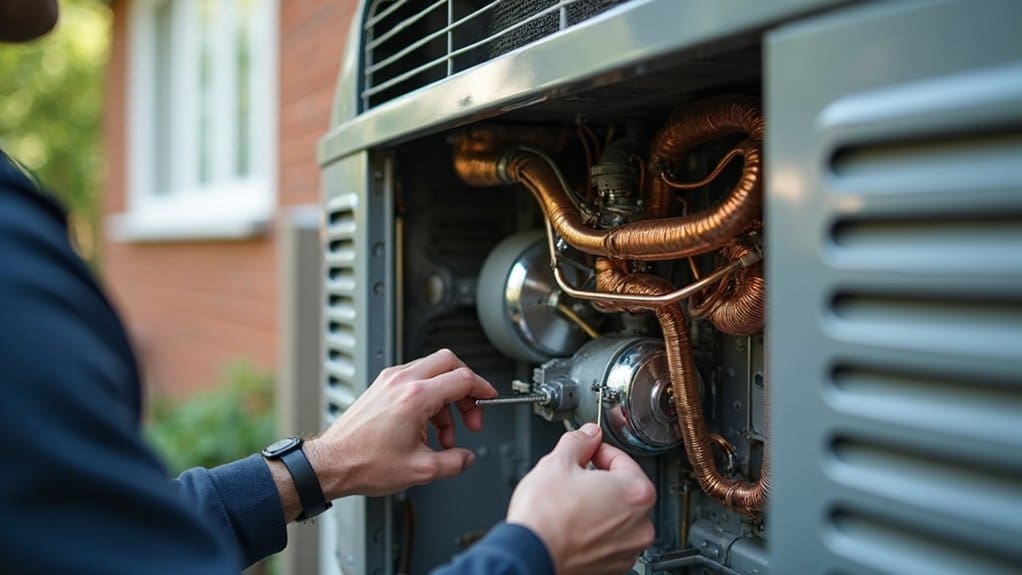
When your air conditioning system breaks down, you’re likely facing anywhere from 30 minutes to several hours of repair time, depending on what’s actually wrong with your unit. Simple fixes like air filter replacements or thermostat adjustments typically take 30 minutes to an hour, while more complex issues like refrigerant recharges can require 1-3 hours. Major problems such as compressor failures often need 4-6+ hours to complete. Understanding these timeframes and the factors that influence them will help you better prepare for your service appointment.
Key Takeaways
- Simple repairs like filter replacement or thermostat fixes typically take 30 minutes to 1 hour to complete.
- Moderate issues such as clogged drain lines or refrigerant recharges usually require 1-3 hours for proper resolution.
- Complex repairs involving compressor replacement or electrical work can take 4-6+ hours or multiple service visits.
- Repair duration depends on parts availability, system complexity, technician experience, and seasonal demand fluctuations.
- Homeowners can minimize repair time by clearing unit access, securing pets, and ensuring workspace efficiency.
Factors That Influence AC Repair Duration
Several key factors determine how long your air conditioning repair will take, ranging from quick 30-minute fixes to full-day projects.
The complexity of the issue profoundly impacts time needed for completion. Simple problems like a clogged condensate drain line require minimal effort, while major component failures demand extensive work. Parts availability directly affects your repair timeline—if parts need special ordering, you’ll face additional delays beyond the actual repair time.
Your system’s size and design matter enormously. Single-zone units are typically straightforward, but multi-zone commercial systems require more diagnostic time. Older systems present unique challenges, as they often need thorough inspection and may have discontinued components that are harder to source.
Your HVAC technician’s experience level influences efficiency. Seasoned professionals quickly identify issues like refrigerant leaks and execute repairs faster. Demand during peak summer months can also extend wait times for service appointments, even though the actual repair duration remains unchanged.
Common AC Problems and Their Typical Repair Timeframes
Most air conditioning problems fall into predictable categories, each with distinct repair timeframes that help you plan accordingly. Simple fixes like air filter replacement need just 30 minutes, while thermostat issues typically require 30 minutes to one hour of your technician’s time.
Clogged drain line repairs often take 1-2 hours to complete properly. Your HVAC system’s refrigerant recharge usually requires 1-3 hours, depending on the leak’s location and severity. Parts availability can affect these estimates considerably.
Major AC problems demand substantially more time. Compressor failure represents the most time-intensive repair, often requiring 4-6 hours or longer. Your technician must disconnect refrigerant lines, remove the faulty compressor, install replacement parts, and test the entire system thoroughly.
Understanding these typical repair timeframes helps you set realistic expectations and plan your schedule accordingly. Minor maintenance-related fixes happen quickly, while component replacements and major HVAC repairs require significant time commitments for proper completion.
What Affects the Speed of Your Air Conditioning Service
Why do some air conditioning repairs finish in under an hour while others stretch across multiple days? Several factors influence your repair timeline and overall customer satisfaction with HVAC services.
Your air conditioning system’s complexity plays a pivotal role. Single-zone units typically require less time than multi-zone systems, while commercial installations involve more extensive work than residential air conditioning needs. The severity of your problem matters too—thermostat replacements happen quickly, but compressor failures demand extensive labor.
Availability of replacement parts directly impacts your AC repair process. In-stock components mean same-day completion, while special orders can delay repairs for days or weeks. Your unit’s age affects diagnosis speed, as older systems often present unique challenges that experienced technicians handle more efficiently.
Weather conditions and seasonal demand also influence scheduling. Peak summer months create higher service volumes, potentially extending wait times. These factors combine to determine how long it’ll take to repair an AC system and restore your comfort.
Preparing Your Home to Minimize Repair Time
While external factors shape your repair timeline, you can take control by preparing your home before the technician arrives. Clear the area around both your indoor and outdoor unit to provide easy access. Remove furniture, boxes, or debris that might obstruct the technician’s workspace. This simple step can streamline the repair process significantly.
Replace your air filter if it’s dirty or clogged. A clean filter helps technicians diagnose problems more accurately and can reduce repair complexity. Check that your electrical panel is accessible and guarantee pets are secured in another room.
These proactive steps homeowners can take make a substantial difference in service efficiency. When technicians can immediately access equipment and work without obstacles, they’ll complete diagnostics faster and identify necessary parts sooner. Your preparation directly translates to quicker service, potentially reducing your repair timeline by 30-60 minutes while guaranteeing more accurate problem assessment.
When Extended Repair Times Are Necessary
Certain AC problems demand considerably more time to resolve than standard repairs. Your air conditioner depends on numerous components working together, and when major failures occur, complex repairs become unavoidable. Compressor replacements, complete system overhauls, and extensive electrical work can take 4-8 hours or more.
How long does it take when you need a full AC replacement? This extensive work may take a few days, especially when permits and inspections are required. HVAC professionals must coordinate with local authorities and guarantee proper installation protocols.
Part availability drastically affects repair timelines. Specialized components for older units or high-end systems often require special ordering, extending your wait time substantially. During peak seasons, demand for technician services increases dramatically, creating scheduling delays that push simple fixes into extended repair times.
Weather emergencies compound these delays, as service calls multiply while technician availability remains limited, making patience essential during these challenging periods.
Tips for Ensuring Efficient AC Repair Service
Although repair timelines often feel beyond your control, you can take proactive steps to streamline the entire process. First, choose experienced HVAC companies with certified technicians who’ve handled common air conditioning issues like refrigerant leaks, compressor failures, and electrical problems. Their expertise will take considerably less time than inexperienced contractors.
Provide your technician with detailed information about your unit’s history and recent performance issues. This background helps them diagnose problems faster, especially when dealing with refrigerant system complications that can be time-consuming to identify.
Clear the area around your AC unit before technicians arrive. Removing obstacles and ensuring easy access prevents delays and safety hazards that could extend repair time.
Schedule repairs during off-peak seasons when HVAC companies aren’t overwhelmed with emergency calls. You’ll experience shorter wait times and faster service.
Establish regular maintenance schedules with several preventive checkups annually. This proactive approach catches potential problems early, preventing major breakdowns that require long, costly repairs.
Frequently Asked Questions
How Long Does an AC Repair Usually Take?
Your AC repair timeline depends on the issue’s complexity. Simple air filter changes take 30 minutes, while refrigerant leak detection and compressor replacement need 4-8 hours. Cooling system diagnostics add time.
What Is the $5000 AC Rule?
The $5000 AC rule states you should replace your unit if repair costs exceed 50% of replacement value. Consider unit replacement considerations, energy efficient upgrades, and professional installation services for better long-term savings.
The 3 Minute Rule for Air Conditioners Is That the Air Conditioner Should Be Left to Run for at Least 3 Minutes Before It Is Turned off
Studies show 78% of compressor failures stem from improper shutdown procedures. You’re right—maintaining adequate unit running time protects your system. This practice optimizes cooling efficiency, stabilizes refrigerant levels, and prevents costly compressor diagnostics down the road.
How Long Should HVAC Maintenance Take?
You’ll find HVAC maintenance timeline varies by task complexity. Routine filter changes take 30-60 minutes, while ideal cooling system tuneups require 1-2 hours. Efficient AC maintenance and suitable system upkeep depend on your system’s size and condition.
Conclusion
You now understand that AC repair timelines vary dramatically—from thirty minutes for simple fixes to several days for complex system overhauls. Don’t let uncertainty leave you sweating in the dark. You’ve learned to prepare your space, communicate clearly with technicians, and recognize when extended repairs are justified. By setting realistic expectations and choosing qualified professionals, you’ll navigate any cooling crisis with confidence. Remember, patience during repairs prevents hasty decisions you’ll regret later.