
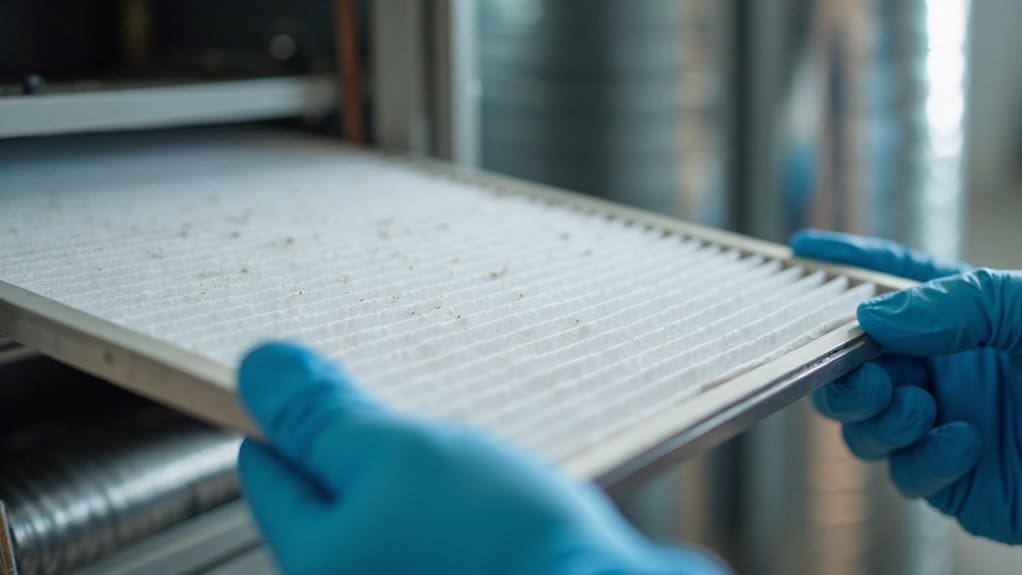
You’ll need to establish a monthly inspection routine to examine your filters for dirt, discoloration, and airflow restrictions. Clean reusable filters with gentle vacuuming or warm water rinsing every 1-2 months, ensuring they’re completely dry before reinstallation. Replace disposable filters when 50-75% of surface area shows debris accumulation, using manufacturer-specified MERV ratings. Keep essential tools like soft-bristle brushes, vacuum attachments, and compressed air canisters readily available. Following these practices can reduce energy costs by up to 15% while there’s much more to optimizing your system’s performance.
Key Takeaways
- Conduct monthly visual inspections to check for dirt accumulation, discoloration, or physical damage on filter surfaces.
- Replace filters when 50-75% of surface area shows debris buildup or airflow measurements indicate restrictions.
- Clean reusable filters every 1-2 months with gentle vacuuming or warm water, ensuring complete dryness before reinstallation.
- Use manufacturer-specified filter types and MERV ratings to maintain optimal system performance and efficiency.
- Keep maintenance records documenting filter condition, installation dates, and replacement schedules for proper system care.
Understanding Different Types of Air Filtration Systems
When selecting an air filtration system for your facility, you’ll encounter several distinct types designed for specific particle sizes and applications. Basic fiberglass air filters with MERV 1-4 ratings capture large particles and provide cost-effective solutions for standard HVAC systems. Pleated filters, constructed from cotton, polyester, or paper materials, offer increased surface area for enhanced particle capture compared to standard options.
For superior indoor air quality, HEPA filters represent the gold standard in air purification, trapping extremely small particles down to 0.3 microns with exceptional efficiency. Clean room environments typically require ULPA filters, which capture particles as small as 0.12 microns.
You’ll also find mechanical and electronic filtration systems that use different capture methods – physical barriers or static electricity attraction. Understanding these distinctions helps you choose appropriate systems for your specific needs and guarantees effective filter maintenance strategies that optimize performance across your facility’s air filtration infrastructure.
Essential Tools and Supplies for Maintenance Tasks
Proper maintenance of your air filtration system requires specific tools and supplies to ascertain thorough cleaning and peak performance. You’ll need a soft-bristle brush or microfiber cloth to safely clean filters without damaging delicate materials. A soft brush attachment works excellently for removing surface debris.
Your vacuum cleaner with hose attachment becomes invaluable for extracting accumulated dust from system components. For stubborn particulates in tight spaces, compressed air canisters effectively blow out fine debris that brushes can’t reach.
Essential hand tools include screwdrivers, pliers, and wrenches for accessing internal components and disassembling parts during deep cleaning sessions. Different screw types and sizes require various screwdriver heads, so maintain a complete set.
A digital multimeter helps verify electrical connections and system operation after maintenance. This tool affirms your filtration system runs efficiently and safely. Having these supplies readily available streamlines maintenance tasks and prevents system downtime while searching for appropriate tools.
Monthly Filter Inspection and Assessment Procedures
Monthly filter inspections form the cornerstone of effective air filtration system maintenance, requiring systematic evaluation to identify performance issues before they jeopardize air quality. You’ll need to establish a consistent routine that follows manufacturers recommendations and incorporates a comprehensive maintenance checklist.
During your monthly assessment, focus on these critical inspection points:
- Visual examination – Check for visible dirt accumulation, discoloration, or physical damage to the HEPA filter housing and seals
- Airflow measurement – Monitor pressure differentials and air velocity to detect restrictions caused by dirty filters
- Documentation review – Record filter condition, installation dates, and performance metrics for tracking replacement schedules
Regular maintenance prevents costly system failures and maintains indoor air quality standards. You should replace filters immediately if they show excessive contamination or reduced airflow capacity. This proactive approach will guarantee optimal performance while extending your system’s operational lifespan and protecting occupant health through consistent air purification.
Proper Cleaning Techniques for Reusable Filters
Reusable filters require specific cleaning methods that differ markedly from standard disposal procedures, making proper technique essential for maintaining both filter integrity and system performance.
Clean your reusable air filters every 1-2 months to prevent dust accumulation. You’ll want to gently vacuum the surface or rinse with warm water—never use abrasive cleaners or fully submerge the filter, as this damages the media and reduces effectiveness.
After cleaning, guarantee your filter’s completely dry before reinstalling. Moisture entering your HVAC system can cause serious damage and create ideal conditions for mold growth. This drying step is indispensable for proper maintenance.
Always follow manufacturer instructions when cleaning reusable filters. Each type has specific requirements that, when followed correctly, extend the filter’s lifespan and maintain supreme airflow throughout your system.
Regular inspection and proper cleaning techniques keep your air filtration system running efficiently while protecting your investment in reusable technology.
Filter Replacement Schedule and Best Practices
While reusable filters benefit from regular cleaning, disposable filters follow a different maintenance approach that focuses on timely replacement rather than restoration. Your HVAC systems require fresh air filters every 1-3 months to maintain peak energy efficiency and equipment longevity.
Follow these essential maintenance tips for ideal filter replacement:
- Inspect regularly – Check filters monthly for dirt buildup, replacing when 50-75% of surface area shows debris accumulation
- Use manufacturer specifications – Install only the recommended filter type and MERV rating specified in your owner’s manual
- Monitor usage patterns – Heavy-use environments may require more frequent replacement than standard schedules suggest
Proper filter replacement can reduce your energy costs by up to 15% while extending HVAC equipment lifespan. Don’t rely solely on calendar dates—visual inspection reveals when filters need changing. Your owner’s manual contains model-specific guidelines that’ll help you establish the perfect replacement schedule for your particular system’s needs.
Motor and Blower Component Maintenance
Why do HVAC systems fail when their filters remain clean? Often, it’s because you’ve neglected the motor and blower components that move air through those filters. These hardworking parts require regular attention to prevent costly breakdowns.
Start by inspecting your motor and blower for wear, dirt accumulations, or damage that could cause overheating and fire hazards. Clean enclosed motors using an air jet while wearing eye protection, focusing on removing debris around vent openings.
During your annual blower assembly cleaning, check the tightness of the blower wheel set screw. Always disconnect power before examining wiring for security and proper insulation – this step’s pivotal for safe maintenance.
Don’t forget lubrication. Consult your motor specifications for proper re-oiling instructions to keep bearing motors running smoothly. Regular motor and blower maintenance guarantees your HVAC system moves air efficiently through clean filters, maximizing performance and extending equipment life.
Ductwork and Ventilation System Care
Most HVAC efficiency problems stem from overlooked ductwork issues that silently drain your system’s performance. Your ventilation system requires regular attention to maintain ideal indoor air quality and energy efficiency.
Start by inspecting your ductwork monthly for visible leaks, damage, or obstructions. Clean grilles, registers, and diffusers regularly to prevent dust buildup that compromises your Clean Air delivery. Seal any gaps using mastic sealant or foil-backed tape to stop conditioned air from escaping.
Consider these upgrade opportunities:
- Insulated ductwork – Improves thermal efficiency and prevents condensation-related mold growth
- Professional cleaning – Schedule every 3-5 years to remove accumulated contaminants from your entire network
- Component replacement – Upgrade damaged sections that can’t be effectively sealed
Your HVAC systems work harder when ductwork problems persist. Remember, your filters can only do so much if your ventilation system isn’t properly maintained. Regular ductwork care guarantees maximum efficiency and cleaner indoor air throughout your home.
UV Light and Electronic Component Servicing
Although UV light and electronic components operate behind the scenes, they’re critical elements that demand your attention for ideal air purification performance. Your UV light bulbs typically last 1-3 years and need replacement during routine HVAC maintenance. Don’t wait until they burn out completely—schedule replacements proactively to sustain consistent air purification.
Your HVAC unit’s electrical components, including motors and circuit boards, require regular inspection to catch potential issues early. You’ll want to check these during standard HVAC systems maintenance visits. Unlike filters use, which you can handle yourself, electronic component repairs demand professional help. Licensed technicians have the expertise to safely service these sensitive parts without compromising your system’s integrity.
Neglecting UV light and electronic maintenance reduces your air purification efficiency and can trigger costly system failures. Regular professional servicing maximizes your filtration system’s longevity and guarantees all specialized components work together effectively for optimal indoor air quality.
Troubleshooting Common Performance Issues
When your air filtration system starts acting up, you’ll notice telltale signs that demand immediate attention. These performance issues can greatly impact your home’s air quality and system efficiency.
Start by addressing the most common culprits:
- Reduced airflow – Check for clogged filters that restrict air movement through your HVAC system and replace them immediately
- Unusual noises – Inspect the motor and blower components for signs of wear or damage that could indicate mechanical failure
- Inefficient operation – Ensure all system components receive proper maintenance to maintain prime performance
Don’t overlook your ductwork during troubleshooting. Leaks can dramatically reduce your air filtration system’s performance, so inspect and seal any breaches you discover. If these basic maintenance steps don’t resolve the issues, it’s time to consult an HVAC professional. They’ll diagnose complex problems that routine maintenance can’t address, safeguarding your system continues protecting your indoor air quality effectively.
When to Contact Professional HVAC Technicians
Professional HVAC technicians become necessary partners in maintaining your air filtration system’s ideal performance. When your maintenance team encounters complex issues beyond their expertise, it’s time to call us professionals. Make sure you contact HVAC specialists when facility management software indicates performance problems or when your team lacks specific knowledge for repairs.
Depending on the type of system malfunction, professional intervention becomes vital. You can’t always use a vacuum cleaner or basic tools to resolve sophisticated heating and air complications. HVAC professionals bring specialized diagnostic equipment and expertise that your maintenance staff may not possess.
Your whole-home air filtration system requires professional attention when performance drops considerably or when complex mechanical failures occur. Robust facility management software helps identify these critical moments by monitoring system efficiency and alerting you when professional assistance is needed. Consulting HVAC experts ensures your air filtration system continues operating at peak efficiency while maintaining perfect indoor air quality throughout your facility.
Frequently Asked Questions
What Maintenance Task Should Be Carried Out on Filters?
You should establish filter cleaning schedules every 1-3 months, monitor filter condition regularly, evaluate filter performance, consider filter replacement intervals, plan filter upgrade considerations when needed, and use proper filter disposal methods.
What Are the Two Steps to Install a New Air Filter During Maintenance?
Ironically, “installing” involves removing first. You’ll extract the old filter by checking replacement indicators, then slide in your new one, ensuring size compatibility. Don’t forget monitoring performance and considering lifespan for your replacement schedule.
What Maintenance Does an Air Purifier Need?
You’ll need regular filter cleaning schedule maintenance, checking filter replacement frequency, conducting filter quality inspections, performing fan motor maintenance, monitoring airflow obstruction, and tracking air quality monitoring to keep your purifier running efficiently.
How to Maintain Air Filtration?
You’ll maintain air filtration by establishing filter inspection intervals, planning replacement schedules, monitoring energy consumption, detecting airflow obstructions, optimizing maintenance costs, and using proper filter disposal methods to guarantee peak system performance year-round.
Conclusion
Your air filtration system is the silent guardian of your home’s atmosphere, standing watch like a steadfast sentinel. You’ve armed yourself with the knowledge to keep this protector strong—from filter changes to professional consultations. Don’t let neglect become the chink in your armor. Stay vigilant with regular maintenance, and your invisible shield will continue filtering life’s impurities, ensuring every breath you take is clean, pure, and healthy for years ahead.