
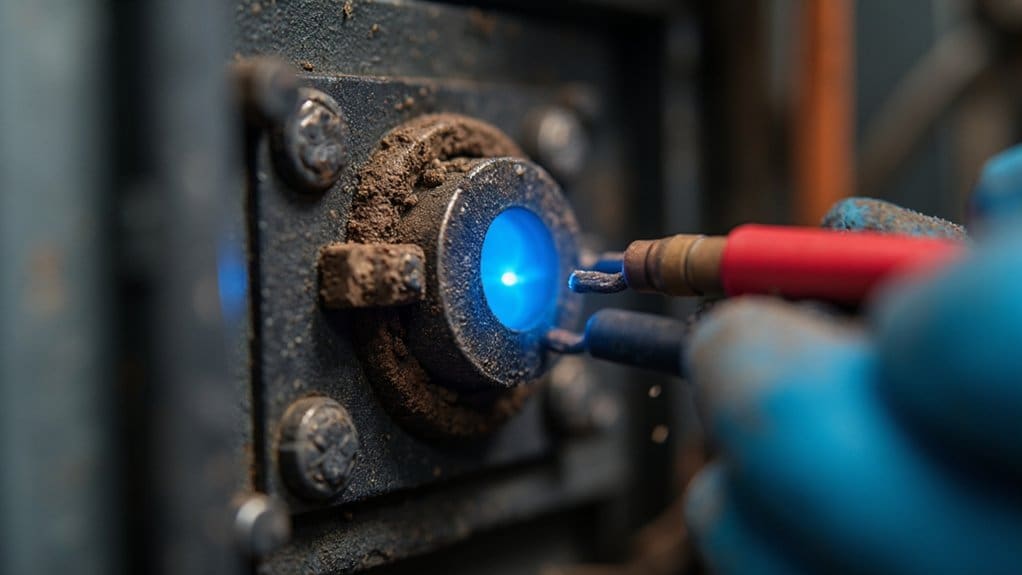
When your furnace pilot light keeps going out, you’re likely dealing with a dirty orifice, faulty thermocouple, or airflow issues causing drafts. Start by turning off the gas supply, waiting 3-5 minutes, then carefully relight following your owner’s manual instructions. If you smell gas, see yellow flames instead of blue, or the pilot won’t stay lit after multiple attempts, don’t attempt further repairs yourself. Professional help and proper maintenance techniques can solve these persistent issues permanently.
Key Takeaways
- Clean clogged pilot light orifice and thermocouple to restore proper gas flow and flame detection.
- Turn gas valve to pilot, press starter button, hold for 30 seconds before switching to on.
- Check for drafts from leaky ductwork that can extinguish flames and address ventilation issues.
- Replace faulty thermocouple if pilot light won’t stay lit after multiple relighting attempts.
- Call HVAC professional immediately for gas odors, yellow flames, or repeated pilot light failures.
What Is a Pilot Light and How Does It Work?
When you fire up your gas furnace, a small but essential component called the pilot light serves as the ignition source for the entire heating system. This perpetual flame burns continuously, ready to ignite the main gas burners when your thermostat calls for heat.
The pilot light operates through a simple mechanism. Gas flows through a dedicated valve to create a small, steady flame. A thermocouple, positioned near the flame, generates electrical current when heated. This current keeps the gas valve open, maintaining the pilot light’s operation. If the flame goes out, the thermocouple cools, closing the valve as a safety measure.
When your furnace needs to heat air, the main gas valve opens, allowing gas to flow to the burners. The pilot light ignites this gas, creating the larger flames that heat your home’s air supply.
While common in older systems, pilot lights require regular maintenance and are increasingly being replaced by electronic ignition systems in modern furnaces. Professional technicians can address most pilot light issues safely.
Common Causes Why Your Pilot Light Goes Out
Understanding how your pilot light works helps you identify why it might suddenly extinguish. Several factors can cause your pilot light to go out repeatedly, creating frustrating pilot light problems.
A dirty or clogged pilot light orifice blocks proper gas flow, causing an unstable pilot light flame. When debris accumulates, your pilot light keeps going out because it can’t maintain consistent combustion.
Your thermocouple plays an essential role in safety by detecting flame presence. Over time, this component deteriorates, sending false signals to the gas valve that shut off your gas supply unnecessarily.
Drafts from leaky ductwork or inadequate return air create airflow issues that extinguish flames. Even minor air currents can cause your pilot light going out problems.
Watch for warning signs like flickering flames or when your flame is yellow instead of blue. These visual cues indicate underlying issues that’ll cause your pilot light to go out if left unaddressed.
How to Safely Relight Your Furnace Pilot Light
Before attempting to relight your pilot light, you must prioritize safety by turning off your furnace’s gas supply and allowing 3-5 minutes for any residual gas to clear from the housing. This prevents dangerous gas accumulation during furnace repair procedures.
Next, locate your gas valves and control knob. Turn the knob to the pilot setting, then press the red starter button to restore gas flow and ignite the pilot light flame. Hold this safety device for 30 seconds, allowing the thermocouple to heat up properly before switching to the on position.
Monitor the flame to guarantee it remains stable and doesn’t extinguish. If problems persist during furnace maintenance, consult your owner’s manual for model-specific instructions. Complex issues may require an HVAC professional‘s expertise to diagnose thermocouple malfunctions or gas valve problems safely and effectively.
When to Call a Professional for Pilot Light Repairs
Although basic pilot light relighting falls within most homeowners’ capabilities, certain situations demand professional intervention to safeguard your safety and prevent costly damage.
You should contact a professional immediately if you smell gas around your furnace or detect signs of carbon monoxide exposure like headaches or dizziness. A trained HVAC technician must handle these emergencies. Additionally, schedule a service call when your pilot light won’t stay lit after multiple attempts, indicating a faulty pilot assembly or thermocouple.
Professional HVAC experts should address yellow or orange flames instead of blue, unusual sounds during operation, or visible corrosion around gas connections. If your pilot light repeatedly goes out within days of relighting, don’t attempt further repairs yourself.
Contact us or another qualified service provider when dealing with gas line issues, ventilation problems, or unfamiliar furnace components. Schedule maintenance annually to prevent these problems and achieve optimal performance.
Preventive Maintenance Tips to Keep Your Pilot Light Working
Regular maintenance keeps your pilot light functioning reliably and extends your furnace’s lifespan while preventing costly emergency repairs. You’ll save money and avoid unexpected breakdowns by following these essential maintenance steps.
Perform these critical tasks twice a year to guarantee pilot light issues:
- Replace your air filter regularly – A clogged filter restricts airflow and causes your system to work harder, potentially affecting pilot light performance
- Inspect the thermocouple for dirt buildup – When your thermocouple is dirty, it can’t detect the pilot flame properly, causing shutdowns
- Clear debris from near your furnace – Remove any items, dust, or obstructions that could interfere with proper ventilation
Check your owner’s manual for specific maintenance schedules and procedures. Clean the pilot light assembly gently with a soft brush to remove dust accumulation. These simple steps help your pilot light stay lit consistently and warrant your heating system’s working properly throughout the heating season.
Frequently Asked Questions
How Do You Fix a Pilot Light That Keeps Going Out?
You’ll need pilot light maintenance including safety valve inspection, sensor alignment adjustment, and checking for air flow obstructions. Also examine gas pressure regulation, thermostat compatibility, and perform ignition system diagnostics for reliable operation.
Can You Manually Light a Gas Furnace With Electronic Ignition?
Picture your furnace’s cold, silent chamber—you can’t manually light electronic ignition systems. Instead, try electronic ignition reset, gas valve troubleshooting, thermostat compatibility checks, igniter replacement, flame sensor cleaning, or limit switch diagnostics for proper operation.
How to Tell if a Thermocouple Is Bad on a Furnace?
You’ll notice thermocouple diagnostic signs like pilot lights that won’t stay lit or flicker yellow. Use thermocouple testing procedures with a multimeter to check millivolt output, or consider thermocouple replacement cost versus professional thermocouple inspection.
How to Fix No Pilot Light on Furnace?
Don’t let darkness reign—check your thermostat settings, guarantee proper air ventilation, clean dirty pilot assembly, verify sufficient gas supply, inspect for blocked gas lines, examine sensor component failure, and address electronic ignition issues through proper furnace maintenance.
Conclusion
You might think pilot light issues aren’t worth the hassle, but don’t ignore them. A faulty pilot light can lead to dangerous gas leaks or carbon monoxide buildup in your home. While you can handle basic relighting, you shouldn’t hesitate to call a professional when you’re unsure. Regular maintenance saves you money and keeps your family safe. Your furnace’s pilot light is a small component with big safety implications—treat it seriously.