
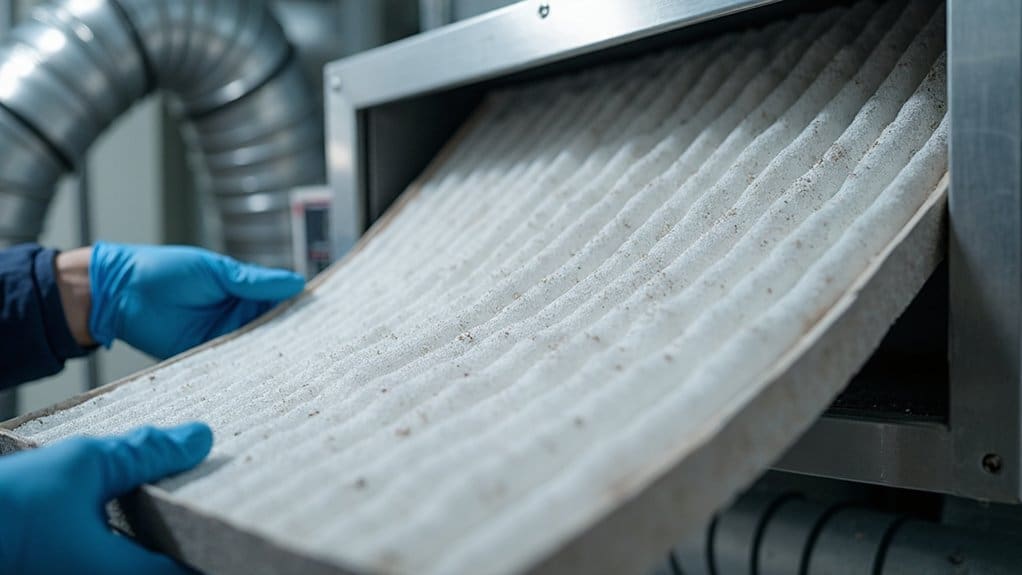
When you repair your air filtration system, you’ll dramatically improve your indoor air quality by restoring your filters’ ability to capture 95% of harmful 0.3-micron particles, including allergens, bacteria, and pollutants. Replacing clogged filters, sealing ductwork leaks, and upgrading to higher MERV-rated filters reduces respiratory issues while boosting your HVAC system’s efficiency by up to 15%. Professional maintenance can enhance your annual air quality by 60%, creating a healthier home environment for your family to enjoy year-round.
Key Takeaways
- Repairing clogged or damaged filters restores proper airflow and removes up to 95% of harmful particles from indoor air.
- Fixing leaky ductwork prevents unfiltered air from bypassing the filtration system and contaminating clean indoor spaces.
- Upgrading to higher MERV-rated filters during repairs captures microscopic contaminants like bacteria, viruses, and allergens more effectively.
- Professional filter maintenance reduces respiratory issues, allergies, and exposure to airborne chemicals that compromise health.
- Proper filtration system repairs improve energy efficiency by 15% while extending HVAC equipment lifespan by 30%.
Understanding the Connection Between Filter Performance and Air Quality
Your home’s air filtration system serves as the first line of defense against microscopic contaminants that constantly circulate through your living space. When your HVAC system’s filters function properly, they trap dust, pollen, and pet dander before these air contaminants can compromise your indoor air quality. HEPA filters excel at this task, capturing 99.97% of particles as small as 0.3 microns through superior air purification technology.
However, when filter performance deteriorates, these pollutants recirculate freely throughout your home. Clogged or damaged filters can’t provide adequate air filtration, allowing allergens to trigger respiratory issues in sensitive individuals. Understanding MERV ratings helps you select filters that match your air quality needs—higher ratings mean better contaminant removal.
The connection between filter performance and air quality is direct: effective filters equal cleaner air, while compromised filters equal contaminated environments. Regular filter maintenance guarantees your system continues protecting your family’s health through consistent air purification.
Common Air Filtration System Problems That Compromise Indoor Air
While maintaining proper filter performance is important, several common problems can sabotage your air filtration system’s effectiveness and leave your indoor air quality compromised. Clogged or dirty filters create the most frequent issues, restricting airflow and reducing your HVAC system’s ability to capture airborne particles effectively. This leads to poor indoor air quality as dust, pollen, and other contaminants circulate freely.
Damaged ductwork presents another serious concern. Leaky ducts allow unfiltered air to bypass your air filtration systems entirely, undermining air purification efforts and contributing to indoor air pollution. Outdated or incorrectly sized filters can’t trap smaller particles, while malfunctioning fans or motors disrupt proper circulation and HVAC efficiency.
Neglecting regular filter maintenance compounds these problems. Without timely replacements, filters become oversaturated with allergens and debris, transforming from air quality solutions into sources of contamination that compromise your home’s healthy environment.
Health Benefits of Repairing Damaged Air Filters
When air filters become damaged or clogged, they can’t effectively capture harmful pollutants like dust mites, pollen, mold spores, and bacteria that trigger respiratory problems. Repairing your air filtration systems delivers immediate health improvements by restoring proper airborne contaminants removal.
You’ll experience these significant health benefits when you maintain your air filters:
- Reduced respiratory issues – Clean filters eliminate asthma and allergy triggers, allowing you to breathe easier and sleep better throughout the night.
- Lower infection risk – Properly functioning filters capture viruses and bacteria, reducing airborne transmission of infectious diseases in your home.
- Enhanced cognitive function – Improved indoor air quality boosts your productivity, concentration, and overall mental performance during daily activities.
- Decreased chemical exposure – Regular filter maintenance prevents volatile organic compounds from circulating, protecting you from harmful off-gassing chemicals.
Upgrading to HEPA filters or adding air purifiers accelerates air quality improvement, creating healthier living environments for your family.
Types of Filter Repairs That Enhance Pollutant Removal
Because different filtration components require specific repair approaches, understanding which repairs target particular pollutants helps you prioritize maintenance tasks for maximum air quality improvement.
Replacing worn air filters directly addresses particulate matter like dust and pollen that compromise indoor air quality. When you clean or replace clogged filters, you’ll restore proper airflow through your HVAC systems while optimizing filtration performance.
Upgrading to higher MERV-rated filters during repairs considerably enhances removal of microscopic contaminants. These advanced filters capture bacteria and viruses along with mold spores that standard filters miss.
Electronic air cleaner repairs focus on ionizer and UV components that neutralize biological pollutants. When you fix these systems, you’ll improve their ability to inactivate harmful microorganisms.
Sealing air leaks in ductwork prevents the most critical filtration bypass. Unfiltered air entering through damaged ducts allows pollutants to recirculate, undermining your entire system’s effectiveness regardless of filter quality.
Professional Maintenance Versus DIY Filter Repairs
After identifying which repairs your filtration system needs, you’ll face the decision of handling the work yourself or hiring professionals. While you can replace basic filters independently, complex repairs require an HVAC professional’s expertise.
DIY maintenance works well for routine tasks, but HVAC tech knowledge becomes vital for specialized filters and system diagnostics. Every filter replacement must follow manufacturer specifications to sustain good air quality standards.
Consider these factors when deciding:
- Simple replacements – You can handle standard filter swaps per manufacturer guidelines
- Complex repairs – HVAC maintenance professionals should address motor issues, ductwork problems, or electronic components
- Right filters – An HVAC tech guarantees you’re using appropriate filter types for your specific system
- Best practices – Professionals implement proper installation techniques that maximize efficiency
Long-term Impact of Proper Filter System Maintenance on Home Environment
Why does consistent filter maintenance matter beyond immediate air quality improvements? Proper filter maintenance creates lasting benefits that transform your home environment over years. When you regularly replace air filters every 1-3 months, you’re extending your HVAC systems’ lifespan by up to 30% while reducing energy costs by 15%. This sustained approach prevents harmful buildup on critical components.
Your indoor air quality improves dramatically through consistent air filtration practices. Upgrading to higher MERV rating filters captures 95% of airborne particles as small as 0.3 microns, providing essential protection for allergy and asthma sufferers. Annual professional maintenance enhances air quality by 60% while preventing dangerous mold and bacteria growth in ductwork.
The cumulative effect means you’ll breathe cleaner air containing fewer dust, pollen, and pet dander particles. Your HVAC systems operate more efficiently, your family experiences fewer respiratory issues, and you’ll save money on both energy bills and equipment replacement costs through proper filter maintenance habits.
Frequently Asked Questions
Do Air Filters Actually Improve Air Quality?
Yes, you’ll see real improvements when filters capture particulates and reduce allergens effectively. Proper filter maintenance and regular replacement maximize filter effectiveness, extending filter lifespan while boosting energy efficiency and overall system performance.
How to Improve Indoor Air Quality With Your HVAC System?
You’ll improve indoor air quality through regular filter replacement, proper ventilation maintenance, and ductwork cleaning process. Consider air purifier installation, humidity control strategies, and professional inspections importance for clean air circulation throughout your home.
What Are Three Strategies to Improve Indoor Air Quality?
Like gardening for your lungs, you’ll improve air quality through filter maintenance strategies, humidity control measures, and air duct cleaning techniques. These pollutant identification practices and ventilation optimization approaches create healthier breathing spaces.
What Is a Filter’s Primary Purpose Is to Protect Indoor Air Quality?
Your filter’s primary purpose involves filter particle capture mechanisms that protect indoor air quality through proper filter material composition, maintaining filter efficiency, and following filter maintenance schedules to prevent filter clogging indicators from compromising performance.
Conclusion
You’ll breathe cleaner air when you maintain your filtration system properly. Consider Sarah’s experience: after repairing her clogged HEPA filters and sealing ductwork leaks, her family’s allergy symptoms decreased by 60% within two weeks. You can’t afford to ignore damaged filters that allow pollutants to circulate freely. Whether you choose professional maintenance or tackle simple repairs yourself, you’re investing in your family’s long-term health and comfort.