
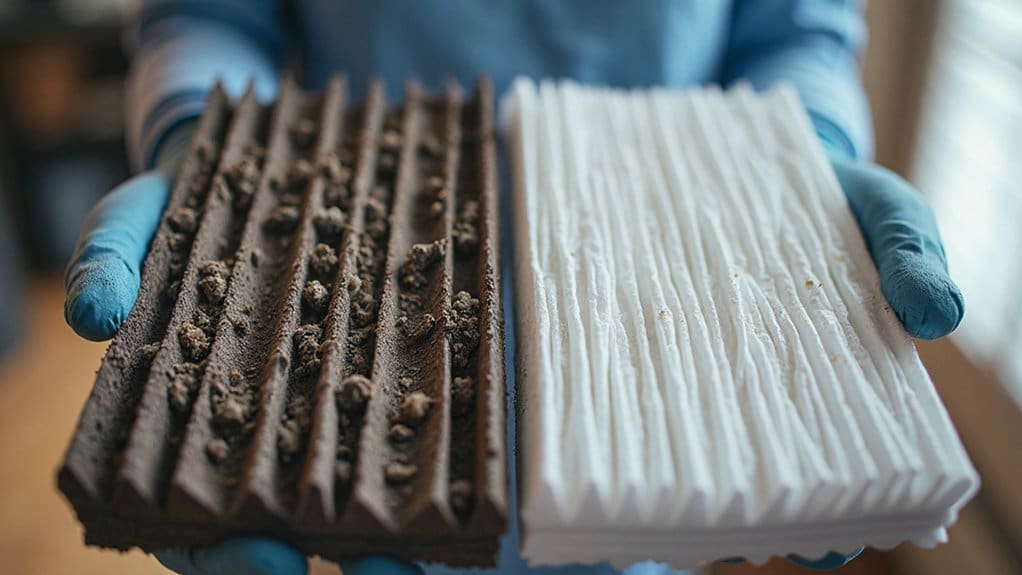
You should replace your air conditioner filter every 30-90 days depending on the filter type, with fiberglass filters needing monthly changes and pleated filters lasting 60-90 days. Your replacement frequency depends on home size, outdoor air quality, pets, and allergies. A clogged filter reduces efficiency, increases energy bills, and can cause costly system damage. Watch for visible dirt buildup, reduced airflow, worsening allergies, or musty odors as signs you need immediate replacement. The specifics below will help you optimize your maintenance schedule.
Key Takeaways
- Fiberglass filters need replacement every 30 days, while pleated filters last 60-90 days under normal conditions.
- Clogged filters decrease HVAC efficiency, increase energy bills, and can lead to costly component failures.
- Homes with pets, poor outdoor air quality, or allergy sufferers require more frequent filter changes.
- Replace filters immediately when you notice visible dirt buildup, reduced airflow, or musty odors from vents.
- Regular filter maintenance improves indoor air quality, extends system lifespan, and ensures optimal HVAC performance.
Why Air Filter Maintenance Is Critical for Your AC System
Most homeowners don’t realize their air conditioner’s filter serves as the first line of defense for their entire HVAC system. When you neglect filter replacement, you’re compromising your system’s ability to function properly. A clogged filter forces your HVAC system to work harder, making it less efficient and driving up your energy bills dramatically.
Your filter’s primary job involves trapping particles like dust, pollen, and pet dander before they circulate throughout your home. Without regular HVAC maintenance, these contaminants accumulate, degrading your indoor air quality and potentially triggering respiratory conditions in sensitive family members.
A dirty filter also restricts airflow, preventing your system running at ideal performance. This strain can lead to premature component failure and costly repairs. By maintaining clean air filters, you’ll guarantee better indoor air quality, lower energy costs, and extend your system’s lifespan while protecting your family’s health.
General Guidelines for Air Filter Replacement Frequency
While the previous section established why filter maintenance matters, determining how often you should replace your air filter depends on several key factors. Different air filters have varying lifespans, and your specific circumstances affect when you’ll need to change your AC filter.
- Fiberglass filters – Replace every 30 days for excellent HVAC systems performance
- Pleated filters – Last 60 to 90 days under normal conditions
- High efficiency filters – Need replacement every 3 to 6 months
- Specialty filters – Follow manufacturer recommendations for specific replacement intervals
Your home size greatly impacts how frequently you’ll change your filter. Larger homes circulate more air, requiring more frequent replacements. If you have pets, pet dander accumulates faster, meaning you’ll need to change filters more often than the standard recommendations suggest.
Key Factors That Determine How Often to Change Your Filter
Understanding the standard replacement schedules provides a foundation, but your specific situation determines the actual frequency needed for your home. Your heating and cooling system’s HVAC air filter requirements depend on several key factors that affect how quickly filters become dirty and clogged.
Home size substantially impacts filter life. Larger homes with extensive air ducts experience greater air circulation, meaning you’ll likely need changing your filter every 30-60 days instead of the standard 90-day schedule. Poor outdoor air quality from smoke or dust accelerates filter contamination, requiring more frequent filter changes.
Pet owners should inspect filters monthly since pet hair and dander quickly clog filtration media. It’s a good idea to replace filters more often when you notice excessive buildup. Allergy sufferers benefit from frequent filter changes to guarantee new air circulates properly through air conditioners and heating systems, maintaining ideal indoor air quality for your furnace or air conditioner.
Warning Signs Your AC Filter Needs Immediate Replacement
Several obvious indicators signal when you can’t wait for the scheduled replacement date and must change your AC filter immediately.
When you notice these warning signs, it’s time to replace your filter regardless of your maintenance schedule:
- Visible dirt accumulation – If you see dust covering the filter surface or clogging the mesh, you need to change it now. A dirty filter can’t improve airflow or trap larger particles effectively.
- Reduced air circulation – When your heating or cooling system struggles to push air through vents, consider changing your filter immediately for better performance.
- Allergy symptoms worsen – Increased sneezing, coughing, or respiratory issues often indicate your filter isn’t capturing mold spores and allergens properly.
- Musty odors – Strange smells from your vents suggest it’s time to replace the old filter with a new filter to restore clean air circulation.
Don’t wait when these signs appear—change your air filter immediately.
Step-by-Step Process for Changing Your AC Filter
Anyone can replace their AC filter in just a few minutes with the right approach and basic safety precautions. Start by turning off your system at the thermostat to prevent debris from circulating during the process.
Locate your air handler, typically found in a closet, basement, or attic. Remove the access panel and pull out the old filter, noting its size and direction of airflow arrows. Take a photo before removal to remember proper positioning.
When changing the filter, guarantee the new one matches the exact dimensions. Insert it following the airflow direction indicated by arrows on the frame. Replace the access panel securely.
To Change Your HVAC filter effectively, establish a regular schedule. Most homeowners should determine how often to change filters based on usage and environmental factors. Standard filters need replacement every 1-3 months, though some HVAC companies recommend checking monthly.
Consider professional service if you’re uncomfortable performing this maintenance task yourself.
Best Practices for Staying on Top of Filter Maintenance
While changing your AC filter is straightforward, maintaining a consistent schedule requires strategic planning and smart habits. Best Air particulate air filters are designed to handle varying indoor conditions, but consistent service guarantees better indoor air quality.
Consider these proven strategies:
- Set calendar reminders – Schedule monthly check-ins to assess filter condition, especially if you have multiple pets that increase debris accumulation.
- Buy filters in bulk – Purchase several filters at once to eliminate procurement delays when replacement time arrives.
- Monitor surface area coverage – Inspect how much of the filter’s surface area shows dirt buildup to gauge replacement timing.
- Track usage patterns – Note how Often You Should Change filters based on seasonal variations and household activities.
Filters are designed to handle specific timeframes, but your indoor environment dictates actual replacement needs. Homes with multiple pets or high dust levels require more frequent attention than manufacturer guidelines suggest.
Frequently Asked Questions
Why Do I Have to Change My AC Filter so Often?
You’ll change filters frequently because dust accumulation rate affects air flow efficiency. Poor filter material quality increases filter replacement intervals, while proper filter size guarantees ideal system performance and reduces energy consumption impact from clogged filters.
What Happens if You Don’t Change the Air Filter in an AC Unit?
Ever noticed your AC struggling to cool? When you don’t change filters, clogs cause airflow restriction and compressor strain. You’ll face energy inefficiency, dust accumulation, poor cooling, mold growth, and respiratory issues requiring increased maintenance.
How to Know if an AC Air Filter Needs Changing?
You’ll notice filter debris accumulation and reduced airflow when your filter needs changing. Check for gray discoloration, increased dust, higher energy bills, or worsening allergies. These filter replacement indicators signal it’s time for maintenance.
Will My AC Work Better if I Change the Filter?
Dirty filters can reduce airflow by 15%. You’ll notice improved cooling performance and energy efficiency after filter replacement. Regular maintenance schedules prevent dust accumulation and airflow restriction, extending system longevity while improving air quality at minimal filter replacement cost.
Conclusion
You can’t afford to ignore your AC filter maintenance any longer. A dirty filter forces your system to work 15% harder, dramatically increasing your energy bills and shortening your unit’s lifespan. By following these simple maintenance steps and staying vigilant for warning signs, you’ll save hundreds of dollars annually while breathing cleaner air. Don’t let a $10 filter cost you thousands in repairs or premature replacement.