
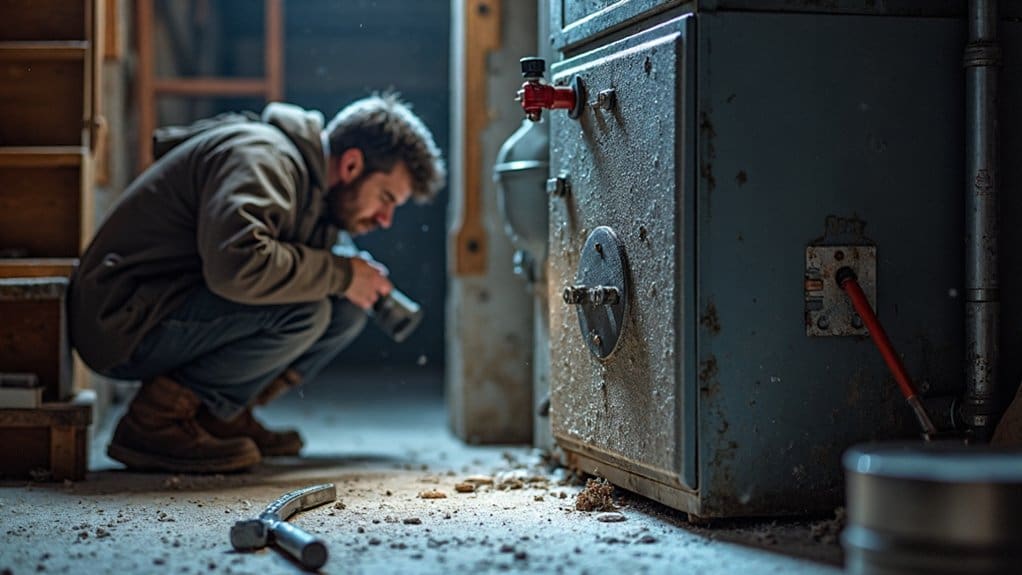
When your furnace fails unexpectedly, first check your thermostat settings, replace the air filter, and inspect your electrical panel for tripped breakers. If these troubleshooting steps don’t work, you’ll need emergency replacement if your system’s over 15-20 years old, making strange noises, or showing visible damage. Choose a licensed service with 24/7 availability and transparent pricing. Consider gas, electric, or heat pump options based on your home’s needs and discover exhaustive strategies for maneuvering this heating crisis.
Key Takeaways
- Check thermostat settings, circuit breakers, air filter, and gas valve before calling for emergency furnace replacement service.
- Replace furnaces immediately if they’re over 15-20 years old, frequently breaking down, or repair costs exceed 50% of replacement.
- Choose emergency services with 24/7 availability, licensed technicians, fast response times, and transparent pricing for urgent replacements.
- Consider gas furnaces for cost-effectiveness, electric for safety, heat pumps for efficiency, or hybrid systems for optimal performance.
- Emergency replacement is necessary for complete system failure, visible damage like cracks or rust, or strange noises during operation.
Signs Your Furnace Needs Emergency Replacement
When your furnace breaks down without warning, you’re facing more than just an inconvenience—you’re dealing with a potential safety hazard that demands immediate attention. Your HVAC system displays several critical warning signs that indicate you need professional emergency services immediately.
If your furnace suddenly stops working or refuses to turn on, don’t delay—Call a Professional for emergency furnace replacement. Strange noises like banging, popping, or grinding signal major internal damage requiring immediate action. When your heating system rapidly cycles on and off repeatedly, you’re experiencing systemic failure that demands expert intervention.
Visible rust, cracks, or physical deterioration indicate your furnace has reached its lifespan’s end. Furnaces over 15-20 years old are particularly vulnerable to sudden breakdowns. You Need Professional furnace repair services to assess whether emergency replacement is necessary to maintain your home’s safety and comfort during critical heating seasons.
Immediate Steps to Take When Your Furnace Fails
Before you panic and call for emergency replacement, take these essential troubleshooting steps that could restore your furnace’s operation and save you hundreds of dollars.
First, check your thermostat settings. Guarantee it’s set to heat mode with the temperature higher than your current room temperature. If you need to replace the thermostat batteries, do so immediately and verify all settings are correct.
Next, inspect your home’s electrical panel for tripped circuit breakers that could affect your heating system. Reset any tripped breakers and test the furnace again.
Replace a clogged air filter, as this common issue restricts airflow and causes furnace problems. For gas units, confirm the gas valve is open and the pilot light is lit.
If these steps don’t resolve the issues, then it’s time to call a professional. Emergency heating system problems often require expert diagnosis to determine whether repair or replacement is necessary.
Emergency vs. Repair: When Replacement Is the Only Option
Even after completing all troubleshooting steps, your furnace might still refuse to operate properly. When your furnace fails despite basic fixes like replace the batteries in your thermostat, you’re facing a critical decision between repair and replacement.
Consider replacement when your furnace or heating system experiences frequent breakdowns, especially if it’s over 15 years old. A complete system failure during winter means you need emergency HVAC service, but continuing repairs on an aging unit becomes financially impractical. Emergency heating repair costs can quickly exceed replacement value.
Key replacement indicators include recurring furnace breakdown issues, dramatically reduced efficiency, and repair estimates exceeding 50% of replacement cost. While regular maintenance extends furnace life, some units reach their end regardless of care. Professional emergency HVAC technicians can assess whether your system failure warrants immediate replacement, helping you avoid throwing money at a dying furnace while ensuring reliable home heating.
Choosing the Right Emergency Furnace Replacement Service
Since emergency furnace replacement can’t wait for convenient business hours, you’ll need a service provider who operates 24/7 and maintains adequate inventory for immediate installations.
When selecting Emergency Furnace Repairs specialists, evaluate these critical factors:
- 24/7 Availability – Choose contractors who respond outside normal business hours when heating emergencies strike
- Licensed Technicians – Verify they require professional certification and proper licensing for safe installations
- Complete HVAC Services – Select companies offering thorough heating solutions, not just basic repairs
- Fast Response Times – Prioritize services that can diagnose and fix problems quickly to restore comfort and safety
Don’t settle for the first company you find. Research reviews, verify licenses, and confirm they stock your furnace type. Quality emergency services will schedule an appointment promptly and provide transparent pricing upfront. When your family’s warmth depends on immediate action, call us or contact us today to confirm you’re choosing qualified professionals who’ll restore your home’s heating efficiently.
Types of Furnace Systems for Emergency Installation
Once you’ve identified a reliable emergency service provider, you’ll need to understand which furnace system works best for your immediate replacement needs. Gas furnaces remain the most popular choice for emergency heating situations due to their cost-effectiveness and widespread availability. However, if your home lacks gas supply or faces safety hazards with existing gas lines, electric furnaces provide reliable heating without complex fuel requirements.
Heat pumps offer energy-efficient solutions that keep your home warm while providing year-round comfort through both heating and cooling capabilities. Don’t let cold weather stop work on your replacement – many emergency Repair in St. Louis companies stock these versatile units.
Oil furnaces deliver high heating capacity but may complicate emergency installations. Hybrid systems combining electric and gas technologies offer flexibility, though they’re less common for urgent replacements. Your emergency service in St. Louis will help you choose the best functioning furnace option based on your home’s infrastructure and immediate heating needs.
What to Expect During Emergency Furnace Replacement
When emergency furnace replacement becomes necessary, you’ll work with skilled technicians who arrive ready to assess your current system and recommend the best replacement option for your specific situation. Unlike a standard repair, replacement involves completely removing your old unit and installing a new, energy-efficient system.
Here’s what you can expect during the process:
- Initial Assessment – Technicians evaluate why repair isn’t viable and check your home’s electrical panel for compatibility
- System Selection – You’ll receive detailed equipment specifications and costs for heating and cooling units
- Professional Installation – The new furnace is properly sized and configured, ensuring your home stays comfortable
- Final Testing – Complete system verification including Carbon Monoxide checks and airflow testing
Temporary Heating Solutions While Awaiting Replacement
While technicians work to install your new furnace, you’ll need reliable heating solutions to keep your family warm and comfortable. First, check your home’s electrical panel for a tripped breaker before your heating system completely stops working. If your furnace is set to heat but isn’t maintaining the current room temperature, inspect air filters and replace them if needed.
Use space heaters strategically in essential rooms, ensuring they’re plugged directly into outlets. Consider portable propane or kerosene heaters for larger spaces, but maintain proper ventilation to prevent carbon monoxide buildup. If you smell gas near your pilot light, evacuate immediately and call professionals.
Maximize heat retention by insulating windows with blankets or plastic sheeting. Layer clothing and use extra blankets for warmth. Utilize fireplaces or wood stoves if available. Remember to change filters regularly once your new system operates to maintain efficiency and indoor air quality.
Preventing Future Furnace Emergencies Through Proper Selection
How can you avoid finding yourself in another furnace emergency situation? Making informed decisions during replacement will reduce the likelihood of future breakdowns and costly repairs.
Here’s how proper selection prevents emergencies:
- Choose appropriate sizing and efficiency ratings – An oversized or undersized unit strains components and fails prematurely when your system fails to match your home’s heating demands.
- Ensure proper ductwork design – Poor airflow creates pressure imbalances that damage your furnace and affect how efficiently it distributes heat and the temperature throughout your home.
- Verify electrical compatibility – Check your home’s electrical panel can handle the new unit’s requirements and install appropriate circuit breaker protection to prevent leaks or electrical hazards.
- Invest in maintenance plans – Professional tune-ups catch problems early before they become emergencies.
*Note: This field is for validation purposes and should be left unchanged when submitting service requests.*
Cost Considerations for Emergency Furnace Replacement
Beyond selecting the right furnace to prevent future emergencies, you’ll face considerable financial decisions when your heating system fails unexpectedly. Emergency replacements typically cost $3,000 to $10,000, with expenses higher than the current market rates due to urgency. When you’re looking for emergency heating solutions and hear strange noises from your failing system, don’t delay—these issues promptly require professional attention and can pose safety risks.
Several factors affect your costs: fuel type (gas, electric, oil), energy efficiency ratings, and installation complexity. Labor expenses greatly impact your budget, with HVAC technicians charging $50-$150 hourly. However, you can offset expenses through utility rebates and government tax credits.
If something is wrong and you need to call for help, explore financing options like low-interest loans or payment plans. These arrangements help manage unexpected costs while ensuring your home stays warm during critical repairs or replacements.
Frequently Asked Questions
How to Heat Your House When Your Furnace Breaks?
Nearly 40% of heating emergencies occur during winter’s coldest weeks. You’ll need temporary heating solutions like portable space heater usage, fireplace alternatives, or emergency furnace rental. Consider insulation upgrades and kerosene heater safety while exploring wood stove installation options.
What Is Considered a Furnace Emergency?
You’re facing a furnace emergency when there’s carbon monoxide detection, your furnace won’t turn on, unusual furnace noises occur, insufficient warm air flows, or you notice frozen furnace components creating safety concerns during sudden temperature drops.
Who to Call if Your Furnace Isn’t Working?
Picture smoke signals rising from your chimney—you’ll need HVAC technician services immediately. Contact local furnace repair companies or emergency furnace repair hotlines first. They’ll assess signs of furnace malfunction and discuss furnace replacement options if needed.
How Can I Heat My Home Without a Furnace?
You can use portable space heaters, electric blankets, or a wood stove for warmth. Consider kerosene heaters, propane heaters, or your fireplace. Electric baseboard heaters work well, and generator power helps during outages.
Conclusion
Like a phoenix rising from the ashes of your old system, you’ll emerge from this furnace emergency stronger and warmer. You’ve learned to recognize warning signs, make smart replacement decisions, and choose quality emergency services. Don’t let this experience become your furnace Waterloo—invest in proper maintenance and quality equipment. With the right preparation and professional help, you’ll never face another cold night wondering if you’ll wake up as a popsicle again.