
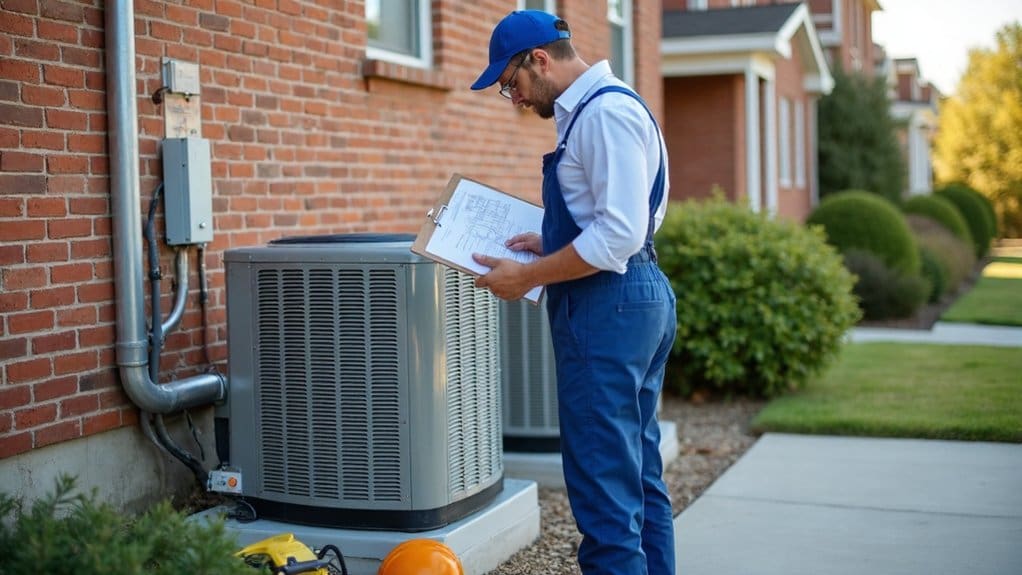
You’ll need an air conditioning installation permit from your local building department before installing a new AC system, replacing an existing unit, or making major HVAC modifications. This formal authorization safeguards your installation meets building codes, safety standards, and energy efficiency requirements. The permit process involves submitting detailed plans, paying fees ranging from $75-$300, and scheduling inspections. Working without permits can result in fines, insurance complications, and problems when selling your home. Continue for complete guidance on maneuvering this essential process.
Key Takeaways
- Most jurisdictions require permits for new AC installations, replacements, or major HVAC modifications to ensure code compliance.
- Permit applications require detailed project plans, equipment specifications, and fees typically ranging from $75-$300 depending on location.
- Licensed inspectors verify proper installation of equipment, ductwork, electrical connections, and refrigerant lines during scheduled inspections.
- Installing without permits can result in hefty fines, insurance claim denials, and complications when selling your home.
- Licensed contractors can navigate permit requirements, coordinate inspections, and ensure compliance with local building codes and regulations.
What Is an Air Conditioning Installation Permit?
When you’re planning to install or replace an air conditioning system in your home, you’ll need to obtain an air conditioning installation permit from your local authorities first. This formal authorization from local government guarantees your HVAC installation meets all building codes, safety standards, and energy efficiency requirements.
The permit process typically involves submitting detailed plans of your proposed system to code enforcement officials, paying required fees, and scheduling inspections throughout the installation. These inspections verify that contractors perform the work according to approved specifications and safety regulations.
Most jurisdictions require permits for AC installations, and skipping this step can lead to serious consequences. Working without proper permits may result in fines, project delays, and complications when you sell your home. Licensed HVAC contractors understand these requirements and can handle the permit paperwork and coordinate inspections on your behalf, ensuring your installation complies with all local regulations.
When Do You Need a Permit for AC Installation?
Where does the line fall between routine maintenance and work requiring official approval? You’ll need a permit when installing a new air conditioning system in your home, replacing your existing unit, or making major modifications to your HVAC setup. Simple filter changes or minor repairs don’t require permits, but substantial work does.
Your local building department sets specific requirements, so check with them before starting any project. These regulations guarantee your air conditioning system meets safety standards and building codes. What seems like straightforward work can become complicated without proper authorization.
Skipping the permit process isn’t worth the risk. You could face fines, project delays, and problems when selling your home later. A licensed contractor can navigate the permit requirements for you, handling necessary paperwork and coordinating inspections. They understand local regulations and can validate your air conditioning system gets installed correctly and legally from the start.
How to Obtain an AC Installation Permit
Getting an AC installation permit starts with submitting a formal application to your local building department. You’ll need a permit to install AC systems, and contractors must provide detailed project specifications and equipment data. The permit application requires technical documentation including load calculations and system diagrams for city or county authorization review.
HVAC permits typically cost between $75-$300, with fees that the homeowner pays based on project complexity and location. You should monitor the review timeline since approval varies by project scope.
Essential steps for obtaining your permit to install:
- Gather all technical documentation and equipment specifications
- Submit formal application with local and state building authorities
- Pay required permit fees upfront
- Schedule and pass rough-in inspection during installation
- Complete final inspection to verify code compliance
Skipping permits isn’t worth the risk. The final inspection verifies your installation meets mechanical, electrical, and energy codes, protecting your investment and safety.
The Role of Inspections in AC Installation
Once you’ve secured your permit and begun installation, inspections become the next critical checkpoint in your AC project. The city building inspector checks that your new HVAC system meets state building codes and manufacturer specifications. During these inspections, they’ll confirm proper installation of equipment including ductwork, refrigerant lines, and electrical connections.
The permit and inspection processes work together to guarantee your projects comply with local regulations. Most cities require permits are typically followed by mandatory inspections before you can use your system. When the inspector reviews air conditioning permits, they’re safeguarding your investment and safety.
Passing inspections is essential for final approval, insurance coverage, and future home sales documentation. Since permit fees usually cover inspection costs, you won’t pay extra unless follow-up visits are needed. Remember, HVAC installation requires professional compliance—skipping inspections can void warranties, create safety hazards, and cause complications later.
Consequences of Installing AC Without Proper Permits
Installing your AC system without proper permits can trigger a cascade of costly problems that extend far beyond the initial savings you might think you’re achieving. When code enforcement officials find unpermitted work, you’ll face hefty fines and legal consequences, even if you hired someone else to do the job. Your manufacturer’s warranty becomes void, and insurance companies will deny claims related to your unit and raise concerns about coverage.
Here are critical consequences you must understand:
- Financial penalties – Fines can cost thousands more than the original permit fees
- Insurance complications – Claims get denied, leaving you financially exposed during emergencies
- Resale roadblocks – Buyers and appraisers will check documentation, creating sale delays
- Safety risks – Work done without following due process lacks proper safeguards to make sure your seasonal energy efficiency ratio meets standards
- Contractor liability – Licensed contractors can miss important requirements without following due process, and time becomes your enemy when problems arise.
Working With Licensed Contractors for Permitted AC Work
The smartest move you can make after understanding these serious consequences is partnering with a licensed HVAC contractor who handles the entire permitting process for you. Licensed professionals know exactly when you need a permit for a new AC unit or permit to replace an existing system, ensuring your installation aligns with local codes.
However, not all HVAC contractors don’t pull permits properly. Some contractors dont pull permits to cut costs, while others may overlook requirements because contractors can miss things during busy seasons. That’s why you must verify their licensing and permit history before hiring.
Quality contractors include permit fees cover in their total quote upfront—never as surprise charges. They’ll also help with any questions about the permitting process and provide documentation proving permits were obtained.
You can double-check by visiting your local government website to confirm permits were actually pulled for your HVAC work without the proper verification could leave you vulnerable.
Permit Costs and Timeline Expectations
While working with licensed contractors eliminates much of the permitting headache, you’ll still need to budget for permit costs and plan around approval timelines. When your contractor obtains a permit from the local government issues office, expect to pay between $75 to $300 for residential projects. Permit fees are typically calculated at $8 to $15 per $1,000 of your project’s value.
The approval process varies considerably by location. Some jurisdictions require city or county permits with stringent timelines for inspections, while others are more flexible. Your inspection generally happens after your HVAC system is installed, and home inspectors may see violations if installation follows local codes improperly.
Key cost and timeline considerations:
- Commercial permits and inspections would cost more than residential ones
- Approval timeframes range from days to several weeks
- Complex projects require longer processing times
- Permit costs should be factored into your total budget
- Local office workload affects timeline expectations
Conclusion
Don’t let your AC installation become a house of cards that comes tumbling down. You’ve learned the ropes—from permits to inspections to working with licensed pros. Like crossing your t’s and dotting your i’s, following proper permitting isn’t just bureaucratic red tape; it’s your safety net. You’ll sleep better knowing you’ve done things right, and your cool comfort won’t turn into a costly nightmare down the road.