
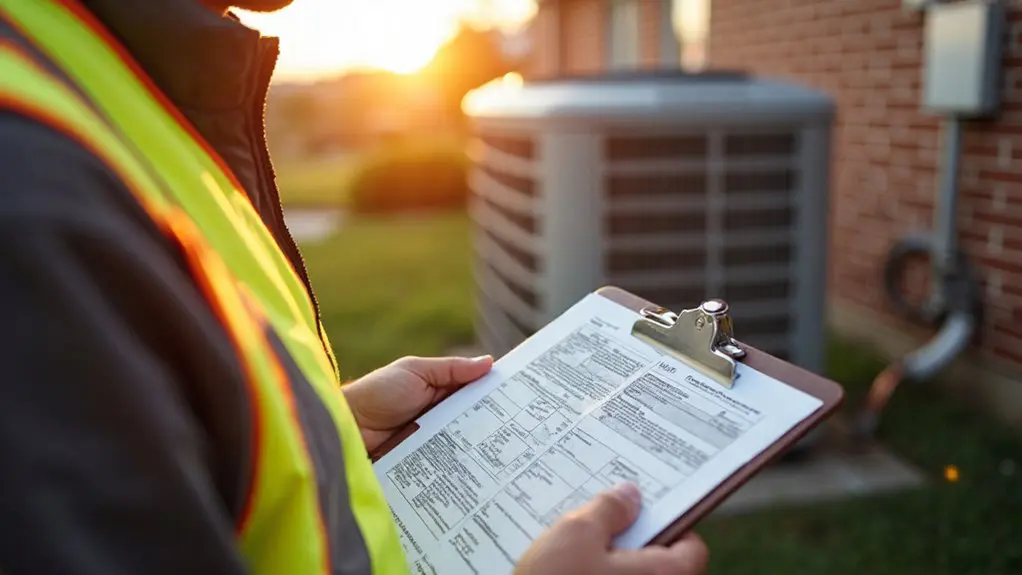
You’ll need permits for most air conditioning replacements, whether you’re swapping out a similar unit or upgrading systems entirely. Licensed HVAC contractors typically handle the paperwork, documentation, and inspection coordination on your behalf. The permitting process guarantees your installation meets local building codes and safety standards through thorough inspections. Installing without proper permits can result in hefty fines, insurance claim denials, and potential system removal requirements. Understanding these requirements will help you navigate the process smoothly.
Key Takeaways
- Major AC replacements and system upgrades require permits, while minor repairs typically don’t need regulatory approval.
- Licensed HVAC contractors handle most permit paperwork, documentation, and inspection coordination on the homeowner’s behalf.
- Permit applications require contractor licensing information, system specifications, completed forms, and applicable fees to local authorities.
- Building inspectors evaluate installation safety, code compliance, and proper component installation before approving the completed work.
- Installing without permits risks fines, insurance claim denials, required system removal, and compromised safety standards.
When Air Conditioning Replacement Permits Are Required
When you’re planning to replace your air conditioning system, you’ll typically need to obtain permits from your local municipality before beginning the work. Most cities and counties require these permits for major HVAC installations to guarantee your new system complies with local building codes and safety standards.
You’ll need a permit when you’re completely replacing your existing air conditioning unit, upgrading to a different system type, or making significant modifications to your current setup. However, minor air conditioning repair work usually doesn’t require permits.
The permitting process involves working with licensed contractors who understand the specific requirements in your area. These professionals verify your installation meets industry standards for energy efficiency and proper operation. Your local building department will review the proposed work and inspect the completed installation.
How to Apply for Your AC Replacement Permit
The permit application process for AC replacement starts with researching your local jurisdiction’s specific requirements, as these can vary enormously between cities and counties. You’ll need to identify specific permit requirements and gather essential documentation, including HVAC contractors’ licensing information and system specifications for your HVAC replacement.
When you’re ready to apply for your permit to replace your air conditioning system, complete the official application form accurately. You’ll typically need to provide contractor details, equipment specifications, and pay applicable fees. Many localities now offer online submission options, while others require in-person visits to local government offices.
Obtaining an HVAC permit guarantees your installation will comply with local codes and safety standards. The permit process runs smoothly when you avoid common mistakes like hiring unlicensed contractors or submitting incomplete information. Getting necessary permits protects your investment and guarantees your new system meets all regulatory requirements for safe operation.
Working With Licensed Contractors for Permit Applications
Licensed HVAC contractors serve as your primary partners throughout the permit application process, handling most paperwork and regulatory requirements on your behalf. These licensed professionals possess the expertise to navigate complex permitting processes while confirming your installation meets all local codes.
When selecting a local HVAC contractor, verify their credentials thoroughly. Contractors must hold valid licenses in your jurisdiction and carry appropriate insurance coverage. A trustworthy HVAC professional will automatically pull permits for your replacement project without requiring prompts from you.
Your licensed contractor handles proper documentation, submits technical specifications, and coordinates required inspections. They understand which permits your specific installation requires and can expedite approval timelines through established relationships with local authorities.
Working with licensed professionals protects you from potential code violations and guarantees compliance with safety standards. Don’t attempt DIY permit applications – let experienced contractors manage this vital step. Verify your HVAC license status through your state’s licensing board before signing any contracts.
What Happens During the Permit Inspection Process
How does the permit inspection process unfold once your HVAC contractor completes the installation? Inspectors will thoroughly evaluate your system’s safety standards and compliance with local building codes. They’ll examine the proper installation of all HVAC systems components while checking for potential hazards like gas leaks and inadequate ventilation. These inspections to ascertain your system meets all requirements for HVAC safety and local government websites often detail specific criteria inspectors follow.
To prepare, guarantee the installation area remains accessible and gather all necessary documentation. Your contractors should coordinate the inspection scheduling, as operating without a permit can result in penalties. If your system fails inspection, you’ll need to address visible issues and schedule a re-inspection to achieve compliance with local codes.
The permit for HVAC inspection process is imperative for verifying safety and code compliance. Check local regulations to understand your area’s specific requirements, as this process enhances both your safety and property’s resale value.
Consequences of Installing Air Conditioning Without Proper Permits
While proper permits and inspections protect your investment, skipping this process altogether creates serious problems that extend far beyond initial cost savings.
Installing air conditioning without permits violates local laws and can result in fines ranging from hundreds to thousands of dollars. Local authorities actively monitor construction activity, and unpermitted work often gets discovered during property sales, insurance claims, or neighbor complaints. These legal complications create costly delays and force you to retroactively obtain permits.
Your Building Department may require complete system removal if the installation doesn’t comply with local safety standards. This means paying twice—once for the original installation and again for proper, permitted work. Insurance companies frequently deny claims for damage caused by unpermitted systems, leaving you financially exposed.
Beyond financial consequences, unpermitted installations bypass essential safety inspections. Systems that don’t meet code requirements can lead to fines, electrical hazards, carbon monoxide risks, and structural damage, ultimately compromising your family’s safety while ensuring safety violations persist.
State and Local Regulations for AC Replacement Projects
Because air conditioning regulations vary greatly across different jurisdictions, you’ll need to research your specific area’s requirements before starting any replacement project. Local and state authorities establish different permitting requirements that directly impact your installation timeline and costs.
Building departments typically oversee AC replacement permits, but specific permit types and fees vary depending on local ordinances. You’ll find that some jurisdictions require permits for any HVAC work, while others only mandate them for specific system changes or electrical modifications.
Start by contacting your local building department to understand what’s required by local codes in your area. Local governments often maintain online resources detailing their local permitting processes, application forms, and fee structures. Don’t assume neighboring cities have identical requirements – each municipality sets its own standards.
Verify that your chosen contractor comprehends regulations in your area and guarantees all work meets local compliance standards before beginning installation.
Conclusion
You can’t afford to skip permits when replacing your air conditioning system. Studies show that unpermitted HVAC work causes nearly 40% of home insurance claim denials, leaving homeowners with devastating out-of-pocket costs. Don’t let your family’s comfort and financial security hang in the balance. You’ll protect your investment, guarantee safety compliance, and maintain your home’s value by following proper permitting procedures. Take the time to do it right—your future self will thank you.