
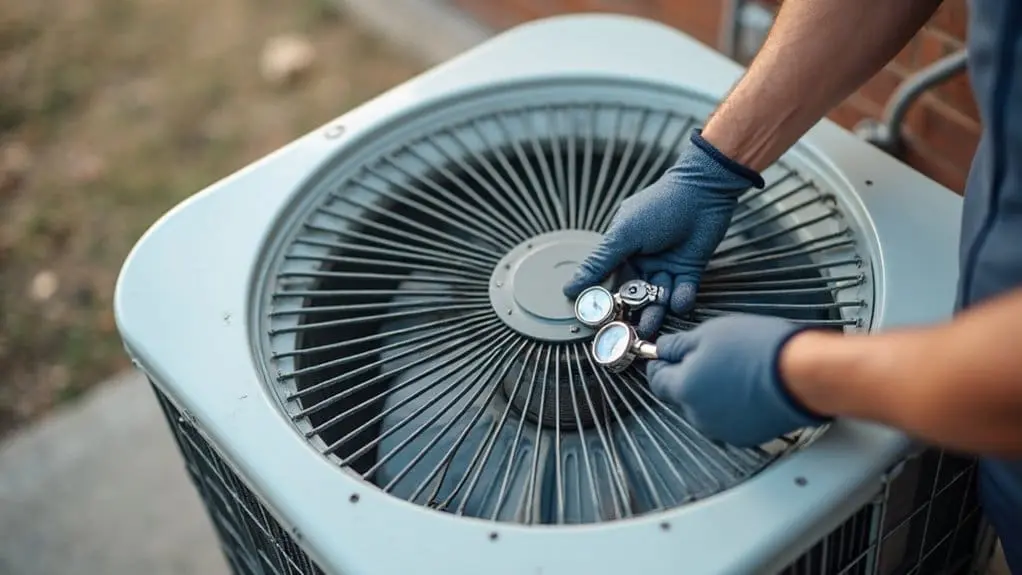
Your air conditioning warranty requires strict adherence to manufacturer-specified maintenance schedules, including annual professional inspections, regular filter replacements, and documented service records. Skipping scheduled maintenance automatically voids coverage, leaving you responsible for costly repairs that should’ve been covered. You must maintain detailed service logs from certified technicians and follow prescribed maintenance intervals exactly as outlined in your warranty terms. Understanding these contractual obligations and proper documentation procedures will help you maximize your warranty benefits and avoid expensive coverage violations.
Key Takeaways
- Annual professional HVAC maintenance and system inspections are mandatory requirements to maintain valid warranty coverage.
- Regular air filter replacements every 1-3 months prevent system damage and fulfill basic maintenance obligations.
- Detailed service logs documenting all professional maintenance activities must be maintained for successful warranty claims.
- DIY repairs or unauthorized modifications immediately void warranty coverage, requiring only certified technician services.
- Skipping scheduled maintenance tasks or failing to address persistent issues constitutes warranty violation and nullifies coverage.
Understanding Your Air Conditioning Warranty Terms and Conditions
Your air conditioning warranty serves as a contractual agreement between you and the manufacturer that defines specific coverage parameters, exclusions, and maintenance obligations you must fulfill to uphold valid protection. Most manufacturers provide 5-10 year coverage for parts and repairs resulting from manufacturing defects, but you’ll encounter strict maintenance requirements. These warranties typically mandate professional HVAC service at specified intervals, performed by qualified technicians who follow manufacturer protocols. Failure to comply with scheduled maintenance nullifies your coverage, leaving you responsible for expensive HVAC system repairs. You must maintain detailed service records documenting all maintenance activities, as manufacturers require this documentation to validate warranty claims. Understanding these terms prevents costly surprises and safeguards your warranty remains enforceable when equipment failures occur, protecting your investment in your home’s comfort system.
Essential Maintenance Tasks Required by Manufacturers
Manufacturers establish specific maintenance protocols that you must execute consistently to preserve warranty coverage and prevent system failures. HVAC warranties typically mandate annual professional maintenance performed by qualified HVAC service providers, including thorough system inspections, filter replacements, and coil cleanings. You’ll need to replace air filters every 1-3 months as routine maintenance to prevent airflow restrictions that compromise system efficiency.
Maintenance records documentation is vital for warranty claims validation. You must maintain detailed service logs showing all professional maintenance activities and repair histories. HVAC Maintenance requirements often specify particular tasks at defined intervals that warranty requirements explicitly outline. Regular maintenance prevents costly breakdowns while ensuring continued coverage protection.
Unauthorized modifications or DIY repairs will void your HVAC warranties immediately. Only certified technicians should perform maintenance procedures to maintain warranty validity and system reliability.
The Two-Party Agreement Nature of HVAC Warranties
Understanding HVAC warranties requires recognizing their fundamental structure as bilateral contracts that create specific obligations for both manufacturers and consumers. Your manufacturer commits to covering repair costs for defective components, while you’re responsible for maintaining the system according to specified guidelines. This Air conditioning warranty framework means you can’t simply install your AC system and expect coverage without fulfilling maintenance requirements.
The two-party agreement establishes clear procedures: manufacturers provide repair coverage and replacement parts, while consumers must document professional tune-ups every 12 months. When you follow these maintenance protocols, you’ll have peace of mind knowing your cooling system remains protected. This contractual structure helps you make informed decisions about AC repair investments while ensuring warranty validity through proper system care and documented maintenance compliance.
Documentation and Record Keeping for Warranty Claims
Proper documentation consistently serves as the cornerstone of successful warranty claims, transforming potential disputes into straightforward reimbursement processes. You’ll need to file detailed records of all maintenance activities, service dates, and technician certifications. Proper registration of warranty documents within specified timeframes prevents automatic coverage voidance.
Your maintenance schedule documentation must include thorough service reports from qualified technicians, proving adherence to manufacturer specifications. Store warranty terms alongside your service agreement to reference coverage limitations and requirements. When warranty claims arise, you’ll present organized maintenance records demonstrating consistent professional servicing.
Digital storage systems enable quick retrieval of maintenance documentation, while physical copies provide backup protection. Your warranty protection depends entirely on proving compliance through verifiable records, making systematic documentation essential for successful claim processing.
Common Warranty Violations That Void Coverage
Although warranty coverage provides essential protection for your air conditioning investment, specific violations can instantly nullify this safeguard and leave you financially exposed. Attempting DIY repairs while your manufacturer’s warranty remains active compromises your cooling system and renders coverage void. Skipping scheduled maintenance tasks like filter replacements or annual tune-ups violates warranty requirements, invalidating both parts and labor warranties. Installing unauthorized components or non-original parts during modifications terminates your HVAC warranty immediately. Neglecting persistent issues without professional intervention constitutes negligence, voiding Extended Warranties and standard coverage alike. Missing documentation of service records prevents you from proving compliance during claim submissions. Professional HVAC technicians guarantee maintenance tasks meet manufacturer specifications, keeping your warranty valid and protecting against unexpected breakdowns throughout the coverage period.
How Manufacturers Detect Skipped Maintenance Services
Manufacturers employ sophisticated detection methods to identify maintenance violations that void your warranty coverage. They’ll scrutinize service records and technician notes for debris buildup patterns that indicate neglected maintenance. Frequent repair claims trigger immediate investigation, as manufacturers require documentation proving you’ve followed scheduled regular maintenance protocols. When warranty issues arise, you’ll need thorough maintenance records demonstrating compliance with your maintenance plan.
Equipment modifications using unauthorized parts are easily detected during inspections and automatically void coverage. Persistent minor issues that escalate into major failures provide clear evidence of inadequate preventative care. Manufacturers track repair patterns to identify homeowners who skip maintenance requirements, leaving them responsible for full repair costs. This systematic monitoring guarantees only compliant customers retain valid warranty coverage throughout the protection period.
Professional Service Requirements for Valid Warranty Protection
Most HVAC warranties become void when you attempt repairs yourself or hire unqualified technicians to service your system. Manufacturer warranty terms and conditions explicitly require licensed professionals for installation, maintenance, and repairs. Warranties cover defects in materials and workmanship, but only when you follow proper service protocols. Your warranty that covers parts and labor becomes invalid if unauthorized technicians perform work on HVAC systems.
Licensed technicians must handle all maintenance beyond basic filter changes. You’ll need documented proof of professional service visits to validate warranty claims. Using non-authorized parts or attempting DIY repairs triggers automatic warranty denial. To avert out-of-pocket expenses, certified technicians perform all system work. Maintaining detailed service records proves compliance with manufacturer requirements, protecting your warranty coverage when equipment failures occur.
Maximizing Your Warranty Benefits Through Preventative Care
The key to maximizing your HVAC warranty benefits lies in establishing a thorough preventative maintenance program that meets manufacturer specifications. Your air conditioner and heating and cooling system require systematic care to guarantee optimal performance and preserve extended coverage. Warranties typically mandate specific maintenance intervals that you must follow to maintain manufacturer’s warranty validity.
Professional technicians help you navigate complex maintenance requirements by documenting filter replacements, coil cleaning, and refrigerant level checks. This documentation becomes essential to keep your extended warranty protection active when filing claims. Your cooling equipment’s lifespan extends drastically when you adhere to prescribed maintenance schedules, preventing minor issues from escalating into major system failures that could void coverage and result in expensive out-of-pocket repair costs.
Conclusion
You’re walking a tightrope between warranty protection and system failure. Each skipped maintenance interval cuts another strand from your safety net. Your HVAC warranty isn’t a passive shield—it’s an active contract demanding procedural compliance. Document every service call, execute manufacturer-specified protocols, and maintain professional inspection schedules. When components fail, your maintenance records become the bridge between costly replacement and covered repairs. Don’t let procedural shortcuts transform your warranty into worthless paper.