
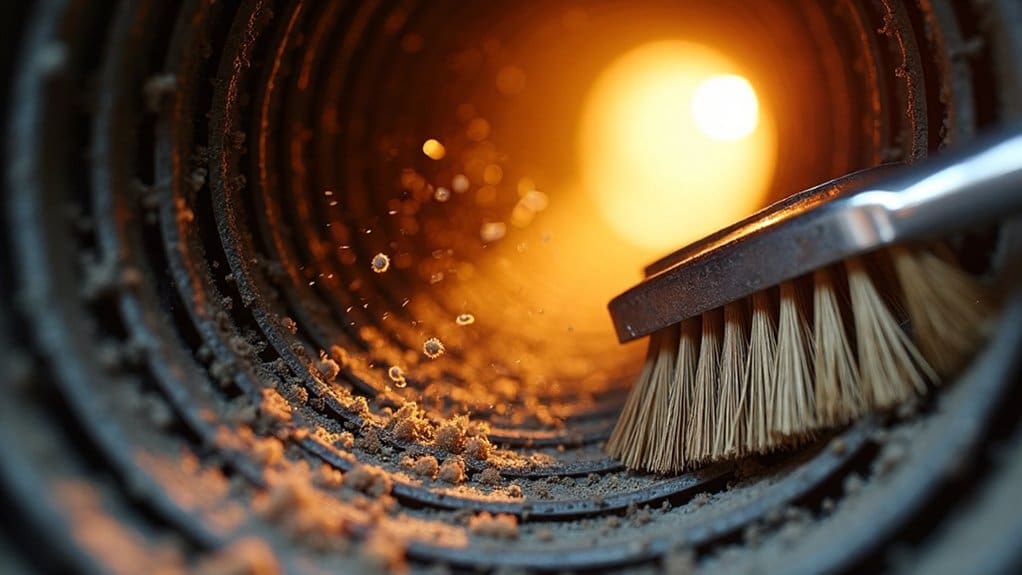
Air duct cleaning can greatly assist allergy sufferers by removing accumulated dust, pollen, pet dander, and mold spores that circulate through your HVAC system. Professional cleaning reduces airborne particulates by up to 75%, targeting the entire system rather than just localized areas like air purifiers. While general households need cleaning every 3-5 years, you’ll benefit from more frequent service every 1-2 years to maintain ideal indoor air quality and discover thorough strategies for long-term relief.
Key Takeaways
- Professional air duct cleaning can reduce airborne allergens by up to 75% by removing accumulated dust, pollen, and pet dander.
- HVAC ductwork acts as a reservoir for allergens, continuously circulating contaminants throughout your home despite regular surface cleaning efforts.
- Allergy sufferers should clean ducts every 1-2 years, more frequently than the standard 3-5 year recommendation for general households.
- Duct cleaning targets the entire HVAC system, unlike air purifiers which only filter localized areas or medications that treat symptoms.
- Professional cleaning removes deeply embedded allergen buildup that standard filtration systems and surface cleaning cannot effectively eliminate.
How Air Ducts Impact Indoor Air Quality for Allergy Sufferers
When your HVAC system runs, it doesn’t just circulate conditioned air—it also spreads whatever has accumulated in your ductwork throughout your home. Your air ducts act like highways for allergens, continuously moving dust, pollen, pet dander, and mold spores from room to room every time your system kicks on.
This constant circulation creates a cycle where allergens never truly settle or get removed from your living space. Instead, they’re repeatedly pushed through your home’s air supply, maintaining elevated levels that trigger allergy symptoms and worsen asthma conditions. Even if you’re diligent about cleaning surfaces and vacuuming, contaminated ductwork undermines your efforts by reintroducing these particles into your indoor environment.
The impact on indoor air quality becomes especially problematic for sensitive individuals who spend significant time indoors. Without proper cleaning, your HVAC system fundamentally becomes a distribution network for the very allergens you’re trying to avoid.
The Science Behind Air Duct Cleaning and Allergen Removal
While allergens accumulate invisibly within your ductwork, the science behind their removal reveals why professional cleaning delivers measurable results. Your HVAC systems continuously circulate dust mites, pet dander, pollen, and mold spores throughout your home, creating ongoing exposure that triggers asthma and allergic reactions.
Research demonstrates that professional air duct cleaning can reduce airborne particulates by up to 75%, substantially improving indoor air quality. High-powered vacuum systems and specialized agitation tools effectively dislodge deeply embedded allergens from duct surfaces, eliminating sources that standard filtration can’t reach.
The removal process targets accumulated contaminants that serve as persistent allergen reservoirs. Once these sources are eliminated, your indoor environment experiences sustained improvement rather than temporary relief. This extensive approach works synergistically with air purifiers, creating a multi-layered defense against allergens. By addressing contamination at its source within your air ducts, professional cleaning provides the foundation for long-term respiratory health benefits.
Comparing Air Duct Cleaning to Other Allergy Management Methods
How does air duct cleaning compare to the traditional methods you’ve likely tried for managing allergies? Unlike temporary solutions, duct cleaning addresses the root cause of indoor allergens circulating through your HVAC systems.
- Air Purifiers – Only filter localized areas, while air duct cleaning targets your entire HVAC system for all-encompassing allergen removal
- Allergy Medications – Provide temporary symptom relief without eliminating the allergen source from your air ducts
- Surface Cleaning – Addresses visible dust but misses hidden contaminants in your ductwork
- Filtration Systems – Work continuously but can’t remove existing buildup already trapped in your ducts
For allergy sufferers, reducing allergens at their source proves more effective than treating symptoms after exposure. Air duct cleaning improves indoor air quality system-wide, creating lasting benefits that air purifiers and medications simply can’t match when used alone.
Optimal Cleaning Frequency for Households With Allergies
Although general HVAC maintenance recommends air duct cleaning every 3-5 years, allergy sufferers need a more aggressive approach to maintain symptom-free living spaces. You should schedule professional duct cleaning every 1-2 years to effectively remove accumulated allergens from your home’s air circulation system.
If you have pets, this timeline becomes even more critical since pet dander circulates continuously through your HVAC system. Households with both allergy and asthma sufferers can’t afford to let allergens build up in their air ducts for extended periods.
You’ll need immediate cleaning service attention if you notice visible dust accumulation around vents or detect strange odors when your system runs. New homeowners or those completing renovations should prioritize duct cleaning to eliminate construction debris that compromises indoor air quality.
This frequent cleaning schedule, combined with regular HVAC maintenance, creates the consistent allergen-free environment necessary for managing your allergy symptoms effectively.
Professional Air Duct Cleaning: What to Expect During the Process
When you schedule professional air duct cleaning, technicians arrive with specialized equipment designed to create a controlled cleaning environment throughout your home’s HVAC systems.
The duct cleaning process involves sealing your entire system to prevent debris from circulating and contaminating indoor spaces. High-powered vacuums and specialized tools dislodge accumulated allergens that affect indoor air quality and trigger allergies.
Here’s what happens during professional duct cleaning for allergy relief:
- Initial inspection – Technicians assess whether your air ducts need cleaning and identify problem areas
- System sealing – Ducts are sealed to contain contaminants during removal
- Deep cleaning – Powerful equipment removes dust, pollen, and debris from ductwork
- Antimicrobial treatment – EPA-registered chemicals eliminate mold and bacteria on non-porous surfaces
The entire process typically takes 3-5 hours for a 2,000 square foot home. Professional duct cleaning can help improve indoor air quality by removing allergens that accumulate over time in your HVAC system.
Frequently Asked Questions
Is Duct Cleaning Worth It for Allergies?
You’ll find duct cleaning worthwhile for allergies through airborne allergen reduction, dust mite elimination, and pet dander mitigation. It improves indoor air quality, optimizes air flow, and enhances HVAC system maintenance for better pollen filtration.
Does Cleaning Your Ducts Really Help?
Like a fresh start, cleaning ducts absolutely helps through pet dander reduction and dust mite elimination. You’ll experience respiratory symptom mitigation, seasonal allergy relief, and indoor air quality improvement while boosting HVAC system efficiency throughout your home.
What Are the Drawbacks of Duct Cleaning?
You’ll face potential air leaks, ductwork damage, and bacterial growth concerns. Unreliable service providers may cause unintended consequences like excessive energy usage, inadequate filtration, and potential indoor air pollution from improper techniques.
How Much Does Duct Cleaning Usually Cost?
Most homeowners spend $300-500 on professional duct cleaning. You’ll find average costs vary by home size and contamination levels. For budget-friendly tips, consider multi-system discounts or recurring service agreements to reduce typical expenses.
Conclusion
You’ll find air duct cleaning can genuinely improve your allergy symptoms when combined with other management strategies. While it’s not a miracle cure, removing accumulated dust, pet dander, and debris from your ductwork reduces airborne allergens circulating through your home. Remember, an ounce of prevention is worth a pound of cure—regular cleaning every three to five years, along with proper filtration and humidity control, creates a more comfortable environment for your allergies.