
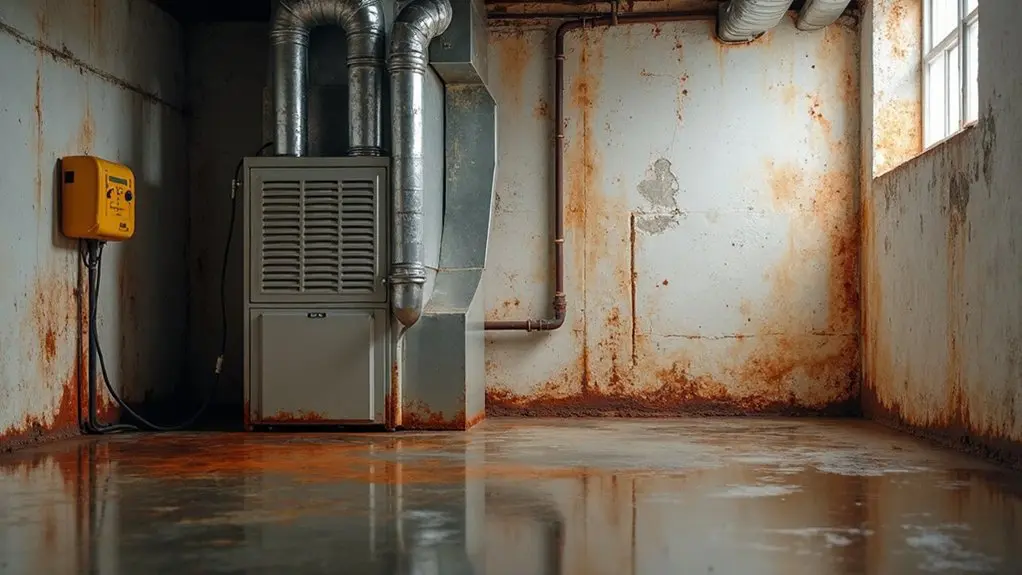
You should watch for physical symptoms like persistent headaches, dizziness, and nausea in family members, which often signal carbon monoxide exposure from your furnace. Look for visual warning signs including flame color changes from blue to yellow or orange, soot buildup around vents, and unusual sounds like banging or grinding. Install CO detectors near your heating system and schedule annual professional inspections to catch cracked heat exchangers before they become deadly. These essential safety measures can protect your household from this silent threat.
Key Takeaways
- Install carbon monoxide detectors on every level near gas appliances and evacuate immediately if alarms sound.
- Watch for physical symptoms like persistent headaches, dizziness, nausea, and fatigue in household members.
- Look for visual warning signs including flame color changes, soot buildup, and decreased furnace heat output.
- Schedule annual professional inspections to catch cracked heat exchangers and blocked ventilation before dangerous leaks occur.
- Replace furnaces older than 15-20 years as modern units have improved safety systems and reduced risks.
What Causes Carbon Monoxide Leaks in Heating Systems
Several factors can cause your heating system to leak carbon monoxide into your home, turning what should be a safe appliance into a potential hazard.
A cracked heat exchanger represents one of the most serious threats. When this critical component develops cracks or deteriorates, it can’t properly separate combustion gases from the air circulating through your home. Your furnace relies on the heat exchanger to transfer heat safely while containing dangerous gases.
Obstructed ventilation systems prevent proper exhaust flow, trapping carbon monoxide inside your heating equipment instead of venting it outside. Dirty or damaged burners disrupt the combustion process, leading to incomplete combustion that produces excess carbon monoxide.
Improper installation creates multiple risks, from inadequate venting to poor connections. Over time, normal wear causes furnace components to deteriorate, creating gaps and cracks that allow carbon monoxide leaks to develop throughout your heating system.
Physical Warning Signs in Household Members
When carbon monoxide enters your home, your body will often signal danger through specific physical symptoms that you shouldn’t ignore. You’ll likely experience persistent headaches that won’t respond to typical pain relievers. Dizziness and light-headedness can make you feel unsteady on your feet, while nausea and vomiting may occur without any apparent cause.
Pay attention if you’re experiencing confusion or disorientation – these cognitive symptoms indicate serious carbon monoxide exposure. You might find yourself struggling to think clearly or feeling unusually forgetful. Overwhelming fatigue that doesn’t improve with rest is another critical warning sign.
The most telling indicator is symptom improvement when you leave your home. If you feel better at work or when running errands, but symptoms return when you’re back inside, carbon monoxide poisoning is likely. Don’t dismiss these warning signs as coincidence – they’re your body’s urgent plea for help and immediate action.
Visual Indicators From Your Heating System
Your furnace provides clear visual clues about its health and safety status that you can easily spot during routine inspections. Watch for flame color changes in your gas heating system—blue flames indicate proper combustion, while yellow or orange hues signal dangerous incomplete burning that can produce carbon monoxide.
Check around your HVAC unit for soot or black streaking near the furnace or venting system. These dark marks are warning signs of ventilation problems that allow harmful gases to escape into your home instead of safely venting outside.
Look for excessive moisture buildup around your heating equipment, which may indicate heat exchanger damage or ventilation issues. Notice if your furnace produces less hot air than usual, as decreased output often signals blockages or mechanical problems.
Strange odors from your gas furnace demand immediate attention, as they could indicate dangerous gas leaks or other serious malfunctions requiring professional repair.
Strange Odors and Gas Leak Detection
The distinctive “rotten egg” smell around your furnace serves as your most critical early warning system for gas leaks. Natural gas manufacturers deliberately add mercaptan, a chemical compound that creates this unmistakable sulfur odor. Without this additive, natural gas would be completely odorless and potentially deadly leaks could go undetected.
If you detect any rotten egg smell near your heating system, don’t investigate further or attempt repairs yourself. Immediately shut off the gas supply to your furnace and evacuate the area. Avoid using electrical switches, phones, or anything that could create sparks near the suspected gas leak.
Contact professionals immediately to inspect and repair the issue. Gas leaks pose serious risks including explosions, fires, and carbon monoxide poisoning. Licensed technicians have specialized equipment to safely locate leaks and perform necessary repairs. Never ignore sulfur odors—they’re designed to save your life.
Changes in Burner Flame Color and Combustion Issues
Beyond detecting gas leaks through smell, you can identify serious furnace problems by observing your burner flames. Healthy furnace flames should burn blue consistently. If you notice red, green, or yellow flames, your Heating System Needs immediate attention as this indicates improper combustion.
These color changes signal dangerous combustion issues that can produce deadly carbon monoxide gas. Since carbon monoxide is odorless and colorless, abnormal flame colors serve as your primary visual warning of a malfunctioning furnace. Continued operation with discolored flames dramatically increases carbon monoxide poisoning risks.
When you spot any flame color other than steady blue, shut off your furnace immediately. Don’t attempt repairs yourself—improper combustion requires professional diagnosis. Contact a qualified technician right away to inspect and repair the combustion system. This immediate action prevents potential carbon monoxide exposure that could cause serious health complications or death.
Unusual Sounds That Signal Danger
How can you tell if strange furnace sounds indicate a safety emergency? Several warning signs demand immediate attention when your furnace starts making unusual sounds that signal danger.
Listen for loud banging or popping noises during startup, which often indicate delayed ignition that can crack your heat exchanger. Scraping or grinding sounds suggest damaged blower components that compromise ventilation. Whistling or squealing noises may signal airflow restrictions that affect proper combustion.
High-pitched whining sounds are particularly concerning red flags, as they can indicate pressure buildup or failing safety controls. Clicking sounds outside normal startup sequences often point to electrical issues or malfunctioning gas valves.
If you detect any of these dangerous sounds, shut off your furnace immediately and contact emergency services if you smell gas. Schedule a professional inspection before attempting to restart your system. Don’t ignore these auditory warnings – they’re your furnace’s way of signaling potentially life-threatening carbon monoxide risks.
Signs of Corrosion and System Deterioration
While unusual sounds alert you to immediate dangers, visual inspection of your furnace reveals equally important warning signs through corrosion and deterioration. Your furnace can become a safety hazard when components break down over time. Look for these critical deterioration indicators:
- Rust or corrosion on the heat exchanger or flue pipes
- White staining around vents or connections
- Cracks or holes in metal components
- Loose or disconnected ductwork joints
- Water pooling around the furnace base
A cracked heat exchanger poses serious risks since your furnace might allow dangerous gases to mix with your home’s air supply. These compromised components create pathways for CO leaks into living spaces. Spotting these signs early can prevent catastrophic failures and protect your family’s health. Regular maintenance by qualified technicians helps identify deterioration before it becomes life-threatening. Don’t ignore visible damage—schedule immediate repairs when you notice any structural problems with your heating system.
Carbon Monoxide Detector Placement and Response
Even when you’ve identified potential furnace problems through visual inspection, carbon monoxide detectors serve as your critical last line of defense against this silent killer. Install carbon monoxide detectors on every level of your home and outside sleeping areas, with additional units placed around your furnace and other gas appliances for earliest detection.
If you suspect carbon monoxide exposure or your detector sounds, immediately and contact emergency services while evacuating everyone from your home. Don’t re-enter until professionals have thoroughly ventilated the space and deemed it safe.
Your gas furnace requires an annual inspection by a qualified HVAC technician to prevent dangerous leaks. Replace detector batteries yearly and the entire unit every 5-7 years to guarantee reliable operation.
Remember: carbon monoxide is odorless and colorless, making detectors your only reliable warning system. Position them strategically near potential sources like furnaces, water heaters, and fireplaces for maximum protection.
Prevention Through Regular Maintenance and Inspection
Proactive furnace maintenance consistently prevents the majority of carbon monoxide incidents in homes. You’ll need a professional Air Conditioning and heating technician to identify dangerous issues before they threaten your family’s safety.
Annual inspections catch critical problems that could lead to deadly carbon monoxide leaks:
- Cracked heat exchangers that allow combustion gases into your living space
- Blocked ventilation systems preventing proper exhaust flow
- Combustion irregularities causing incomplete fuel burning
- Soot buildup indicating poor air circulation
- Flame color changes signaling potential safety hazards
Your furnace needs regular attention to maintain safe operation and keep your home protected. Professional maintenance extends your system’s lifespan while improving energy efficiency and preserving warranty coverage. Watch for decreased heat output, unusual sounds, or visible soot around your unit.
Consider replacing furnaces older than 15-20 years with modern models featuring advanced safety systems. These upgrades drastically reduce carbon monoxide risks while delivering better performance and efficiency for your home.
Emergency Actions When Carbon Monoxide Is Suspected
Despite your best maintenance efforts, carbon monoxide emergencies can still occur and demand immediate action to protect your family’s lives.
If your carbon monoxide detector sounds or you suspect CO poisoning, evacuate everyone immediately. Don’t hesitate—every second counts when dealing with this silent killer. Call 911 right away to report the suspected leak and seek medical attention for anyone experiencing symptoms like headaches, dizziness, or nausea.
While evacuating, open windows and doors if safely possible to ventilate your home, but don’t re-enter until professionals certify the area. Never attempt DIY repairs on your furnace—improperly fixed equipment continues leaking dangerous CO levels.
Contact your gas company or licensed HVAC technician for thorough inspection before returning. Professional expertise guarantees your heating system meets safety standards and keeps your home safe. Remember, carbon monoxide emergencies require immediate professional intervention—your family’s lives depend on swift, proper response.
Conclusion
You can’t afford to ignore these warning signs when your family’s safety hangs in the balance. Don’t wait until your heating system goes full Pony Express on you – those outdated, failing components won’t deliver reliable performance. Install CO detectors, schedule annual inspections, and call professionals immediately if you notice unusual flames, corrosion, or symptoms in household members. Your vigilance today prevents tomorrow’s tragedy. Stay alert, stay safe, and keep that furnace running properly.