
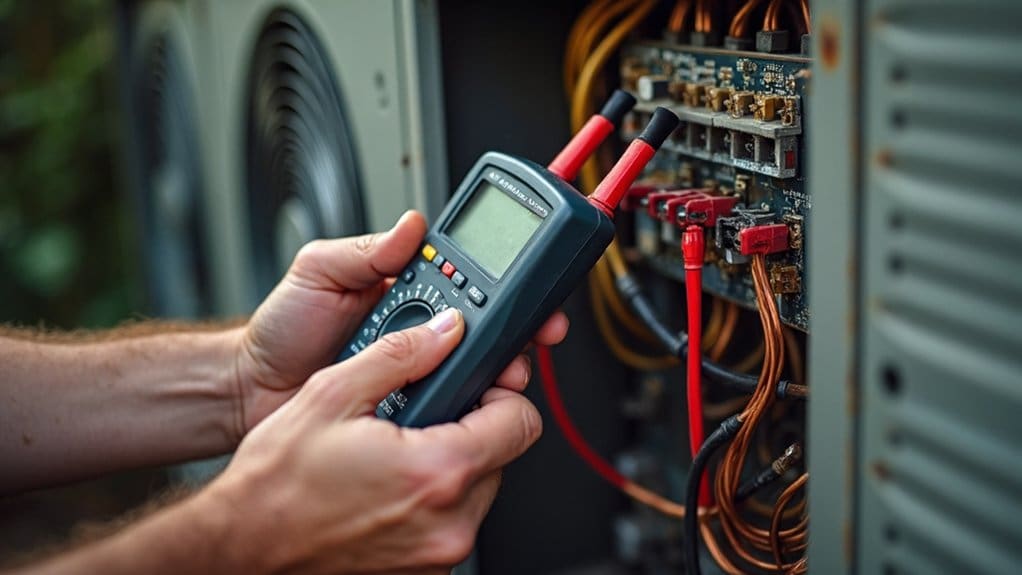
When your central air conditioning malfunctions, start by checking basic issues like thermostat settings, tripped circuit breakers, and dirty air filters. If your system won’t turn on, examine power switches and electrical connections. For warm air problems, listen for refrigerant leaks and inspect for ice buildup. Strange noises often indicate loose components or airflow restrictions, while weak airflow typically stems from clogged filters or blocked vents. This guide explores ideal solutions for excellent performance.
Key Takeaways
- Check thermostat settings, circuit breakers, and power switches before assuming major electrical problems with your AC system.
- Replace dirty air filters first when experiencing warm air or weak airflow issues, as this resolves many common problems.
- Listen for unusual noises like rattling, buzzing, or whistling to help identify loose components or airflow restrictions.
- Never attempt refrigerant leak repairs yourself, as these require specialized equipment and professional HVAC technician expertise.
- Schedule annual maintenance with certified technicians to prevent emergency breakdowns and extend your system’s lifespan.
System Won’t Turn On
Why won’t your central air conditioning system respond when you need it most? Start by examining your thermostat settings—guarantee it’s set to “cool” with the temperature below your current room temperature. If the thermostat screen appears blank, replace the batteries immediately.
Next, check your electrical panel for tripped circuit breakers. Reset any circuit breaker that’s switched to the “off” position. Locate the power switch near both your indoor unit and outdoor unit, confirming both are in the “on” position.
Examine all electrical connections for loose wires or damage. Power supply issues often prevent system startup, so verify electricity reaches both units. If you’ve completed these steps and your system still won’t respond, call an electrician to diagnose deeper electrical problems. Professional assessment secures safe repairs and prevents further damage to your air conditioning system.
AC Unit Is Blowing Warm Air
Next, examine your air filter. A dirty, clogged filter restricts airflow and forces your system to work harder, reducing its cooling capacity. Replace it if it’s visibly dirty.
Listen for hissing noises around your unit, which often indicate a refrigerant leak. Look for ice buildup on the evaporator coils, another sign of refrigerant issues. These problems prevent your system from producing cool air effectively.
While you can handle thermostat adjustments and air filter replacements yourself, refrigerant leaks require professional attention. Call an HVAC technician to diagnose the problem, recharge the refrigerant, and repair any leaks to restore your system’s cooling performance.
Weak Airflow From Vents
When your AC system struggles to push air through the vents, you’ll notice reduced comfort and higher energy bills as your unit works overtime. Weak airflow typically stems from three main culprits that you can troubleshoot yourself.
First, check your air filter. A clogged or dirty filter restricts airflow considerably. Replace it if it’s visibly dirty or hasn’t been changed in three months.
Next, inspect your ductwork for obstructions or damage. Look for disconnected joints, crushed sections, or debris blocking the passages. Verify that all connections remain secure throughout the system.
Finally, examine your blower motor. A loose belt or motor issues can dramatically reduce air circulation. Listen for unusual noises or grinding sounds that indicate mechanical problems.
Don’t forget to verify that all air vents are fully open and unobstructed by furniture or debris. These simple checks often resolve weak airflow issues without requiring professional intervention.
AC Unit Is Making Strange Noises
Although your air conditioning system normally runs quietly in the background, strange noises signal that something’s gone wrong and needs your immediate attention. Different sounds indicate specific problems requiring different solutions.
Whistling or humming noises typically point to airflow restrictions caused by dirty air filters. Replace your filter to restore proper airflow and eliminate these sounds. However, buzzing and humming can also indicate serious electrical issues with your capacitor or wiring that demand professional intervention.
Rattling and clanking sounds usually stem from loose components like panels, screws, or bolts that have vibrated free over time. You can often resolve these by tightening the hardware around your outdoor unit. Pay special attention to your condenser fan, as loose fan blades create particularly disruptive noises.
While some noise issues have simple fixes, don’t ignore persistent strange sounds. Contact a qualified technician to diagnose and repair underlying problems before they escalate into costly system failures.
Water Leaking From Indoor Unit
Water pooling around your indoor air conditioning unit creates an entirely different set of concerns that require prompt attention. When you notice water leaking from your indoor AC unit, several culprits could be responsible.
A clogged condensate drain line ranks as the most frequent cause. This blockage prevents proper water drainage, forcing moisture to overflow. Similarly, drain line obstructions or a malfunctioning drain pump can create backups that result in leakage.
Frozen evaporator coils present another common issue. As ice accumulates on the coils and subsequently melts, excess water overwhelms the system’s drainage capacity. You’ll want to check your evaporator coils for frost buildup during operation.
Don’t overlook mechanical failures either. A cracked or damaged condensate pan can’t contain water properly, while condensate pump malfunctions prevent efficient moisture removal. Improper installation also contributes to drainage problems, creating incorrect slopes or connections that impede water flow through your system’s drainage components.
Frozen Evaporator Coils
Why do evaporator coils freeze when your air conditioning system should keep your home comfortably cool? A frozen evaporator coil occurs when restricted airflow prevents proper heat exchange, causing moisture to freeze on the coils.
Start by checking your air filter. Dirty air filters block airflow, forcing your HVAC system to work harder and potentially freeze the evaporator coils. Replace clogged air filters immediately to restore proper circulation.
If new filters don’t resolve the issue, you’re likely dealing with low refrigerant levels from a refrigerant leak or other mechanical problems. These cooling issues require professional attention, as improper refrigerant handling can damage your equipment.
Don’t ignore persistent freezing. When you troubleshoot and basic fixes fail, contact an HVAC professional promptly. Continued operation with frozen coils leads to inadequate cooling, higher energy costs, and potential system failure that’s expensive to repair.
System Is Constantly Cycling On and Off
Another common air conditioning problem you might encounter is a system that constantly cycles on and off, known as short cycling. This frustrating issue prevents your AC from maintaining consistent temperatures and increases energy costs.
Several factors can cause your air conditioner to short cycle. A dirty air filter restricts airflow, causing your HVAC system to overheat and shut down prematurely. Low refrigerant levels from leaks force the compressor to work harder, triggering frequent cycling. Thermostat problems, including poor placement or malfunctioning components, send incorrect signals to your unit.
Surprisingly, an oversized air conditioning system can also create this problem. When your AC cools your home too quickly, it shuts off before completing a full cycle, then restarts shortly after.
Troubleshooting short cycling involves checking your air filter first, then examining refrigerant levels and thermostat settings. Since these problems often require technical expertise, contacting a professional HVAC technician will help diagnose and resolve the underlying issues effectively.
When to Call a Professional HVAC Technician
How do you know when basic troubleshooting isn’t enough for your air conditioning problems? When your system isn’t cooling effectively, makes strange noises, or has persistent performance issues, it’s time to contact a professional. Call a professional immediately if you suspect refrigerant leaks or electrical problems, as these require specialized tools and expertise.
HVAC technicians possess the training and certification needed for complex repairs that homeowners shouldn’t attempt. Trying these repairs yourself can be dangerous and void your warranty. Your local HVAC professionals can properly diagnose refrigerant issues, which require specialized equipment for safe handling and recharging.
Don’t wait for emergency breakdowns. Contact an HVAC contractor for annual maintenance and tune-ups to extend your system’s lifespan and improve energy efficiency. Professional HVAC service prevents costly repairs and guarantees optimal performance. Call in a professional when basic HVAC troubleshooting fails—this troubleshooting guide has limits, and Calling a professional safeguards your investment.
Frequently Asked Questions
How to Diagnose Central Air Conditioning Problems?
You’ll diagnose AC problems by checking air filter replacement needs, performing thermostat troubleshooting, inspecting for refrigerant leaks, examining blower motor issues, testing for capacitor failures, and conducting ductwork inspections to identify compressor malfunctions.
What Is the $5000 Rule?
70% of HVAC systems fail prematurely due to poor maintenance. The $5000 rule states you should replace your AC when repair costs exceed half the replacement price, considering unit age considerations and compressor failure signs.
What Is the Most Common Part to Fail on an AC Unit?
You’ll most commonly encounter capacitor issues in your AC unit. These small electrical components frequently fail, causing compressor failure or blower motor problems. Refrigerant leaks and thermostat malfunctions also rank high among typical breakdowns.
What Is the Most Common AC Repair?
You’ll most commonly need repairs for dirty air filters, refrigerant leaks, and capacitor failure. Frozen coils, clogged drain lines, electrical issues, motor malfunctions, improper thermostat calibration, failed compressor, and ductwork problems also frequently occur.
Conclusion
Picture yourself relaxing in your cool, comfortable home while summer’s heat beats down outside. You’ve conquered those mysterious AC hiccups and restored your system’s smooth operation. Your unit now hums quietly, delivering crisp, invigorating air throughout every room. But remember, when complex issues arise or you’re unsure about safety, don’t hesitate to call a professional technician. They’ll guarantee your cooling sanctuary remains your reliable refuge from sweltering temperatures.