
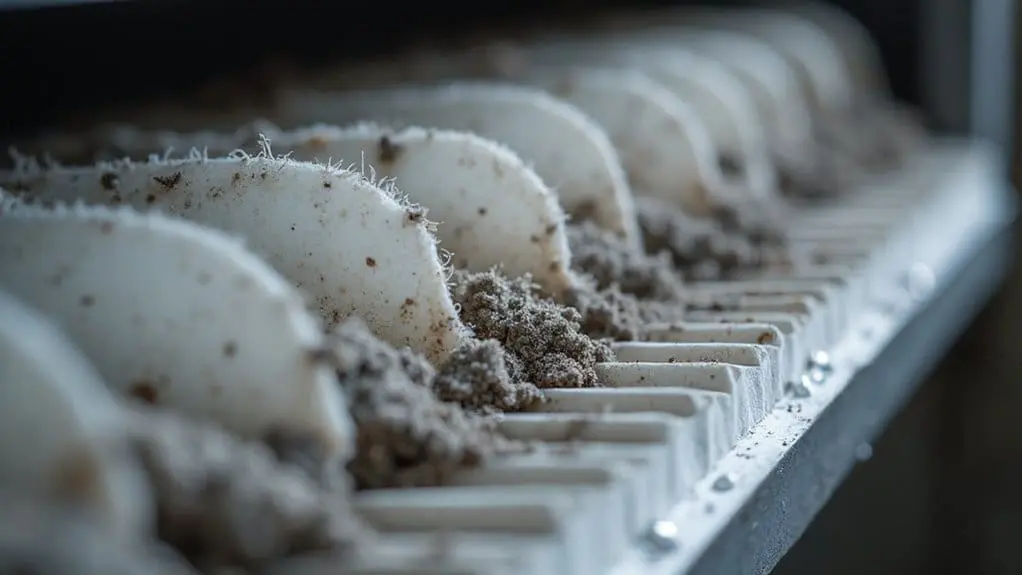
Preventive maintenance prevents your system’s most expensive failures by addressing dirty air filters that restrict airflow and freeze evaporator coils, refrigerant leaks that reduce cooling capacity and damage compressors, electrical malfunctions involving faulty wiring and worn capacitors, and clogged drain lines that cause water damage and mold growth. Regular inspections identify these issues before they escalate into costly repairs or complete system breakdowns. Understanding these specific maintenance interventions helps you protect your investment and optimize performance.
Key Takeaways
- Regular air filter replacement every 1-3 months prevents airflow restrictions that cause evaporator coil freezing and reduced cooling performance.
- Routine leak detection and refrigerant level checks prevent compressor damage and maintain optimal system efficiency and cooling capacity.
- Preventive coil cleaning and airflow optimization stop evaporator coils from freezing, which blocks heat transfer and triggers system lockouts.
- Annual electrical inspections identify faulty wiring, worn capacitors, and potential fire hazards before they cause unexpected system shutdowns.
- Regular drain line cleaning and flow testing prevent water overflow, mold growth, and costly water damage from moisture removal failures.
Dirty or Clogged Air Filters
When your air conditioning system struggles to maintain consistent temperatures or runs continuously without reaching the set point, dirty or clogged air filters are often the primary culprit. A dirty air filter restricts airflow through your HVAC system, forcing components to work harder and consume more energy. When airflow is restricted, your evaporator coil can’t absorb heat effectively, leading to frozen coils and compromised cooling performance. Insufficient airflow also causes your air conditioner problems including reduced system efficiency and elevated utility costs. Dirty filters create a cascade of operational issues that strain your air conditioning system. You can prevent these common air conditioner problems by replacing air filters every 1-3 months. This simple maintenance procedure guarantees proper airflow and optimal system performance.
Refrigerant Leaks
Beyond airflow restrictions, refrigerant leaks represent another significant threat to your air conditioning system’s performance and longevity. When refrigerant levels drop due to a refrigerant leak, your system loses cooling capacity and operates inefficiently, directly impacting your energy bills. These leaks often develop gradually, making detection challenging without proper diagnostic equipment.
During preventive maintenance, an HVAC technician employs specialized leak detection tools to identify compromised refrigerant lines and connections. They’ll inspect for wear patterns, corrosion, and joint failures that commonly cause leaks. If you ignore these issues, insufficient refrigerant forces your compressor to work harder, potentially causing catastrophic compressor damage.
Regular maintenance allows technicians to recharge your system with proper refrigerant levels and address minor leaks before they escalate into costly compressor replacements, maintaining ideal efficiency.
Frozen Evaporator Coils
Although evaporator coils operate at cold temperatures during normal cooling cycles, they shouldn’t freeze solid—yet this problematic condition occurs when restricted airflow or insufficient refrigerant disrupts the delicate heat exchange process. When your evaporator coil freezes, it can’t absorb heat effectively, causing continuous operation without cooling and potential system shutdown.
Frozen coils dramatically impact system performance and efficiency through:
- Blocked heat transfer surfaces preventing proper refrigerant evaporation
- Reduced airflow across the coil assembly, restricting cooling capacity
- Ice formation that forces system lockout protection mechanisms
You’ll prevent this malfunction through regular maintenance protocols. Change your air filter consistently and keep return vents unobstructed to maintain adequate airflow. During scheduled maintenance, technicians clean coils, verify refrigerant levels, and optimize airflow patterns to prevent freezing conditions.
Electrical Issues and Control Failures
While mechanical components often receive primary attention during AC troubleshooting, electrical malfunctions represent equally critical system vulnerabilities that can trigger immediate shutdowns or prevent startup sequences entirely. Faulty wiring, tripped breakers, and worn-out capacitors will disable your system’s operational capacity. These electrical issues create unexpected shutdowns, compromising reliability while introducing fire hazards that threaten property safety.
You’ll need licensed HVAC professionals to diagnose electrical components and repair compromised electrical connections. Their expertise guarantees proper electrical control system restoration without safety violations. Annual maintenance protocols include thorough electrical system inspections, identifying degraded wiring and failing capacitors before they escalate into costly repairs.
Prompt electrical issue resolution prevents minor malfunctions from developing into extensive system failures, maintaining your unit’s operational integrity while eliminating potential fire hazards.
Clogged Drain Lines and Water Damage
Frequently overlooked condensate drain lines cause extensive water damage when algae, dirt, and debris accumulate within the drainage system. When your drain line becomes clogged, moisture removal fails, creating water leaks that compromise system integrity and structural components.
Regular maintenance protocols include:
- Drain line inspection – Visual assessment for blockages and flow restrictions
- Cleaning procedures – Removing algae buildup and debris accumulation using appropriate tools
- Flow testing – Verifying proper drainage capacity and system functionality
Neglecting these preventive measures results in water overflow, leading to mold proliferation and costly system damage. You’ll encounter backup conditions that affect indoor air quality and mechanical performance. Implementing scheduled drain line maintenance prevents catastrophic failures and maintains ideal moisture control. Professional technicians can identify early warning signs before blockages compromise your entire HVAC system’s operational efficiency.
Thermostat Malfunctions
Thermostat malfunctions disrupt your HVAC system’s ability to maintain consistent temperature control and respond accurately to environmental changes. When your thermostat sensor fails, it can’t read ambient conditions properly, causing your system to ignore temperature settings and struggle to reach the desired temperature. This malfunction often results in uneven cooling throughout your home and forces your evaporator to work harder than necessary.
You’ll notice unusual noises from your system as it cycles incorrectly due to faulty thermostat signals. Outdated units create compatibility issues that prevent ideal performance. Regular maintenance helps identify calibration problems and wiring issues before they escalate. A professional HVAC technician can diagnose sensor accuracy, verify programming functions, and recommend upgrades. Remember to change filters every maintenance cycle to prevent additional strain on your malfunctioning thermostat system.
Dirty or Blocked Outdoor Unit
Beyond indoor component failures, your AC system’s outdoor condenser unit faces constant exposure to environmental contaminants that compromise heat dissipation performance. Accumulated dirt, debris, and leaves create obstructions that restrict essential airflow around the unit’s heat exchange surfaces.
This blockage manifests through:
- Reduced thermal transfer efficiency due to restricted air circulation patterns
- Excessive system cycling as the unit struggles to achieve target temperatures
- Elevated operating pressures that strain compressor components
Built-up grime on condenser coils further impedes heat release capabilities, forcing your system to work harder while delivering diminished cooling output. You’ll need to maintain adequate clearance around the outdoor unit and remove accumulated debris regularly.
Implement gentle hose spray cleaning to eliminate surface contaminants. Schedule this maintenance during spring yard cleanup to guarantee consistent seasonal performance and prevent costly system failures.
Conclusion
You’ve diagnosed the critical failure points—now implement your preventive protocol. Don’t let your system become a casualty of neglect; these maintenance procedures are your armor against catastrophic breakdowns. Execute filter replacements, refrigerant inspections, and electrical diagnostics with surgical precision. Your proactive intervention transforms potential disasters into manageable maintenance cycles. Remember: prevention isn’t just maintenance—it’s system life extension through methodical care. Follow these protocols, and you’ll keep your AC running like a well-oiled machine.