
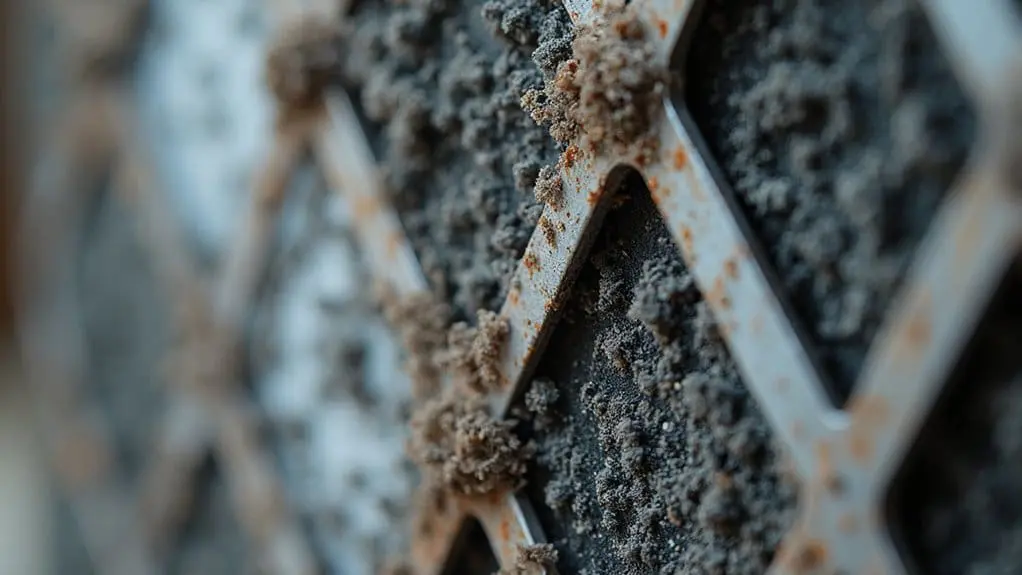
Your air filtration system’s most common problems stem from clogged filters that restrict airflow and force your HVAC to work harder, improper installation creating gaps that bypass filtration, and selecting wrong filter types that don’t match your system’s specifications. You’ll also face blocked airflow from accumulated debris, inadequate maintenance schedules that cause performance degradation, and worn components leading to system strain. These issues increase energy costs while compromising indoor air quality, but targeted solutions can restore ideal performance.
Key Takeaways
- Clogged filters restrict airflow and force HVAC systems to work harder, increasing energy costs and reducing performance.
- Improper filter sizing creates gaps that allow unfiltered air bypass, compromising indoor air quality and system efficiency.
- Wrong filter type selection based on incorrect MERV ratings leads to inadequate filtration or excessive airflow restriction.
- Blocked airflow from dirty filters causes temperature inconsistencies and forces systems to work overtime to maintain comfort.
- Inadequate maintenance schedules result in system failures; filters should be replaced every 1-3 months based on usage.
Clogged and Dirty Air Filters
The most frequent culprit behind air filtration system failures is a clogged or dirty filter that’s been neglected beyond its recommended replacement interval. When your filter becomes clogged with accumulated debris, dust, and contaminants, it severely restricts airflow throughout your system. This reduced airflow forces your HVAC unit to work harder, consuming more energy while delivering less clean air to your space.
You’ll notice decreased system performance, higher utility bills, and compromised indoor air quality. The solution requires consistent filter maintenance on a scheduled basis. Check your dirty air filters monthly and replace them according to manufacturer specifications. Standard filters need replacement every 1-3 months, depending on usage and environmental conditions. Maintaining proper airflow through regular filter changes guarantees continuous, efficient system operation and clean air circulation.
Improper Filter Installation and Sizing
Even when you’re diligent about replacing filters on schedule, improper installation and incorrect sizing can sabotage your air filtration system’s performance. Incorrectly installed air filters create gaps that allow unfiltered air to bypass the system entirely, compromising indoor air quality.
| Problem | Consequence | Solution |
|---|---|---|
| Wrong filter size | Reduced airflow, system strain | Measure within 1/8 inch accuracy |
| Gaps around filter | Unfiltered air bypass | Confirm proper fit per manufacturers recommended specs |
| Nominal vs. actual confusion | Poor performance | Use actual dimensions for correct filter selection |
Your HVAC system requires precise measurements—not guesswork. Improper maintenance through incorrect sizing forces your system to work harder while delivering poor results. Custom-sized filters confirm proper fit, maintaining ideal airflow and system efficiency.
Wrong Filter Type Selection
While proper installation matters, selecting an incompatible filter type can cripple your HVAC system’s performance and compromise your indoor air quality. Installing the wrong type restricts airflow, forcing your system to work harder and consume more energy. When a filter is installed that doesn’t match your system’s specifications, air bypasses the filtration media, reducing particulate capture effectiveness.
Filters play a vital role in maintaining ideal system operation. Disregarding manufacturer-recommended MERV ratings leads to inadequate filtration, while oversized ratings can strain your equipment. The Right Filter selection requires considering your home’s specific needs—pets, allergies, and dust levels all influence filter requirements.
To guarantee proper performance, match filters to your HVAC system’s specifications and your household’s air quality demands. This prevents operational issues and maintains consistent comfort levels.
Blocked Airflow and Reduced Performance
Beyond compatibility issues, blocked airflow creates a cascade of performance problems that directly impact your HVAC system’s efficiency and your home’s comfort. When your air system struggles against clogged filters, it consumes greatly more energy while delivering less effective climate control.
| Problem | Cause | Solution |
|---|---|---|
| Reduced airflow | Dirty filter accumulation | Replace filter monthly |
| Increased energy costs | HVAC working harder | Maintain clean filters |
| Poor air quality | Bypassed filtration | Guarantee proper installation |
| System strain | Restricted ventilation | Use correct filter type |
| Temperature inconsistency | Impeded circulation | Regular maintenance schedule |
These common issues compound quickly, forcing your HVAC to work overtime. To preserve ideal performance, establish a proper maintenance routine that includes regular filter inspections and timely replacements.
Inadequate Filter Maintenance Schedule
Most homeowners consistently underestimate the critical importance of maintaining a proper filter replacement schedule, creating a preventable cascade of system failures and performance degradation. Your HVAC system running efficiently depends on replacing filters every 1-3 months, though specific timing varies based on home occupancy and pet ownership. When you’ve installed a new filter, establish consistent monitoring protocols. Regular inspections reveal dust accumulation patterns that indicate replacement needs before airflow restriction occurs. Guarantee the filter matches your system’s specifications and replacement frequency aligns with actual usage patterns. Neglecting this schedule forces your system to work harder, increasing energy consumption and component wear. Proper maintenance keeps your air clean while preventing costly breakdowns. Following manufacturer guidelines will improve indoor air quality and extend system lifespan considerably.
Worn-Out and Damaged Filters
Even with perfect timing, filters eventually reach their functional limits and begin deteriorating physically. You’ll notice visible dirt accumulation, discoloration, tears, or fragmentation—clear indicators that you need to remove the filter immediately. These damaged components can’t effectively trap airborne particles, compromising your system’s ability to maintain Proper Air quality indoors.
Worn-out filters play an essential role in system degradation. They restrict airflow, forcing your HVAC system to work harder and increasing energy use substantially. Make sure the filter you’re installing matches the recommended filter type specifications for ideal performance.
Regular inspection prevents these issues. Check monthly for deterioration signs and replace damaged filters promptly. This proactive approach will keep your HVAC system operating efficiently while maintaining effective pollutant capture and removal capabilities throughout your home.
System Overheating and Component Failure
When dirty filters block airflow considerably, your HVAC system’s components face dangerous temperature spikes that can trigger cascading failures throughout the entire unit. These Common Air Filter Problems create a domino effect where motors work harder, heat exchangers overstress, and electrical components deteriorate rapidly. You’ll notice Unusual Noises like grinding or squealing before complete component failure occurs.
Filters that become dirty or clogged restrict airflow by up to 50%, forcing your system into dangerous operating conditions. To prevent this, inspect and maintain filters monthly, ensuring they’re correctly installed with proper sealing. Replace filters beyond cleaning immediately. When your system isn’t running smoothly, check filter condition first—it’s often the root cause of expensive repairs and premature equipment replacement.
Conclusion
You’ve conquered the most catastrophic air filtration disasters that’ll absolutely destroy your system’s performance! You’re now equipped with bulletproof solutions to tackle every filter crisis—from massively clogged filters that’ll choke your system to death, to catastrophically wrong installations that’ll obliterate efficiency. Don’t let these problems devastate your equipment again. You’ll maintain peak performance by implementing rigorous maintenance schedules and selecting precisely the right filters for your specific system requirements.