
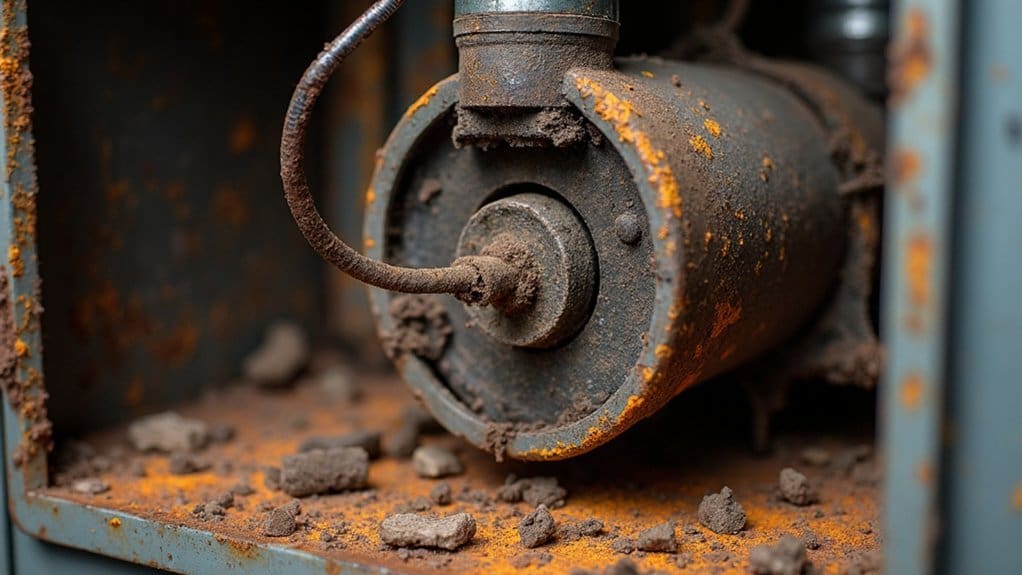
Most furnace problems you’ll encounter stem from skipping basic maintenance tasks. Clogged air filters reduce airflow by 50% and spike energy costs by 15%, while dirty burners slash heating efficiency by 30%. You’ll also face ignition system failures from dirt buildup, blower motor issues from worn bearings, and dangerous heat exchanger cracks that leak carbon monoxide. These costly breakdowns can destroy your comfort and safety, but they’re easily preventable with consistent care and attention to your system’s needs.
Key Takeaways
- Clogged air filters reduce airflow by 50% and increase energy costs by 15%, preventable through regular filter changes.
- Dirty burners compromise combustion efficiency by 30% and cause uneven heating, prevented by annual professional cleaning.
- Ignition system failures from dirt buildup on igniters and sensors create fire risks, avoided through regular inspection.
- Blower motor problems from worn bearings and loose belts reduce airflow, prevented with consistent maintenance attention.
- Heat exchanger cracks cause dangerous carbon monoxide leaks, identified early through regular professional maintenance inspections.
Clogged Air Filters Restricting System Airflow
When your furnace air filter becomes clogged with dust and debris, it can reduce system airflow by up to 50%, forcing your heating system to work considerably harder than necessary. This restriction creates a domino effect throughout your entire HVAC system.
Dirty filters don’t just block air flow—they’re silent budget killers. Your furnace struggles against the blockage, consuming greatly more energy to maintain comfortable temperatures. This decreased energy efficiency translates directly into increased energy costs, often raising your bills by 15% or more.
The consequences extend beyond your wallet. Clogged air filters force system components to operate under excessive strain, accelerating wear and potentially leading to component failure. What starts as a simple maintenance oversight can result in expensive repairs or premature system replacement.
Regular furnace maintenance, specifically changing air filters every 1-3 months, prevents these costly problems. This simple step maintains ideal system airflow and protects your investment.
Dirty Burners Reducing Heating Efficiency
While clogged filters restrict airflow, dirty burners attack your furnace’s efficiency from a different angle—they compromise the combustion process itself. When soot and debris accumulate on your gas furnace burners, they can’t burn fuel properly, reducing heating efficiency by up to 30%. This incomplete combustion means you’re paying more for less heat.
Dirty burners create a cascade of issues throughout your HVAC system. The compromised combustion process forces your furnace to work harder, consuming more gas while delivering inadequate heating. Poor air quality and uneven temperatures become noticeable problems as your system struggles to maintain comfort levels.
Regular maintenance prevents these costly issues from developing. During annual tune-ups, HVAC professionals inspect and clean burners according to manufacturer specifications. This simple maintenance step restores peak performance and extends your furnace’s lifespan. Don’t wait for efficiency problems or expensive repair bills—schedule professional burner cleaning as part of your routine maintenance plan.
Ignition System Failures and Malfunctions
Beyond dirty burners lies another critical vulnerability in your furnace’s operation—the ignition system itself. When ignition components fail, you’re left without heat and potentially facing dangerous safety hazards.
Electronic igniters and pilot light systems require clean, properly functioning parts to operate reliably. Dirt buildup on hot surface igniters acts as insulation, preventing them from reaching temperatures necessary to ignite gas. Similarly, clogged fuel nozzles in intermittent pilot systems block proper fuel flow, causing your pilot light to fail when lighting the main burner.
Your flame sensor also needs attention—accumulated debris interferes with its ability to detect flames, causing unnecessary shutdowns. These malfunctions create fire risks that demand immediate professional attention.
Routine maintenance prevents most ignition failures through regular cleaning and inspection of all components. Don’t wait for complete system failure—schedule annual service with a qualified HVAC technician to keep your ignition system operating safely and reliably.
Blower Motor and Belt Problems
After your ignition system lights the burners and produces heat, your furnace’s blower motor becomes the workhorse that distributes warm air throughout your home. This critical component faces constant wear and tear from continuous operation, making regular maintenance essential for preventing costly breakdowns.
Worn-out blower motor bearings create friction that forces your motor to work harder, ultimately leading to premature failure. Meanwhile, loose or misaligned blower belts cause slippage, reducing airflow while increasing your energy consumption. When dirt accumulates on blower wheels and blower housing, it restricts air movement and makes your furnace work less efficiently.
Failing blower capacitors disrupt your motor’s start-up and operation, potentially shutting down your entire system. Debris buildup on various blower components increases resistance throughout the system, reducing your furnace’s ability to circulate heated air effectively. These moving parts require consistent attention to maintain ideal performance and prevent unexpected failures.
Thermostat Issues and Temperature Control Problems
Your thermostat acts as the command center for your entire heating system, but when it breaks down, you’ll quickly discover how this small device controls your home’s comfort. A malfunctioning thermostat creates widespread temperature control problems that affect your entire home’s heating efficiency.
Common culprits include dirty thermostat sensors that can’t accurately read room temperatures, loose wiring that disrupts communication with your furnace, and dead batteries that render the unit completely useless. These issues force your furnace to work intermittently or shut down entirely.
Before calling professionals, check your thermostat settings to guarantee they’re programmed correctly. Perform a basic wiring inspection for loose connections, and try battery replacement if your unit uses them. However, irregular temperature readings from faulty thermostats make your furnace work harder, driving up energy costs considerably.
Regular maintenance prevents most thermostat-related problems, assuring consistent temperature control and ideal furnace performance year-round.
Heat Exchanger Cracks and Damage
One of the most serious furnace problems you’ll encounter involves heat exchanger cracks and damage, which create immediate safety hazards and compromise your system’s efficiency. When your furnace’s heat exchanger develops cracks or damage, it can cause dangerous carbon monoxide leaks that threaten your family’s health. You’ll notice warning signs like soot buildup, strange odors, and flickering pilot lights—all requiring immediate furnace shutdown.
Heat exchangers typically last 10-15 years, though older furnaces face higher failure risks. Regular maintenance through annual professional tune-ups helps identify potential problems before they escalate into major safety hazards. These inspections catch early damage that could otherwise lead to costly repairs.
While replacing a damaged heat exchanger involves significant expense, it’s often more cost-effective than buying a new unit for newer furnaces. However, older systems might warrant replacing the entire furnace instead of investing in extensive heat exchanger repairs.
Limit Switch Malfunctions Causing Overheating
When your furnace’s limit switch malfunctions, it creates a cascade of overheating problems that can damage your entire heating system. This critical safety device monitors your furnace’s internal temperature and controls the blower fan operation. When it fails, your furnace runs continuously without proper temperature regulation.
A faulty limit switch won’t shut off the blower when temperatures climb too high, causing dangerous overheating conditions. This excessive heat directly impacts your heat exchanger, potentially creating cracks in the metal. Cracked heat exchangers pose serious safety risks because they can leak carbon monoxide into your home’s air supply.
The overheating cycle becomes self-perpetuating once it starts, making immediate repairs essential. Regular maintenance appointments with your HVAC technician can identify limit switch problems before they escalate into expensive furnace damage. During routine inspections, technicians test the switch’s functionality and replace worn components, preventing the dangerous overheating scenarios that compromise your family’s safety.
Blocked Vents and Leaky Ductwork
While limit switch failures create internal furnace problems, blocked vents and leaky ductwork cause external issues that force your heating system to work overtime. When vents become clogged with dust, debris, or furniture placement, they restrict proper air circulation throughout your home. This poor airflow prevents warm air from reaching intended areas while trapping cold air in others, creating uneven heating patterns.
Leaky ductwork compounds these problems by allowing heated air to escape before reaching your living spaces. Your heating system compensates by running longer cycles or short cycling as it struggles to maintain consistent temperatures. This forces your furnace to work harder, consuming more energy and increasing utility bills.
Regular maintenance prevents these issues. Clear blocked vents monthly and inspect ductwork annually for leaks. Seal any gaps with appropriate materials to guarantee proper air coming through your system. These simple steps maintain efficient airflow and extend your furnace’s lifespan.
Strange Noises Indicating Mechanical Issues
Beyond airflow disruptions, your furnace communicates potential problems through various sounds that shouldn’t be ignored. Rattling, banging, or squealing noises from the furnace often signal mechanical breakdowns requiring immediate professional attention. These sounds typically stem from issues with your furnace blower, worn ball bearings, damaged fan belts, or other deteriorating moving parts.
Ignoring these warning signs creates a domino effect of furnace issues. What starts as minor component wear escalates into major system failure, resulting in expensive emergency repairs or complete unit replacement. Rattling might indicate loose hardware, while banging suggests misaligned components. Squealing often points to belt problems or bearing failure.
Regular maintenance prevents these mechanical problems from developing. Professional technicians identify worn parts during routine inspections, replacing components before they fail catastrophically. This proactive approach eliminates strange noises, extends equipment lifespan, and saves you from costly repairs that could’ve been prevented with consistent furnace care.
Frequently Asked Questions
What Is the Most Common Furnace Problem?
You’ll find dirty air filters cause the most furnace problems, creating airflow restrictions and overheating issues. They’re behind most ignition problems, thermostat malfunctions, and wear and tear failures you’ll experience without proper maintenance.
What Are Some Things That May Be Done as Preventive Maintenance on Furnaces?
You should change air filters monthly, inspect your thermostat settings, check the blower motor, clean the heat exchanger, test safety controls, inspect ductwork, lubricate moving parts, monitor carbon monoxide levels, and schedule annual tune-ups.
What Is the Most Common Part to Fail on a Furnace?
You’ll find blower motor failure ranks as the most common furnace problem. However, air filter clogs, ignitor failure, and flame sensor problems follow closely. Thermocouple malfunctions, pilot light issues, and electrical control board faults also occur frequently.
Do Furnaces Need Regular Maintenance?
Yes, you’ll need regular maintenance for furnace lifespan extension. You should prioritize filter replacement frequency, thermostat calibration importance, and heat exchanger inspection. Don’t overlook burner adjustment necessity and blower motor performance for ideal efficiency.
Conclusion
You’ve learned that most furnace breakdowns stem from neglected maintenance tasks. When you skip regular filter changes, burner cleaning, and system inspections, you’re setting yourself up for costly repairs and cold nights. Remember, an ounce of prevention is worth a pound of cure—scheduling annual maintenance visits and staying on top of basic upkeep tasks will keep your heating system running efficiently for years to come.