
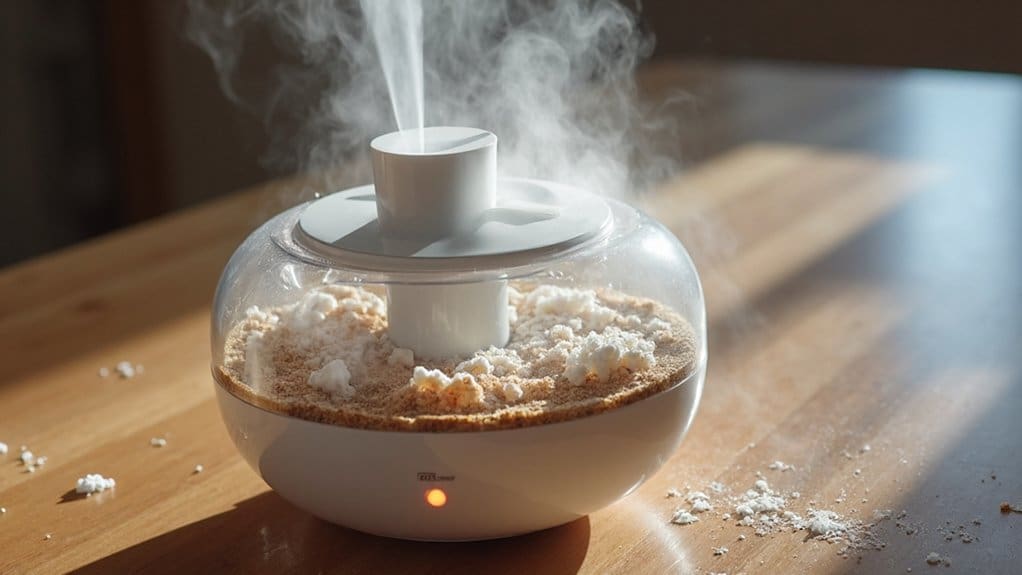
You’ll need professional repair when your humidifier completely stops producing mist despite having power and water, persistently leaks after basic troubleshooting, emits continuous odors even after thorough cleaning, creates excessive white dust when using distilled water, or experiences intermittent shutdowns with electrical malfunctions. These complex issues involve damaged internal components like transducers, control boards, or compromised seals that require specialized expertise to diagnose safely. Understanding these warning signs helps you determine when professional intervention becomes essential.
Key Takeaways
- Complete loss of mist production due to damaged transducers, heating elements, or severe mineral buildup requiring professional diagnosis.
- Persistent water leakage from damaged tank components, compromised seals, or malfunctioning drainage systems needs expert repair.
- Continuous unpleasant odors indicate mold, bacterial growth, or chemical contamination requiring professional inspection for health safety.
- Excessive white dust formation suggests internal component damage or inadequate filtration systems needing professional assessment.
- Intermittent shutdowns and electrical malfunctions involving faulty control boards, sensors, or wiring require professional electrical repair.
Complete Loss of Mist Production Despite Power and Water Supply
Nothing’s more frustrating than watching your humidifier sit idle despite having power and a full water tank. When your unit isn’t working and you’re getting zero mist production, the problem typically runs deeper than basic troubleshooting can fix.
The most common culprits include a damaged transducer or malfunctioning heating element, both critical components for generating humidity. Your humidifier might appear to be working normally—lights on, water present—but these internal failures prevent actual mist creation.
Faulty control boards and sensors can also cause complete operational failure. Additionally, severe mineral buildup can obstruct the misting mechanism entirely, blocking humidity output even when other systems function properly.
These issues require professional repair since attempting DIY fixes often causes additional damage. A qualified technician can properly diagnose whether your transducer, heating element, or other components need replacement, ensuring your humidifier returns to working condition safely.
Persistent Water Leakage That Basic Troubleshooting Cannot Resolve
When water pools around your humidifier despite checking connections and seating the tank properly, you’re likely dealing with internal damage that basic fixes can’t address. Persistent leakage often stems from damaged water tank components, compromised seals, or malfunctioning drainage system elements that require professional diagnosis to identify accurately.
Don’t attempt complex repairs yourself, as improper handling can worsen the damage and create additional problems. Modern humidifiers contain intricate internal components and plumbing connections that demand specialized knowledge to repair accurately.
Ignoring persistent leakage creates serious consequences beyond equipment damage. Water accumulation promotes mold growth in surrounding areas and poses a safety hazard through potential electrical issues or slippery surfaces. Professional servicing from qualified HVAC technicians guarantees the root cause gets properly identified and resolved. They’ll restore your humidifier’s integrity while preventing future leaks that could damage your home’s floors, walls, or furnishings.
Continuous Unpleasant Odors After Thorough Cleaning and Filter Replacement
Despite your diligent cleaning efforts and fresh filter installation, lingering foul odors from your humidifier signal deeper contamination issues that standard maintenance can’t eliminate. While routine maintenance typically resolves most smell problems, persistent odors indicate a deeper issue within your unit’s internal components.
Stagnant water trapped in hard-to-reach areas creates ideal conditions for mold growth and bacterial contamination. Even after thorough cleaning, these microorganisms can survive in concealed spaces, continuously producing unpleasant smells. Chemical contamination from cleaning products or water additives may also cause lingering odors that resist standard cleaning methods.
Your humidifier’s complex design might harbor contamination beyond your reach, requiring professional expertise to access and sanitize all components. Additionally, mechanical problems or electrical problems can create conditions that promote bacterial growth despite clean filters.
Continuing operation without professional help risks dispersing harmful airborne particles throughout your home, making expert inspection essential for your family’s health and safety.
Excessive White Dust Formation When Using Distilled Water
The appearance of white dust from your humidifier despite using distilled water reveals a frustrating contradiction that many homeowners face. This persistent issue occurs when your distilled water source still contains trace mineral impurities, or when mineral buildup has accumulated within your humidifier’s internal components.
Even with regular cleaning and filter replacement, your humidifier design may inherently contribute to white dust formation through inadequate filtration systems. The minerals get dispersed into your air, creating that telltale powdery residue on nearby surfaces.
Your best solution involves upgrading to a unit with a built-in demineralization cartridge, which actively removes minerals before water atomization. However, when proper humidifier maintenance fails to resolve the problem, internal component damage may be the culprit. Professional repair becomes necessary when your water source isn’t the issue, but faulty mechanisms continue generating excessive white dust despite your maintenance efforts.
Intermittent Shutdowns and Electrical Component Malfunctions
Electrical malfunctions in your humidifier create unpredictable disruptions that can leave you without proper moisture control when you need it most. Intermittent shutdowns often stem from faulty control boards, failed sensors, or overheating caused by mineral buildup inside your tank and components.
Loose wiring connections and malfunctioning switches trigger unexpected power failures that disrupt your humidifier’s operation. These electrical problems require professional diagnosis and repair to guarantee safe, proper functioning. Don’t ignore these issues—they can escalate into serious damage or fire hazards.
You can prevent many electrical malfunctions through regular maintenance. Clean your tank frequently and use distilled water to minimize mineral deposits that contribute to overheating. However, complex electrical problems need expert attention to avoid safety risks.
Professional technicians possess the expertise to identify root causes and perform necessary repairs. Prompt professional service extends your humidifier’s lifespan and prevents unexpected breakdowns that leave you dealing with uncomfortable indoor air quality.
Frequently Asked Questions
What Is the Life Expectancy of a Humidifier?
Your humidifier’s life expectancy depends on type and care. With proper maintenance schedule, correct water usage, mineral buildup prevention, and regular filter replacement timing, you’ll extend its lifespan from 2-15 years considerably.
What Is the Most Common Reason a Humidifier Will Not Operate?
Over 40% of humidifier failures stem from lack of power issues. You’ll find tripped breakers, faulty cords, or defective switches cause most problems. Mineral buildup, damaged components, and filter issues also frequently prevent your humidifier from operating properly.
Can Humidifiers Be Repaired?
You can repair most humidifiers through mineral buildup removal, filter replacement schedule maintenance, fan motor troubleshooting, fixing water tank leaks, steam output adjustment, sensor calibration, timer function reset, and resolving automatic shut off issues professionally.
Which of the Following Are Potential Problems Associated With Humidifiers?
You’ll encounter mineral buildup, filter clogging, mold growth, water leaks, and excessive noise with improper maintenance. Overhumidification, insufficient moisture, thermostat failure, and power supply issues are also common problems you might face.
Conclusion
While you’ve mastered basic maintenance like cleaning tanks and replacing filters, these five complex issues demand professional expertise. You can’t DIY your way through electrical malfunctions or internal component failures. Don’t let frustration mount as your home’s air quality suffers. Instead of wrestling with persistent problems that’ll only worsen, you’ll save time, money, and stress by calling a qualified technician who’ll restore your humidifier’s performance quickly and safely.