
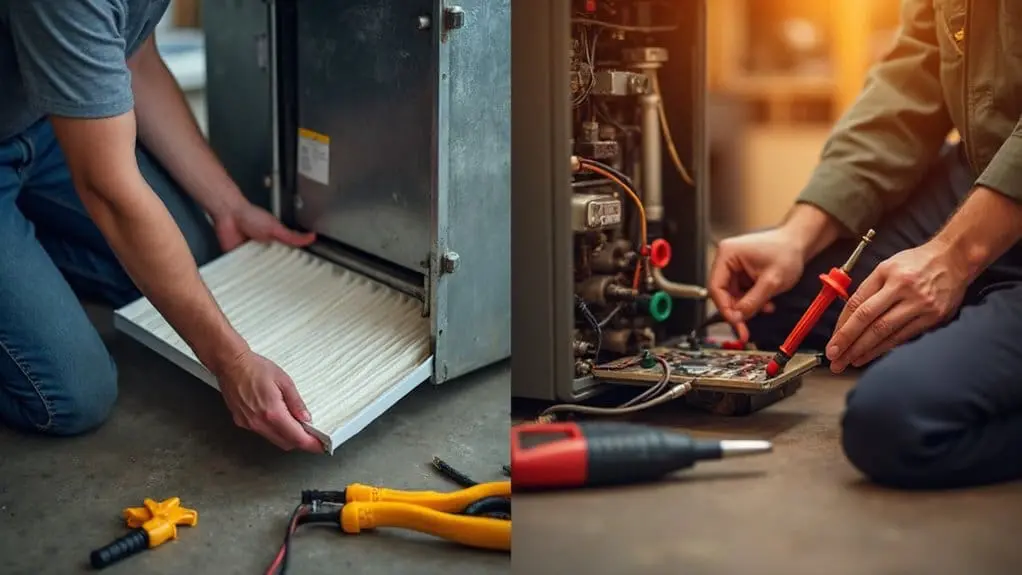
You can safely handle basic furnace maintenance like replacing air filters monthly, cleaning vents with a vacuum, and adjusting thermostat settings after shutting off power. However, you shouldn’t attempt carbon monoxide testing, gas pressure verification, electrical diagnostics, or heat exchanger calibration—these require specialized tools and training. Professional maintenance prevents voiding warranties, guarantees code compliance, and protects against safety hazards like gas leaks or electrical fires. Understanding these boundaries helps you maximize efficiency while avoiding costly mistakes.
Key Takeaways
- Homeowners can safely replace air filters, clean vents, adjust thermostats, and inspect visible ductwork after shutting off power.
- Professional technicians must handle gas components, electrical connections, combustion testing, and carbon monoxide detection using specialized equipment.
- DIY repairs on complex components like heat exchangers, gas pressure systems, and electrical controls risk voiding manufacturer warranties.
- Well-maintained furnaces by professionals last 15-20 years versus 7-10 years for neglected systems, justifying service costs.
- Professional maintenance includes liability insurance, code compliance, and guaranteed warranties that protect against expensive system replacements.
Understanding the Stakes: Why Furnace Maintenance Matters
Your furnace represents one of your home’s most critical and expensive systems, making proper maintenance essential for both safety and financial protection. Regular HVAC maintenance directly impacts three pivotal areas: energy efficiency, system longevity, and indoor air quality.
Professional maintenance can boost your heating system’s efficiency by 15-30%, translating to hundreds of dollars in annual energy savings. A well-maintained furnace operates for 15-20 years, while neglected systems fail after just 7-10 years, forcing premature replacement costs.
Beyond financial considerations, safety remains paramount. HVAC systems involve electrical and gas components that pose serious risks including shock, fire, explosion, and gas poisoning. HVAC technicians possess the expertise to identify and address these hazards properly. Additionally, manufacturer warranties typically require professional service, and DIY repairs can void coverage, creating expensive future complications.
Basic Furnace Tasks Homeowners Can Safely Handle
While professional maintenance remains necessary for complex repairs and safety inspections, homeowners can perform several routine tasks that don’t require specialized training or tools. DIY maintenance begins with replacing air filters every one to three months, depending on usage and filter type. You can safely clean vents and registers using a vacuum and damp cloth to maintain proper airflow. Basic home maintenance tasks include adjusting thermostat settings for ideal efficiency and inspecting visible ductwork for obvious damage. These routine maintenance activities help prevent minor repairs from becoming major problems. However, proper maintenance requires understanding your system’s limitations. Always shut off power before performing any maintenance tasks, and never attempt repairs involving gas lines, electrical connections, or internal components requiring specialized knowledge.
Precise and Safe Inspections Require Professional Expertise
How can you guarantee your furnace operates safely and efficiently beyond basic maintenance tasks? You can’t—this specialized knowledge requires professional expertise from a qualified technician with diagnostic equipment and training.
Professional furnace inspection involves critical safety assessments that homeowners cannot replicate:
- Carbon monoxide detection – Technicians use specialized sensors to identify dangerous gas leaks that could prove fatal
- Safety controls calibration – Complex pressure switches and limit controls require professional adjustment to prevent equipment failure
- Electrical connections testing – High-voltage components need expert evaluation to prevent fire hazards
DIY attempts at thorough maintenance often require emergency repairs due to inadvertent damage. Qualified technicians follow strict protocols for combustion testing, gas pressure verification, and electrical system analysis—critical procedures that require professional intervention to confirm code-compliant, safe operation.
Skilled Handling of Complex Components and Systems
Beyond safety inspections, modern furnace systems contain intricate components that demand specialized technical skills to service properly. You’ll encounter complex components like variable-speed blowers, smart thermostats, and advanced ignition systems requiring specific expertise. Professional HVAC technicians possess specialized tools designed for gas pressure testing, electrical diagnostics, and heat exchanger analysis—equipment you likely don’t own or know how to operate safely.
Electrical components within furnaces carry significant risks when handled improperly, potentially causing system damage or personal injury. Heat exchangers require precise calibration and testing protocols that only certified technicians can perform according to manufacturer specifications. Advanced technology integration in today’s systems demands thorough understanding of interconnected components. Following established safety protocols isn’t optional—it’s essential for preventing dangerous malfunctions and ensuring code compliance.
Safety Precautions Beyond DIY Capabilities
The safety requirements for furnace maintenance extend far beyond what standard homeowner knowledge and equipment can address. Your gas furnace and heating system require specialized expertise to prevent hazardous situations that could result in Costly Mistakes or dangerous exposure.
Professional HVAC technicians follow stringent safety protocols when servicing your heating and cooling system, ensuring proper handling of:
- Gas leak detection and mitigation – Using calibrated equipment to identify dangerous gas concentrations
- Electrical system safety verification – Testing connections and components within your heating system
- Carbon monoxide hazard assessment – Monitoring combustion processes in your furnace or air handler
A qualified technician possesses the training and specialized tools necessary to safely navigate complex internal components. Attempting DIY maintenance on gas, electrical, or internal HVAC system elements creates serious safety risks that compromise your home’s protection.
Effective Troubleshooting for Complex Furnace Issues
When your furnace exhibits irregular cycling, inconsistent heating, or unusual noises, you’re facing diagnostic challenges that require sophisticated troubleshooting methodologies beyond standard homeowner capabilities. Professional Maintenance involves trained HVAC technicians utilizing advanced diagnostic equipment to accurately identify furnace problems within complex furnace components like flame sensors, igniters, and blower motors.
Your specialized knowledge limitations prevent effective analysis of intricate system malfunctions that demand extensive technical experience. Online tutorials can’t replicate the efficiency that comes from professional expertise in pinpointing specific issues through systematic evaluation.
Attempting DIY troubleshooting of complex problems often leads to hazardous mistakes, including gas leaks or electrical hazards. HVAC Maintenance professionals follow stringent protocols for efficient troubleshooting, ensuring proper diagnosis and resolution of sophisticated furnace malfunctions that require code-compliant repair procedures.
Cost Considerations: Balancing Investment and Value
Although professional HVAC maintenance requires higher upfront costs, you’re investing in expertise that prevents catastrophic system failures and costly emergency repairs. Professional service delivers superior value through specialized tools, liability insurance coverage, and code-compliant installations that DIY approaches can’t match.
Consider these cost factors when evaluating maintenance options:
- Tool Investment: Complex repairs require specialized equipment that costs more than the professional service itself
- Parts Warranty: Professionals provide guaranteed parts and labor, while DIY mistakes void manufacturer warranties
- Safety Compliance: Licensed technicians guarantee code-compliant work, preventing insurance claim denials
If you have physical limitations, professional maintenance becomes essential rather than optional. The investment protects against expensive system replacements and provides peace of mind through thorough liability insurance. Quality professional service ultimately costs less than repeated DIY attempts and subsequent repairs.
Conclusion
You’ll find it’s no coincidence that homeowners who tackle basic filter changes and thermostat adjustments while leaving gas line work, heat exchanger inspections, and electrical troubleshooting to certified technicians experience fewer breakdowns and lower long-term costs. Your furnace’s complexity demands this balanced approach—you can’t safely navigate combustion analysis or pressure switch calibration without proper training. When you respect these boundaries, you’re protecting both your investment and your family’s safety.