
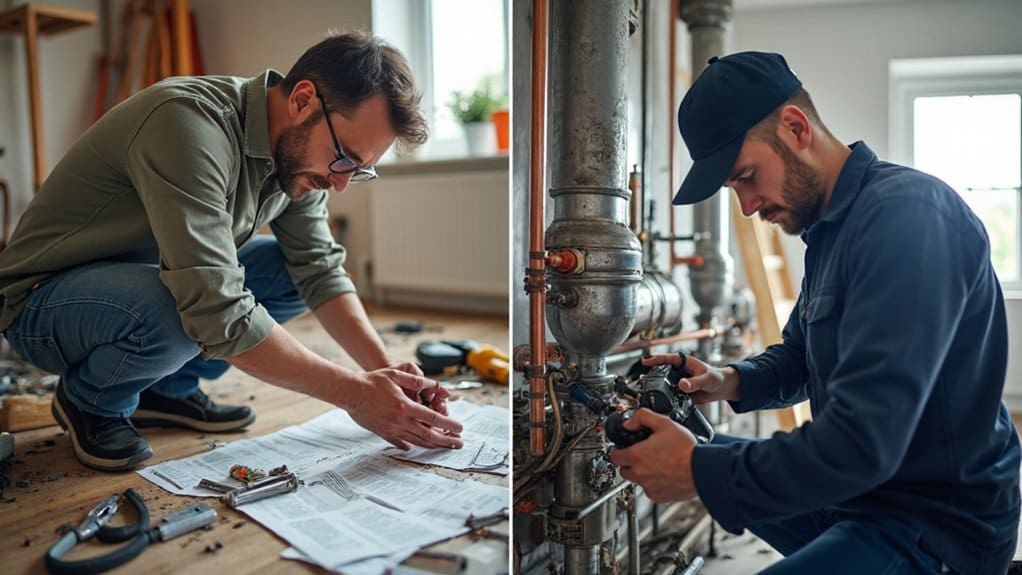
While DIY heat pump installation might seem cost-effective, you’ll face complex electrical wiring, refrigerant handling requirements, and precise system sizing that demand professional expertise. Without proper training, you risk voiding warranties, creating safety hazards, and causing expensive inefficiencies. Professional technicians bring specialized tools, code compliance knowledge, and years of experience to confirm ideal performance and energy savings. The upfront investment in expert installation protects your home’s comfort system and reveals significant long-term benefits.
Key Takeaways
- Professional installers have specialized training, tools, and experience to handle complex HVAC components, electrical wiring, and refrigerant systems safely.
- DIY installation risks voiding manufacturer warranties, causing expensive repairs, and creating safety hazards from improper electrical or refrigerant handling.
- Experts ensure code compliance, proper permits, and adherence to safety regulations that DIY installers often overlook or misunderstand.
- Professional installation maximizes system efficiency and performance through precise sizing, calibration, and configuration that untrained individuals cannot achieve.
- Hidden DIY costs include specialized tools, permits, potential repairs, and inflated energy bills that often exceed professional installation fees.
Understanding Heat Pump System Complexity and Technical Requirements
While heat pumps might appear straightforward from the outside, they’re sophisticated systems that demand extensive technical expertise to install properly. You’ll encounter complex HVAC components that require professional installation knowledge to function ideally. The system’s electrical components need precise wiring connections that comply with local building codes and safety protocols.
Refrigerant handling presents another critical challenge during installation. You must understand proper charging procedures, leak detection, and environmental regulations governing these chemicals. Improper refrigerant levels directly impact system efficiency and energy consumption, compromising your home comfort.
The installation process involves evaluating your space’s heating and cooling loads, sizing equipment appropriately, and integrating ductwork systems. You’ll need specialized tools, testing equipment, and thorough understanding of heat transfer principles. Without proper technical expertise, you risk creating safety hazards, voiding warranties, and installing an inefficient system that increases energy consumption while reducing home comfort levels.
The Hidden Costs and Risks of DIY Heat Pump Installation
Beyond the technical challenges, you’ll face significant financial and safety risks that often exceed the cost of professional installation. The hidden costs start mounting when you purchase specialized tools, permits, and materials at retail prices rather than contractor discounts. Risk of accidents increases dramatically when handling refrigerants and electrical connections without professional training.
Incorrect installation creates cascading problems that DIY installations may result in voiding manufacturer warranties entirely. Without the necessary technical skills, you’re gambling with expensive equipment that could fail prematurely. Going the DIY route often means discovering mistakes after system startup, when refrigerant leaks or electrical issues become apparent.
Poor connections and improper sizing can lead to inefficiencies that inflate your energy bills for years. Future repairs become more expensive when professionals must first correct amateur mistakes. Even damage to your home’s electrical system or ductwork can occur, creating costs that far exceed professional installation fees.
Professional Expertise: Certified Technicians and Proper Equipment
Professional HVAC technicians bring years of specialized training and hands-on experience that you simply can’t replicate through online tutorials or weekend research. Their professional expertise encompasses complex system integration, precise refrigerant charging, and thorough airflow testing using specialized tools you don’t own.
Certified technicians possess the proper equipment necessary for accurate installation, from manifold gauges to digital multimeters. They understand critical processes like refrigerant handling, electrical connections, and ductwork modifications that require technical precision. You’ll benefit from their knowledge of current industry standards and local building codes, confirming your installation meets all regulatory requirements.
Beyond installation, certified professionals provide ongoing support and warranties that protect your investment. They stay current with evolving technologies and manufacturer specifications, guaranteeing ideal system performance. When you choose professional installation, you’re not just paying for labor – you’re investing in expertise that confirms safety, efficiency, and long-term reliability.
Safety Considerations and Code Compliance in Heat Pump Installation
Heat pump installation involves significant safety hazards that can endanger both you and your property if handled improperly. Electrical hazards pose serious risks when you’re working with high-voltage connections without proper training. Refrigerant handling requires specialized knowledge to prevent toxic exposure and environmental damage.
Professional installers understand building codes and safety regulations that govern heat pump systems. They verify your installation meets all safety standards and achieves code compliance, protecting you from potential fines and legal issues. When you attempt DIY installation, you’ll likely void manufacturer warranties due to improper procedures.
Certified HVAC technicians possess the specialized knowledge to navigate complex legal compliance requirements. They’re trained to identify potential hazards and implement proper safety protocols throughout the installation process. Without this expertise, you risk system malfunctions, property damage, and personal liability. Professional installation guarantees adherence to all safety regulations while maintaining your warranty coverage.
Warranty Protection and Long-Term System Performance
When you install a heat pump yourself, you’re fundamentally gambling with thousands of dollars in warranty protection that manufacturers typically void for non-professional installations. Professional installation safeguards your warranty remains intact, protecting you from expensive repairs and replacement costs.
Professional Heat Pump Installation delivers maximized system performance that DIY approaches can’t match. Expert technicians certify proper heat pump installation through precise refrigerant handling, electrical connections, and system calibration. This expertise certifies maximum efficiency and longevity, delivering genuine potential cost savings through reduced energy bills and fewer breakdowns.
Professional expertise minimizes the risk of performance-compromising mistakes that plague DIY installations. Expert technicians understand complex system requirements and local building codes, certifying your heat pump operates safely and reliably. Their expertise allows for proper sizing, placement, and configuration that guarantees optimal performance over your system’s lifetime.
While DIY installation might seem cost-effective initially, professional installation protects your investment and certifies long-term reliability.
Energy Efficiency Optimization Through Professional Installation
Anyone can install a heat pump, but only certified professionals can access its maximum energy efficiency potential through precise technical optimization. Professional installers conduct detailed load calculations to properly size your system, guaranteeing your system operates efficiently at peak capacity. Their expertise enables heat pumps to achieve up to 300% systems efficiency, dramatically reducing your energy consumption and utility bills.
Proper installation requires expertly charging refrigerant levels and adjusting airflow dynamics to enhance your heat pump’s coefficient of performance. Professional installers optimize all components of the HVAC system, including ductwork and insulation, preventing costly heat transfer losses that compromise efficiency.
This installation confirms expertise extends beyond initial setup. Regular HVAC maintenance performed by certified technicians helps maintain optimal performance throughout your system’s lifespan. When HVAC problems arise, professionals provide targeted HVAC solutions that maintain peak efficiency. Professional HVAC solutions deliver sustained energy savings, making your investment worthwhile for years to come.
Time Investment and Skill Level Requirements for Heat Pump Projects
Beyond the efficiency benefits that professionals provide, DIY heat pump installation demands extensive time commitment and advanced technical skills that most homeowners don’t possess. You’ll need exhaustive expertise in HVAC system design, electrical wiring, and refrigerant handling—knowledge that takes years to develop.
While professional technicians complete heat pump systems installation in a single day using specialized tools, your DIY project could stretch across several weeks. Without proper technical skill, you’re likely to encounter complications that compromise system performance and energy efficiency.
The learning curve is steep, requiring you to master complex HVAC principles before touching any equipment. Professional installers bring proven expertise that guarantees ideal functionality from day one. Attempting installation without adequate knowledge risks safety hazards, poor performance, and warranty voidance.
Your time investment in research, troubleshooting, and potential reinstallation far exceeds the cost of hiring qualified professionals who ensure proper heat pump systems operation.
Making the Smart Investment Decision for Your Home Comfort System
How do you determine whether professional installation represents a wise investment for your home’s comfort system? The answer lies in understanding the long-term value of optimal performance versus upfront savings.
When you’re weighing DIY versus professional options, consider that experienced technicians bring expertise in determining proper system size for your home’s heating and cooling requirements. This critical assessment directly impacts comfort and energy efficiency throughout your system’s lifespan.
Professional installation guarantees your heat pump operates at peak energy efficiency from day one. HVAC company technicians handle complex refrigerant systems, electrical connections, and warranty requirements that DIY installations often compromise.
While you’ll pay more initially for professional installation, the investment pays dividends through enhanced long-term efficiency, reduced repair costs, and maintained warranty coverage. Your home’s comfort system represents a significant investment—protecting that investment with expert installation ensures maximum returns through reliable performance and sustained energy savings.
Conclusion
You’ll find that choosing professional heat pump installation isn’t just throwing money at a problem—it’s investing in peace of mind. The complexity, safety risks, and technical expertise required make DIY installation a costly gamble with your home’s comfort system. You’re better served trusting certified technicians who’ll guarantee proper installation, warranty protection, and maximum efficiency. Don’t let upfront savings cost you thousands in repairs, inefficiency, and potential safety hazards down the road.