
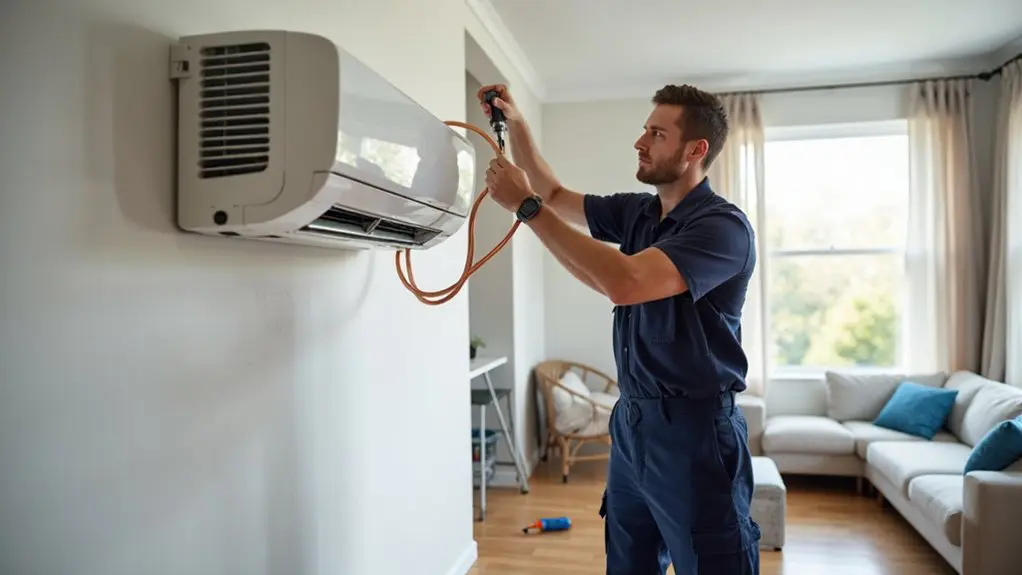
You’ll find ductless mini-split installation eliminates traditional ductwork while providing precise zone-based temperature control through indoor air-handling units connected to an outdoor compressor via refrigerant lines. These systems reduce energy consumption by up to 60% compared to conventional HVAC, with single-zone installations costing $5,000-$8,000 and multi-zone systems starting at $11,000. The installation process requires strategic unit positioning, proper refrigerant connections, and electrical wiring compliance. Explore the thorough details below to determine your ideal system configuration.
Key Takeaways
- Ductless mini-splits eliminate traditional ductwork while providing zoned heating and cooling with individual temperature control for each room.
- Energy efficiency reduces consumption by up to 60% compared to conventional HVAC systems through advanced inverter technology.
- Installation requires strategic indoor unit placement, refrigerant line connections, and proper outdoor compressor positioning for optimal performance.
- Single-zone systems cost $5,000-$8,000, while multi-zone installations start at $11,000 and complete house systems reach $20,000-$30,000.
- Installation complexity varies from several hours for single zones to several days for multi-zone configurations requiring multiple indoor units.
What Are Ductless Mini-Split Systems?
Ductless mini-split systems represent a revolutionary approach to home climate control that eliminates traditional ductwork while delivering precise temperature management. These HVAC systems consist of an outdoor compressor/condenser unit connected to one or more indoor air-handling units through refrigerant lines, bypassing the extensive ductwork required by traditional central systems.
You’ll find mini-split systems offer superior zoned heating and cooling capabilities, allowing individual temperature control for specific rooms or areas. The indoor units provide flexible installation options—wall-mounted, ceiling-recessed, or floor-mounted—accommodating various architectural requirements and space constraints.
These systems excel in energy efficiency, with premium models achieving seasonal energy efficiency ratios exceeding 30. You’ll commonly use ductless systems for home additions, renovations, or areas disconnected from existing central HVAC infrastructure. The streamlined installation process requires minimal structural modifications while maintaining ideal performance standards for year-round climate control.
How Ductless Mini-Split Systems Work
Understanding the installation benefits requires examining the operational mechanics that make these systems so effective. Your ductless mini-split system operates through a closed-loop refrigerant cycle connecting outdoor and indoor units. During cooling, the indoor unit extracts warm air from your home while refrigerant absorbs the heat energy. The outdoor compressor releases this heat, returning cooled refrigerant to deliver conditioned air back into your space.
The system’s heat pump technology reverses this process for heating, extracting energy from outdoor air even in cold conditions. This heat transfer method proves more efficient than generating heat directly, reducing operational cost substantially.
Each indoor unit features independent thermostat control, enabling precise temperature management per zone. This zoned approach eliminates energy waste from heating and cooling unused areas. The refrigerant lines require only small wall penetrations, maintaining your home’s structural integrity while delivering consistent comfort and improved efficiency throughout your living space.
Benefits of Ductless Mini-Split Installation
Modern homeowners consistently discover that ductless mini-split installation delivers exceptional value through multiple operational advantages. Your ductless mini-split system provides efficient heating and cooling through advanced inverter technology, reducing energy consumption by up to 60% compared to conventional heating and cooling systems. This ductless air conditioner eliminates extensive ductwork requirements, streamlining installation procedures while minimizing structural modifications.
Ductless systems offer personalized comfort through individual zone control, allowing you to adjust temperatures in specific rooms independently. You’ll achieve significant energy savings through precise temperature management and reduced thermal losses. These ductless mini splits operate with minimal noise levels, ensuring quiet operation during heating and cooling cycles.
Your investment generates substantial cost savings through reduced utility bills and lower maintenance requirements. The system’s environmentally friendly refrigerants contribute to reduced carbon emissions. Additionally, you’ll benefit from simplified installation processes, enhanced indoor air quality through advanced filtration, and year-round climate control capabilities in a single, compact unit.
Ductless Mini-Split Installation Process
Professional installation transforms your ductless mini-split system from individual components into a fully integrated climate control solution. Unlike traditional HVAC systems, Ductless Mini Split Installation requires precise coordination between indoor and outdoor units to guarantee optimal performance in your homes.
Your certified technician will strategically position multiple indoor units throughout each room, making sure proper refrigerant line connections and electrical wiring. The outdoor compressor unit placement demands careful consideration of airflow, drainage, and local building codes.
Key installation phases include:
- Site preparation and unit positioning – Mounting indoor handlers on walls, ceilings, or floors based on room layout requirements
- Refrigerant line connection – Linking indoor and outdoor units through properly insulated copper tubing
- System commissioning – Testing electrical connections, refrigerant levels, and control functionality
Installation complexity varies considerably. Single-zone systems typically require several hours, while multi-zone configurations with multiple indoor units may need several days. Professional Ductless Air Conditioners installation assures your Split system delivers maximum energy efficiency and reliable climate control performance.
Cost Breakdown for Ductless Mini-Split Systems
Ductless mini-split system costs extend well beyond the initial equipment purchase, encompassing multiple variables that directly impact your total investment. Single Zone mini split systems typically range from $5,000 to $8,000, while Multi Zone configurations start at $11,000 for installations exceeding two zones. Complete house installations can reach $20,000 to $30,000, depending on system complexity.
Heat Pump efficiency ratings, measured by Seasonal Energy Efficiency Ratio, directly influence upfront costs but reduce long-term operating expenses. Installation costs vary based on indoor unit quantity and mounting configurations—wall, ceiling, or floor-mounted units each require specific installation procedures.
Correctly sizing your Ductless AC Unit proves essential for ideal performance and cost-effectiveness. Split Air Conditioning systems demand professional assessment of tonnage requirements, electrical specifications, and refrigerant line routing. Qualified HVAC technicians guarantee proper installation procedures, preventing costly repairs and maximizing system efficiency. Factor in permit costs, electrical upgrades, and potential structural modifications when calculating your total investment.
Choosing the Right Mini-Split System for Your Home
Selecting the appropriate mini-split system requires careful evaluation of your home’s specific heating and cooling demands, spatial constraints, and energy efficiency goals. Understanding how ductless systems work helps you determine whether you need a single-zone unit for one room or a multi-zone configuration for individual rooms or zones throughout your home.
Calculate your BTU requirements using the 400-square-foot per 9,000 BTU guideline to guarantee adequate capacity to heat or cool your spaces effectively. Single Zone vs multi-zone systems considerably impacts both performance and lower installation costs compared to traditional ductwork installations.
Consider these critical factors when selecting your system:
- Indoor air handlers placement – wall-mounted, ceiling-recessed, or floor-mounted options based on room layout
- Energy efficiency ratings – Energy Star models reduce energy costs and may qualify for tax credits
- Zone requirements – single room applications versus whole-home comfort needs
Proper sizing prevents system cycling issues and maximizes efficiency while minimizing operational costs.
Conclusion
You’ve navigated the blueprint for ductless mini-split installation—now it’s time to pull the trigger. Remember, you’re dealing with electrical connections and refrigerant lines, so don’t cut corners on professional installation. You’ll want to verify proper load calculations, guarantee adequate drainage, and confirm electrical compatibility before proceeding. Once you’ve selected your system based on BTU requirements and zone configurations, follow manufacturer specifications precisely. Your investment in professional installation will pay dividends in system longevity and exemplary performance.