
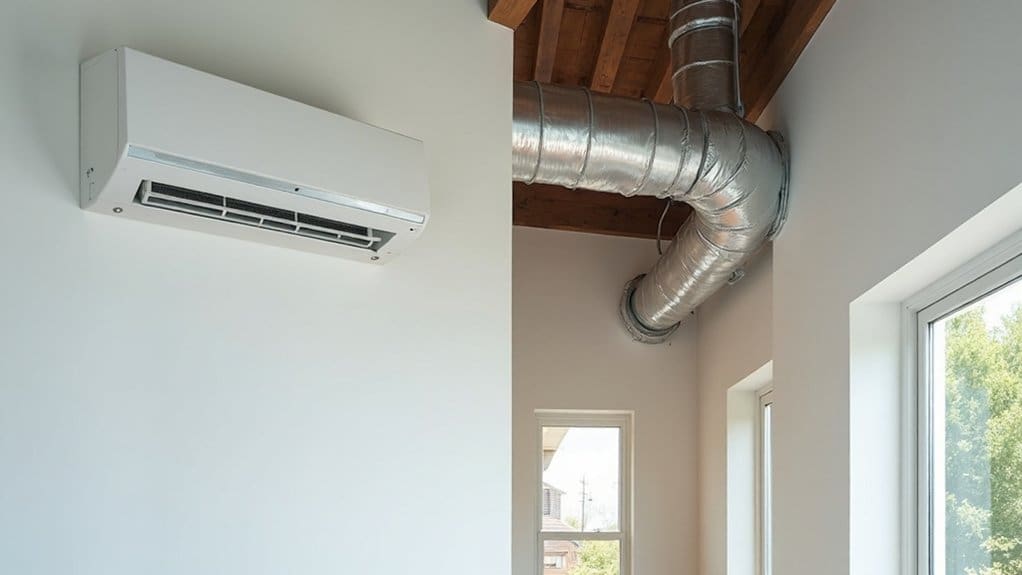
Your choice between ductless and ducted heat pump installation depends on your home’s existing infrastructure and specific needs. Ductless systems cost $4,500-$15,000, install in one day, and provide targeted climate control with superior energy efficiency. Ducted systems range $8,500-$20,000, require extensive ductwork, but offer uniform distribution throughout larger homes. Consider your home size, existing HVAC setup, and whether you prefer zoned control or consistent temperatures. The following factors will help determine your best solution.
Key Takeaways
- Ductless systems cost $4,500-$15,000 and install in one day, while ducted systems cost $8,500-$20,000 with multi-day installation.
- Ductless systems reduce heating costs by 60% and cooling costs by 30% through superior energy efficiency.
- Larger homes benefit from ducted systems’ uniform distribution, while smaller homes suit ductless systems’ targeted control.
- Ductless installation requires only a small wall hole, while ducted systems need extensive ductwork and structural modifications.
- Existing HVAC infrastructure and desired zoned temperature control are crucial factors in choosing the right system.
Understanding the Key Differences Between Ductless and Ducted Heat Pumps
When choosing between ductless and ducted heat pumps, you’ll encounter two fundamentally different approaches to heating and cooling your home. Ductless systems feature individual air handlers mounted in each room, delivering targeted climate control without requiring extensive ductwork throughout your house. In contrast, ducted systems operate through a central indoor unit that distributes conditioned air via a network of ducts running through walls, ceilings, and floors.
These contrasting designs create distinct advantages for each system. Ductless installations are typically less invasive and faster to complete since they don’t require extensive ductwork modifications. You’ll also benefit from superior energy efficiency, as ductless systems avoid the heat loss that occurs through traditional ductwork. However, ducted systems offer centralized control through a single thermostat, while ductless systems provide independent zoning capabilities. Understanding these core differences helps you determine which heating and cooling solution best matches your home’s specific requirements and your personal preferences.
Installation Requirements and Process Comparison
The installation process reveals one of the most significant distinctions between these two heat pump systems. When you choose ductless heat pumps, you’ll experience a straightforward installation that involves drilling a small wall hole for refrigerant lines connecting indoor and outdoor units. This ease of installation typically takes just one day, making it less invasive for your home comfort needs.
Conversely, ducted heat pumps require extensive existing ductwork or new duct installation throughout your home. This complex installation process can span multiple days and involves significant structural modifications. If you’re retrofitting an older home without existing ductwork, you might face additional challenges like asbestos abatement, increasing your initial cost substantially.
Ductless systems offer flexible indoor unit placement for targeted room heating and cooling, while ducted HVAC systems use single indoor units. Though ducted systems may provide whole-home energy efficiency, ductless options reduce utility bills through zone control capabilities.
Cost Analysis: Upfront Investment and Long-Term Savings
How much should you expect to invest in your new heat pump system? Ductless systems typically cost $4,500 to $15,000 for installation, while ducted systems range from $8,500 to $20,000. The upfront savings with ductless come from avoiding expensive ductwork installation.
You’ll find ductless systems offer impressive long-term savings through energy efficiency. They can reduce your cooling costs by up to 30% and heating costs by 60% compared to traditional ducted systems. This efficiency translates into substantial savings over time.
Geothermal ducted systems represent a premium option, often exceeding $40,000 in installation cost. However, they deliver exceptional energy performance and long-term financial benefits.
Ductless systems provide unique budget flexibility—you can install them room by room, spreading your investment over time. This approach makes heat pump technology more accessible while still delivering the efficiency and comfort benefits you’re seeking.
Energy Efficiency and Performance Considerations
Energy efficiency stands as the defining factor separating ductless and ducted heat pump performance. You’ll find ductless systems deliver superior energy efficiency compared to their ducted counterparts, potentially reducing your heating costs by up to 60% and cooling costs by 30%.
The key advantage lies in eliminating energy loss through ductwork. Ducted systems can lose up to 30% of their energy through duct leaks and thermal transfer in unconditioned spaces, directly impacting your energy bills. Ductless systems bypass this problem entirely by delivering conditioned air directly to each room.
Your zoning capabilities with ductless HVAC systems allow you to heat or cool only occupied rooms, maximizing efficiency. Additionally, ductless units feature inverter-driven compressors that adjust output based on demand, unlike the single-stage compressors in many ducted systems.
These efficiency gains translate into substantial long-term savings on your heating and cooling costs, making ductless systems increasingly attractive for energy-conscious homeowners.
Choosing the Best Heat Pump System for Your Home’s Needs
When choosing between ductless and ducted heat pump systems, your home’s unique characteristics will determine which option delivers the best performance and value. Consider your home size first—larger homes often benefit from ducted heat pumps‘ whole-home coverage, while smaller spaces work well with ductless mini-splits.
Evaluate your existing HVAC infrastructure carefully. If you lack ductwork, ductless systems offer superior energy efficiency without expensive modifications. However, homes with established ducts might find ducted heat pumps more cost-effective.
Your desired heating and cooling capabilities matter greatly. Ductless mini-splits excel at zoned temperature control, letting you customize comfort in specific rooms. Ducted systems provide uniform distribution throughout your home layout.
Installation costs vary based on these factors. While ductless systems typically cost less upfront, complex home layouts might require multiple units. Ducted HVAC systems demand higher initial investment but deliver extensive coverage. Assess your priorities—targeted comfort versus whole-home consistency—to make the right choice.
Frequently Asked Questions
Is a Ducted or Ductless Heat Pump Better?
You’ll find ductless systems offer better energy efficiency comparison and zoning control capabilities, while ducted provides superior temperature uniformity comparison. Your choice depends on installation complexity differences, existing ductwork integration challenges, and specific heating capacity variations needed.
What Is the Best Side of the House to Put a Heat Pump?
You’ll want north-facing placement for ideal sun exposure and shade considerations. Consider east-west orientation for airflow patterns, noise minimization near bedrooms, accessibility concerns for maintenance, and visual aesthetics with landscaping integration.
What Are the Disadvantages of a Ducted Heat Pump?
You’ll face higher installation costs, complex ductwork requirements, potential air leaks affecting energy efficiency, more maintenance needs, space constraints, and limited flexibility compared to alternatives, plus possible noise considerations and aesthetic limitations throughout your home.
Do Mini Splits Devalue a House?
Don’t worry—mini splits won’t sink your property value. They’re actually viewed favorably due to energy efficiency impact and zoning capabilities. Proper installation and maintenance guarantee they enhance resale appeal rather than detract from it.
Conclusion
You’ll find your perfect heating companion by weighing your home’s unique fingerprint against each system’s personality. Ductless units whisper efficiently in individual rooms, while ducted systems embrace your entire living space with consistent warmth. Your wallet’s comfort level, existing infrastructure, and energy appetite will guide this important courtship. Don’t rush this relationship—the right heat pump will be your home’s faithful guardian for decades, keeping you cozy through life’s seasons.