
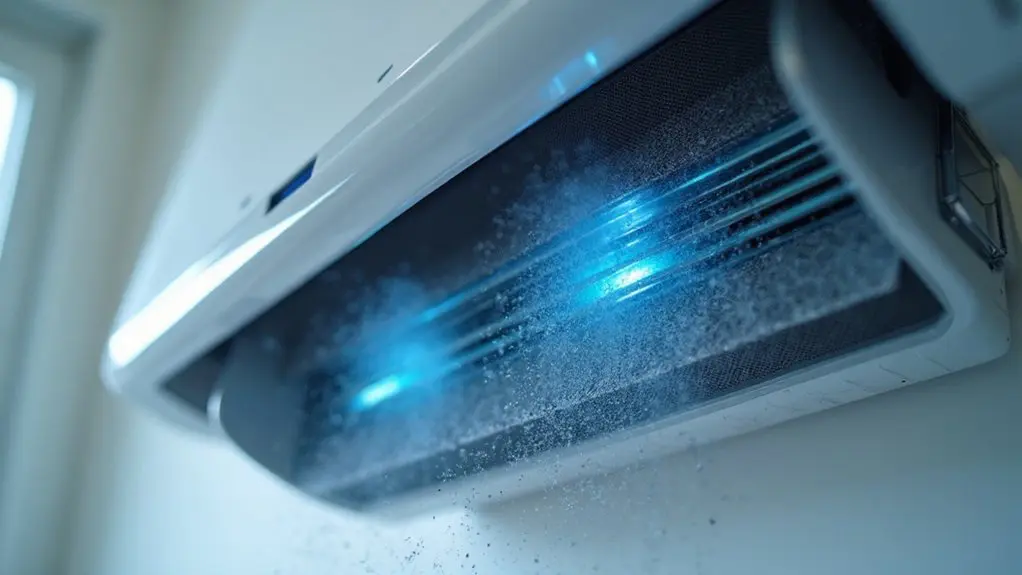
You’ll install your electronic air cleaner on your furnace’s return side, securing the cabinet with sheet metal screws and creating airtight seals with gasket material. The two-stage electrostatic process captures 99% of particles as small as 0.1 microns, including allergens and bacteria, while maintaining ideal airflow. You’ll need adequate clearance for maintenance access and must establish regular cleaning protocols for the washable collection plates. Proper installation techniques and ongoing maintenance practices guarantee maximum filtration performance.
Key Takeaways
- Electronic air cleaners use two-stage electrostatic process to capture 99% of particles as small as 0.1 microns.
- Install on return side of furnace with proper clearance for maintenance and airtight ductwork connections.
- Secure cabinet with sheet metal screws, apply gaskets, connect flexible adapters, and reinstall electronic cells properly.
- Benefits include superior particle capture, maintained airflow, washable plates, and 99% pathogen inactivation including coronavirus.
- Regular cleaning of pre-filters and plates, quarterly connection checks, and manufacturer maintenance schedules ensure optimal performance.
How Electronic Air Cleaners Work
When you install an electronic air cleaner in your HVAC system, it operates through a precise two-stage electrostatic process that captures contaminants as small as 0.1 microns. The first stage uses ionizing wires that charge airborne particles as they pass through your system’s air flow. These charged particles then move to the second stage, where oppositely charged collector plates attract and trap the contaminants through electrostatic force.
Your electronic air purifier’s key components work systematically: the pre-filter removes larger debris, protecting the electronic cell from damage. The electronic cell handles the ionization and collection process, while the fan maintains proper air circulation. The control panel allows you to monitor system performance safely.
This electrostatic attraction principle effectively captures pollen, mold spores, and bacteria that standard filter systems miss. The result considerably improves your indoor air quality by removing microscopic particles that would otherwise circulate throughout your home’s air supply.
Choosing the Right Location for Installation
Since proper placement directly impacts your electronic air cleaner’s performance, you’ll need to install the unit on the return side of your furnace or air handler. This strategic positioning allows your HVAC system to process all incoming air through the cleaner before heating or cooling begins.
The return side location maximizes how electronic air cleaners work by guaranteeing charged particles get captured before entering your system’s components. This placement helps improve indoor air quality while protecting your equipment from contamination. Benefits of Electronic Air cleaners offer exceptional performance when positioned where they can capture airborne particles from your home’s entire air circulation.
You’ll need adequate clearance around the installation site for maintenance access. Measure carefully to fit properly within your existing ductwork. This positioning enhances both air quality and system longevity by filtering contaminants before they reach sensitive HVAC components, making your investment more effective long-term.
Step-by-Step Installation Process
After selecting the ideal location, you’ll begin the physical installation by securing the electronic air cleaner cabinet to your furnace’s side panel. Use sheet metal screws to attach the cabinet firmly, guaranteeing it’s level and properly aligned. Apply gasket material around the connection points to create an airtight seal that maximizes your right electronic air cleaners’ efficiency.
Next, connect the ductwork between the air cleaner and existing heat duct using a flexible adapter. This minimizes noise transmission and prevents air leaks that could compromise your air conditioning system’s performance. Properly sealed connections help the electronic air filter the air effectively through its electrically charged plates.
Reinstall the electronic cells and prefilter in their correct orientation, then attach the electronic switch component. Double-check all connections before plugging the power cord into a nearby outlet. This systematic approach ensures superb indoor quality improvement, particularly benefiting allergy or asthma sufferers while preventing future HVAC problems through proper improving indoor air quality maintenance.
Benefits of Using Electronic Air Cleaners
Once your electronic air cleaner operates within your HVAC system, you’ll experience significant improvements in air quality through its advanced electrostatic precipitation technology. The right electronic air cleaners enhance indoor quality homes air quality by capturing 99% of airborne particles as small as 0.1 microns, including allergens and bacteria that compromise clean air.
Your heating and cooling system maintains ideal performance while using electronic air cleaners, as they don’t restrict airflow like traditional filters. You’ll eliminate frequent filter replacements since washable collection plates provide cost-effective maintenance. The system captures larger particles like dust and pet dander while simultaneously targeting microscopic contaminants.
You’re taking a pivotal step towards quality of the air improvement for allergy and asthma sufferers. Advanced models trap and inactivate 99% of select pathogens, including coronavirus, delivering cleaner air throughout your home. This technology guarantees fresher air circulation while reducing maintenance demands and operating costs.
Maintenance and Performance Optimization
Maintaining peak performance in your electronic air cleaner requires systematic cleaning and monitoring procedures that directly impact filtration efficiency. You’ll need to establish regular cleaning protocols for pre-filters and collection plates, as accumulated particles reduce system effectiveness. Remove and wash these components monthly using mild detergent and warm water, ensuring complete drying before reinstallation.
Verify proper sizing matches your space’s square footage to prevent ozone overproduction and maintain efficient operation. Check your power supply connections quarterly, confirming voltage levels meet manufacturer specifications. Inspect all ductwork connections for air leaks that compromise airflow integrity and reduce filtration capacity.
Monitor your unit’s electrical components for signs of arcing or unusual sounds, which indicate maintenance needs. Adhere strictly to the manufacturer’s maintenance schedule for filter replacements and cell servicing. Document all maintenance activities to track performance trends and identify potential issues before they affect your indoor air quality or system longevity.
Conclusion
You’ve now mastered electronic air cleaner installation and optimization. Remember that properly installed units can remove up to 95% of airborne particles as small as 0.1 microns—significantly outperforming standard filters. Always verify electrical connections are secure and follow manufacturer’s voltage specifications to prevent equipment damage. Schedule monthly cleaning cycles to maintain peak performance and guarantee adequate clearance around your unit. Regular maintenance will maximize your system’s particle removal efficiency and extend its operational lifespan considerably.