
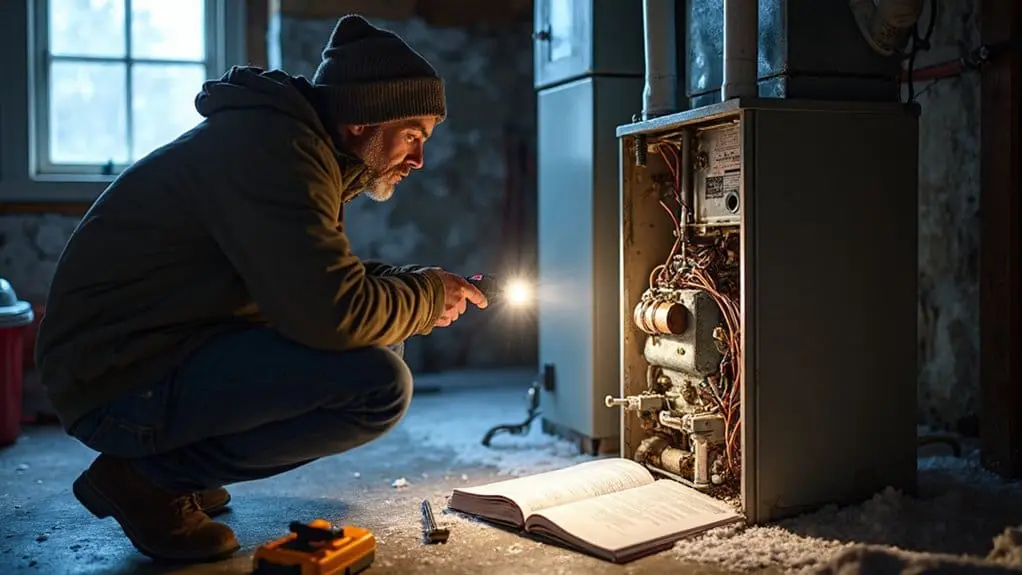
When your furnace fails, first check your thermostat settings and circuit breaker, then inspect for tripped switches or blown fuses. If you smell gas, immediately turn off the gas supply valve clockwise and evacuate the area. Replace your air filter if it’s clogged, guarantee all vents are open, and gather your family in one room while using safe space heaters for temporary warmth. These systematic steps will help you navigate this heating emergency and determine your next course of action.
Key Takeaways
- Check thermostat settings, circuit breakers, and replace batteries to ensure electrical components are functioning properly.
- Turn off gas supply immediately if you smell gas or suspect a leak for safety.
- Replace clogged air filters and ensure all vents are open and unobstructed for proper airflow.
- Use space heaters and gather family in one room as temporary heating solutions while awaiting repairs.
- Call professional HVAC technicians for complete system failures, strange noises, or persistent operational issues.
Assess the Situation and Stay Calm
When your furnace fails during cold weather, your immediate response determines both your safety and the effectiveness of any repair efforts. Emergency HVAC situations can create a stressful experience, but maintaining composure helps you assess the situation effectively.
Check your system’s power supply first—verify the circuit breaker hasn’t tripped and the emergency switch remains on. Examine your thermostat settings to guarantee they’re correctly configured for heating mode. Listen for unusual sounds from the furnace and note any visible issues like error codes or warning lights.
Make sure family members stay warm by gathering in one room and using safe alternative heat sources. Don’t attempt complex repairs yourself—this can worsen problems and create safety hazards. Document symptoms to help HVAC professionals diagnose issues quickly when they arrive.
Turn Off Your Gas Supply for Safety
If you suspect a gas leak or detect the smell of natural gas around your furnace, immediately shut off your home’s main gas supply valve. When your gas furnace stops working or heating system fails, turning off the gas is essential for preventing dangerous incidents. Locate the gas valve near your gas meter and turn it clockwise until it’s perpendicular to the pipe, completely stopping gas flow. This action eliminates risks associated with gas leaks and potential ignition sources. Before shutting off gas supply, guarantee the pilot light is extinguished if accessible. Remove any flammable materials from the furnace area. Don’t attempt repairs yourself—wait for professional evaluation. Turn off the gas as your primary safety precaution when dealing with furnace malfunctions.
Check Your Thermostat and Electrical Components
Before examining your furnace’s internal components, verify that your thermostat functions properly and electrical connections remain secure. These preliminary checks often resolve heating issues without requiring extensive furnace diagnostics.
- Verify thermostat settings – Confirm your thermostat is set to heat mode with an appropriate temperature setting above current room temperature. Replace dead batteries in battery-powered units, as low power causes erratic operation.
- Check the circuit breaker – Visit your circuit breaker box and locate the furnace’s dedicated breaker. A tripped circuit breaker appears in the middle position between “on” and “off.” Reset any tripped breaker by switching it fully off, then back on.
- Inspect the Circuit connections – Examine visible wiring connections at both the thermostat and furnace disconnect switch for loose or damaged wires.
Inspect Your Furnace Filter and Vents
After confirming your thermostat and electrical systems operate correctly, examine your furnace filter and ventilation system, as restricted airflow represents one of the most common causes of heating system failures. First, locate and inspect your dirty air filter. A clogged air filter can restrict airflow considerably, causing your furnace to overheat and shut down automatically. Replace disposable air filters monthly during peak usage. Next, check all vents and registers throughout your home. Guarantee registers are open and unobstructed by furniture, curtains, or debris. Close inspection should reveal whether each vent allows proper air circulation. Blocked vents force your system to work harder, potentially triggering safety shutoffs. Clean register grilles with a vacuum to remove dust buildup that impedes airflow efficiency.
Implement Temporary Heating Solutions
While you’re working to diagnose and resolve your furnace issues, establishing backup heat sources will keep your home habitable and prevent pipes from freezing.
Emergency heating requires strategic deployment of temporary heating solutions:
- Position space heaters in essential rooms – Select electric units with automatic shutoff features and maintain three-foot clearance from combustible materials. Never leave space heaters unattended or operating overnight.
- Create heat zones using blankets and closed doors – Concentrate your family in one room and seal off unused areas to maximize heating efficiency from your backup sources.
- Utilize safe supplemental heat sources – Fireplaces, wood stoves, or gas logs can provide extra warmth when properly ventilated. Space heaters work effectively, but use them safely with proper supervision.
These temporary heating solutions will restore heat while you address the primary furnace malfunction.
Close Off Unused Rooms to Conserve Heat
Since your heating capacity is compromised during a furnace emergency, you’ll maximize available warmth by systematically sealing off unoccupied areas of your home. Close doors to unused bedrooms, bathrooms, and storage spaces immediately. Shut heating vents in these rooms to prevent warm air from dissipating throughout unoccupied zones. This containment strategy concentrates your heating system’s remaining output in essential living areas where you’re actively working and residing.
Focus heat distribution on primary spaces like living rooms, kitchens, and one bedroom. This targeted approach reduces the area requiring warmth, improving efficiency while you contact repair professionals. Sealing unused rooms prevents cold air infiltration and traps generated heat effectively. Until your furnace returns to normal operation, this conservation method maintains comfortable temperatures in occupied spaces and helps prevent future energy waste during the emergency period.
Prevent Frozen Pipes and Water Damage
When your furnace fails during freezing temperatures, exposed pipes become vulnerable to ice formation that can burst and cause thousands of dollars in water damage. Emergency Furnace Repairs require immediate action to guarantee frozen pipes while your heating systems stop working.
- Open faucets to a steady drip – Running water prevents ice formation in supply lines. Focus on faucets along exterior walls where pipes are most exposed to cold air.
- Shut off your main water supply – If your system fails completely, contact your utility company and locate your home’s water shutoff valve. This prevents catastrophic flooding if pipes burst before necessary repairs occur.
- Check electrical circuits – Verify your furnace circuit breaker hasn’t tripped. When Heat Goes out unexpectedly, electrical issues often cause heating system failures before mechanical problems develop.
Monitor Carbon Monoxide Levels
During emergency furnace repairs, malfunctioning heating systems pose a serious carbon monoxide threat that can quickly become lethal. Install working carbon monoxide detectors near bedrooms and living areas before you trigger the heating system. This odorless, colorless gas accumulates silently, making detection equipment essential for your HVAC system‘s secure operation.
Watch for poisoning symptoms: headaches, dizziness, nausea, and fatigue requiring immediate medical attention. If alarms sound, evacuate immediately and call emergency services. Don’t attempt operating a defective furnace with a pilot light until trusted HVAC professionals complete thorough inspections. Heating repair services and regular maintenance prevent these dangerous situations.
Professional furnace repair services provide troubleshooting tips and guarantee your heating and cooling systems operate safely, eliminating carbon monoxide risks through proper ventilation and combustion protocols.
When to Call a Professional HVAC Technician
Beyond carbon monoxide detection and basic safety measures, certain furnace problems require professional intervention to prevent further damage or dangerous conditions. Your furnace might exhibit warning signs that demand immediate expert attention.
Call an HVAC technician when you encounter:
- Complete system failure – If your heater won’t turn on despite checking the breaker (could cause electrical issues), professional diagnosis is essential for safe restoration.
- Strange noises – Unusual sounds indicate internal component problems requiring specialized inspection and repair expertise.
- Persistent operational issues – When basic maintenance like replacing an air filter (a dirty filter restricts airflow) doesn’t resolve problems, professional assessment prevents costly damage.
Emergency heating problems need to be fixed quickly. Contact us today to schedule an appointment – we’re ready to help restore your home’s warmth safely and efficiently.
Signs Your System Needs Repair or Replacement
Several critical indicators reveal whether your furnace requires repair or complete replacement, and recognizing these signs early prevents costly emergency breakdowns. Common reasons include frequent malfunctions, unusual sounds, and diminished warm air output from your thermal system. The first thing you’ll notice is reduced heating efficiency or constant cycling. An aging unit over 15-20 years old typically requires more frequent interventions. Regular maintenance can help identify problems before they escalate. Your heat pump or furnace showing obvious issues like short-cycling signals internal component failure. Filter: A dirty filter restricts airflow and forces your system to work harder. Rising energy bills indicate declining performance effectiveness. When multiple problems occur simultaneously, replacement becomes more economical than continued repairs. Professional HVAC technicians provide reliable service assessments to determine ideal solutions.
Conclusion
Follow furnace failure protocols precisely to protect your property and people. Prioritize safety by securing gas supplies, checking critical components, and continuously monitoring carbon monoxide concentrations. When wintertime woes overwhelm your warming systems, you’ll weather the worst by implementing interim heating measures and preventing pipe problems. Remember: recognizing replacement requirements requires professional assessment. Don’t delay dangerous decisions—contact certified technicians when troubleshooting tactics fail. Your swift, systematic response safeguards both comfort and safety during heating emergencies.