
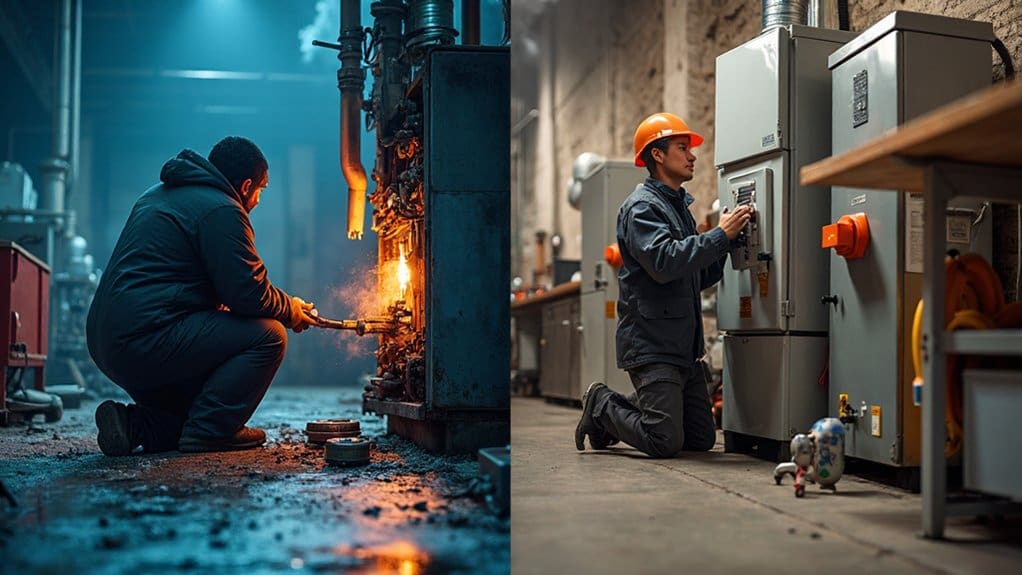
Preventive furnace maintenance costs just $100-$300 annually but saves you thousands in emergency repairs that can strike during winter’s coldest days. You’ll extend your system’s lifespan by up to five years, boost efficiency by 30%, and prevent dangerous issues like carbon monoxide leaks or gas problems. Emergency repairs are disruptive, costly, and poorly timed, while scheduled maintenance catches problems early when they’re affordable to fix. Discover how this proactive approach transforms your heating system’s reliability.
Key Takeaways
- Preventive maintenance costs $100-$300 annually while emergency repairs can reach thousands of dollars in immediate expenses.
- Regular maintenance extends furnace lifespan by up to 5 years and reduces breakdowns by 95%.
- Scheduled inspections prevent dangerous carbon monoxide exposure and identify safety hazards before they become life-threatening emergencies.
- Proactive maintenance improves energy efficiency by 30%, significantly reducing monthly utility bills over time.
- Emergency repairs are disruptive and inconvenient, while preventive care allows planned maintenance during convenient scheduling.
Understanding Emergency Furnace Repair: When Crisis Strikes
When your furnace suddenly stops working in the middle of a frigid winter night, you’re facing an emergency that demands immediate action. Emergency furnace repair becomes critical when your heating system completely fails, leaving you without heat during extreme cold weather.
Several issues can trigger this crisis. Gas leaks pose immediate safety risks, while electrical problems can shut down your entire system. Frozen coils often occur during severe weather, causing complete heating failure. These emergencies don’t wait for convenient timing.
Without prompt emergency service, you’re risking your family’s health and safety. Freezing temperatures can cause serious harm, especially to vulnerable household members. Your home itself faces potential damage from burst pipes and other cold-related issues.
Professional HVAC technicians provide essential emergency services during these critical moments. They possess the expertise to quickly diagnose problems and perform emergency repairs, restoring your heat efficiently. Their rapid response gets your heating system operational again, preventing further complications.
The Fundamentals of Preventive Furnace Maintenance
Rather than waiting for your furnace to fail catastrophically, you can take a proactive approach that prevents most heating emergencies from occurring in the first place. Preventative maintenance forms the foundation of smart home ownership, involving scheduled inspections and tune-ups that keep your HVAC system operating at peak performance.
Routine maintenance includes cleaning filters, checking electrical connections, lubricating moving parts, and testing safety controls. This systematic approach guarantees your heating system running smoothly throughout winter months. Professional technicians identify worn components before they cause complete breakdowns, addressing minor issues that could escalate into expensive repairs.
System maintenance delivers measurable benefits for your heating and cooling equipment. Regular maintenance extends your furnace’s lifespan by up to five years while boosting efficiency by 30%. An annual maintenance plan costs just $100-$300, representing tremendous value compared to emergency repair bills. Routine inspections also improve indoor air quality by maintaining proper airflow and reducing contaminant buildup throughout your home.
Cost Analysis: Emergency Repairs vs. Scheduled Maintenance
Smart homeowners understand that the financial impact of emergency furnace repairs versus scheduled maintenance creates a compelling case for proactive care. When your system unexpectedly breaks down, you’ll face immediate costs ranging from hundreds to thousands of dollars, while annual preventive maintenance typically costs just $100-$300. Emergency service calls demand immediate attention and premium pricing, often leaving you without heat during inconvenient times.
Regular maintenance can save you up to 30% on energy bills through improved efficiency. You’ll extend the life of your furnace and keep warranty coverage intact, protecting against costly out-of-pocket repairs. Maintenance helps identify potential issues before they become expensive emergencies, allowing you to save money through planned repairs rather than crisis situations.
The math is simple: investing in scheduled tune-ups prevents the need for disruptive, expensive breakdowns. Contact us today to establish a maintenance plan that protects both your comfort and wallet.
How Preventive Maintenance Extends System Lifespan
Beyond the immediate financial benefits, preventive maintenance directly impacts how long your furnace will serve your home. Regular maintenance extends the life of your system by up to five years compared to units receiving only emergency repairs. This principle applies whether you’re maintaining a traditional furnace, heat pump, or water heater.
Annual tune-ups identify minor issues before they escalate into major problems that cause premature failure. Well-maintained furnaces experience 95% fewer breakdowns and retain up to 95% of their original efficiency, while neglected systems drop to just 75% efficiency. This maintenance also improves indoor air quality by ensuring proper airflow and filtration.
Preventive Maintenance vs. emergency repairs isn’t just about cost—it’s about reliability. According to the U.S. Department of Energy, consistent care gives you peace of mind. Many HVAC companies offer Maintenance Plans and maintenance agreements that include regular air system inspections, ensuring ideal performance throughout your furnace’s extended lifespan.
Safety Benefits of Regular Furnace Inspections
While cost savings and efficiency matter, your family’s safety represents the most critical reason to schedule regular furnace inspections. A well-maintained system prevents dangerous carbon monoxide exposure, which can cause CO poisoning without warning since this deadly gas remains colorless and odorless.
Professional technicians identify potential issues during routine maintenance to keep your heating system operating safely. They’ll examine heat exchangers for cracks that could leak carbon monoxide into your home and address safety hazards before they escalate into urgent issues.
Regular inspections guarantee critical safety components function properly:
- Limit switches prevent overheating
- Gas valves control fuel flow accurately
- Ventilation systems exhaust gases safely
Neglecting maintenance dramatically increases risks of gas leaks and other life-threatening problems. By catching issues before they become emergencies, you’re protecting your family while extending the life of your heating system. This proactive approach delivers invaluable peace of mind throughout winter months.
Energy Efficiency and Long-Term Savings
Regular furnace maintenance delivers substantial energy savings that compound over time, making it one of the smartest financial decisions homeowners can make. When your HVAC equipment is working properly, it operates at peak efficiency, consuming less energy to heat your home effectively.
Dirty components dramatically impact performance. Even minor dirt accumulation reduces energy efficiency by 21%, while severely dirty systems lose up to 47% efficiency. Dirty condenser coils alone increase compressor energy consumption by 30%, directly translating to higher utility bills.
Maintenance: What’s better than choosing maintenance to emergency repairs? Preventive care reduces wear and tear, helping your system last longer while saving money on both energy costs and premature replacements. The Repair vs. maintenance debate becomes clear when you realize that regular tune-ups guarantee your furnace maintains ideal performance throughout its lifespan, delivering consistent savings that far exceed maintenance costs over time.
Avoiding Winter Breakdowns Through Proactive Care
The harshest winter weather puts tremendous stress on your furnace, making fall maintenance absolutely pivotal for preventing mid-season breakdowns. A proactive approach involves routine inspections and tune-ups that identify potential problems before they escalate. This maintenance focuses on guaranteeing your system’s reliability when you need it most.
Understanding the difference between emergency repairs and preventive care is indispensable:
- Emergency repairs are required when your system stops working entirely during peak winter months
- Preventive maintenance makes costly breakdowns less likely through early problem detection
- Proactive servicing saves you money compared to emergency calls and major component replacements
Staying on top of regular maintenance means technicians can address minor issues before they become the type of repair that leaves you without heat. While emergency fixes are reactive and expensive, preventive care guarantees your furnace handles winter’s demands efficiently, keeping your home comfortable throughout the coldest season.
Creating Your Preventive Maintenance Schedule
Since most furnace problems develop gradually over months of operation, establishing a consistent maintenance timeline helps you catch issues before they turn into expensive emergencies. Your reliable HVAC system needs attention twice yearly—before heating season begins and after it concludes. This schedule also works for cooling systems during spring and fall changes.
Start by checking for wear on filters monthly, replacing them every 1-3 months depending on usage. Schedule professional inspections each fall to certify your system runs efficiently throughout winter. A qualified HVAC Company will examine all components, catching issues early before they escalate.
Consider investing in a service contract that covers regular maintenance visits. This proactive approach helps save money on energy consumption while extending equipment life. Professional technicians spot problems you’d miss, preventing costly breakdowns when you need heat most. Contact us today to schedule your preventive maintenance and protect your investment year-round.
Conclusion
You’ll spend hundreds avoiding a twenty-dollar filter change, then wonder why your furnace died on the coldest night of the year. You’ll call emergency repair at triple rates while shivering in your pajamas, realizing you could’ve prevented this expensive nightmare with a simple annual tune-up. It’s fascinating how you’ll maintain your car religiously but ignore the system keeping your family warm. Prevention isn’t just better—it’s the difference between comfort and crisis.