
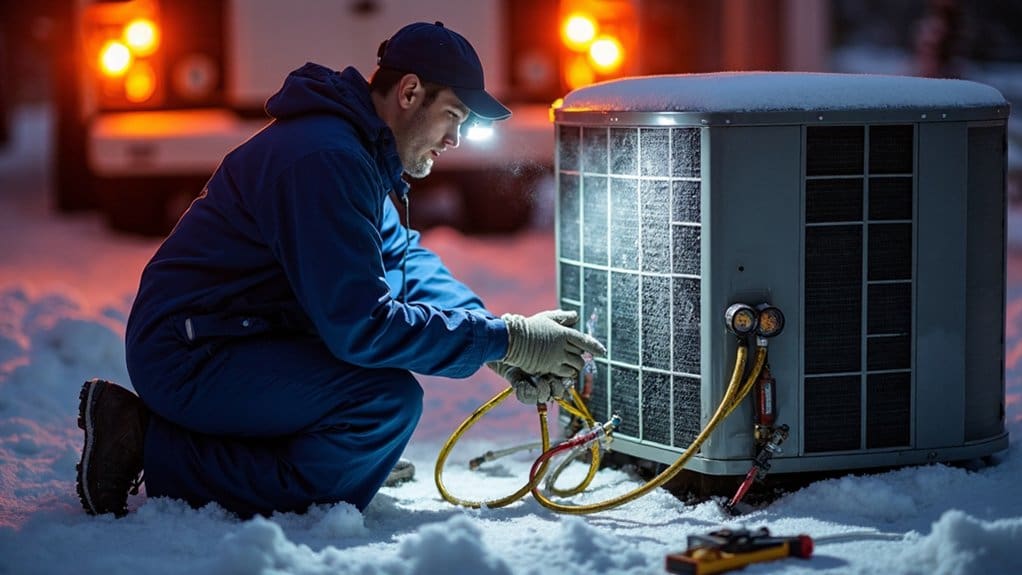
You’re risking expensive emergency repairs when you skip regular heat pump tune-ups. Professional maintenance catches refrigerant leaks, electrical failures, and compressor issues before they escalate into costly breakdowns. Annual tune-ups can save you $200-$500 in energy costs and extend your system’s lifespan by up to five years. Without preventive care, you’re 25% more likely to face emergency situations that cost 2-3 times more than routine maintenance. Understanding the warning signs can help you avoid these devastating system failures.
Key Takeaways
- Regular tune-ups identify minor issues before they escalate into costly emergency repairs requiring immediate professional attention.
- Annual maintenance extends heat pump lifespan by five years while saving $200-$500 in energy and repair costs.
- Systems without regular maintenance are 25% more likely to fail and cost 2-3 times more for repairs.
- Professional inspections catch refrigerant leaks, electrical failures, and compressor issues before they cause complete system breakdowns.
- Preventive maintenance prevents 25% energy cost spikes and preserves manufacturer warranty coverage for long-term protection.
Understanding Heat Pump Emergency Situations
Nothing disrupts your home comfort quite like a heat pump emergency during sweltering summer heat or freezing winter conditions. These critical situations typically stem from three major culprits: refrigerant leaks, electrical failures, and compressor malfunctions that can completely shut down your system’s heating and cooling capabilities.
You’ll often receive warning signals before complete failure occurs. Strange noises like grinding, squealing, or banging indicate internal component stress. Poor airflow through your vents suggests blockages or fan problems, while inconsistent temperatures throughout your home signal system inefficiency.
Ignoring these early indicators leads to devastating system breakdowns when you need your heat pump most during extreme weather. That’s when you’re facing emergency repair calls that disrupt your schedule and strain your budget.
Don’t wait until you’re shivering or sweltering. When you notice these warning signs, contact qualified technicians immediately for prompt emergency repairs to restore your comfort and prevent extensive damage.
How Regular Tune-Ups Prevent System Breakdowns
While emergency repairs address immediate breakdowns, regular tune-ups stop these crises from happening in the first place. Your heat pump depends on scheduled maintenance to catch minor issues before they become major problems that’ll drain your wallet.
During regular maintenance visits, technicians thoroughly inspect your system, clean essential components, adjust refrigerant levels, and tighten electrical connections. This comprehensive approach maintains ideal system efficiency and prevents unexpected failures. Preventative maintenance can extend your heat pump’s system lifespan by up to five years compared to systems that only receive reactive repairs.
The financial benefits are substantial. You’ll save $200-$500 annually in energy costs and repair costs when you invest in tune-ups. Without annual maintenance, you’re 25% more likely to experience system failure during extreme weather when you need heating or cooling most. Regular maintenance transforms potentially catastrophic breakdowns into manageable, planned service calls.
Warning Signs That Indicate Immediate Professional Attention
Even though preventative maintenance vastly reduces breakdowns, certain warning signs demand immediate professional intervention to prevent costly system failure. Your heat pump’s efficiency and lifespan depend on recognizing these critical indicators before they escalate into expensive HVAC repairs.
Watch for these urgent warning signs:
- Strange noises or vibrations from your unit, which often signal impending compressor failure
- Irregular cycling patterns like short-cycling or continuous operation, indicating potential refrigerant leaks or airflow problems
- Icing on outdoor coils during warm weather, suggesting low refrigerant levels or defrost cycle malfunctions
- Unexplained utility bill spikes without usage changes, meaning your system’s working harder due to declining performance
Don’t ignore reduced airflow, warm air during cooling mode, or temperature control issues. These symptoms point to serious internal problems requiring immediate professional attention. While regular tune-ups prevent most breakdowns, addressing these warning signs quickly protects your investment and maintains ideal performance.
The True Cost of Avoiding Preventive Maintenance
Although preventive maintenance requires an upfront investment, avoiding it creates a cascade of financial consequences that far exceed the cost of regular tune-ups. When you skip regular heat pump maintenance, you’ll face a 25% spike in energy costs during peak heating and cooling seasons. This translates to hundreds of dollars in unnecessary utility expenses annually.
The financial pain doesn’t stop there. Emergency breakdowns cost 2-3 times more than routine maintenance service calls. While a heat pump tune-up costs only $70-$200, repairs range from $650-$2,500. You’ll also shorten the life of your heat pump by 3-5 years, forcing premature replacement that costs thousands.
Regular heat pump maintenance helps extend the lifespan of your system while delivering lower energy bills. Routine maintenance also preserves manufacturer warranty coverage and helps improve indoor air quality. Investing in preventive care today prevents costly emergencies tomorrow.
What Emergency Heat Pump Service Actually Involves
When your heat pump fails during a freezing winter night or sweltering summer day, emergency service becomes your lifeline to restored comfort. Emergency technicians arrive equipped to diagnose and resolve critical issues that can’t wait for regular business hours.
During emergency service, technicians focus on immediate solutions:
- Diagnosing urgent problems – identifying refrigerant leaks, electrical problems, or compressor failures
- Performing critical repairs – replace worn components that caused the breakdown
- System restoration – recharge the refrigerant or reset the system to restore operation
- Preventing further damage – addressing issues before they cause complete system failure
You’ll pay considerably more for emergency service than a routine tune-up, but it is crucial to prevent breakdowns from escalating into costlier repairs or home damage. While emergency repairs restore immediate comfort, they highlight why preventative maintenance matters. Regular tune-ups catch these problems early, helping you avoid midnight emergencies altogether.
Seasonal Maintenance Schedules That Minimize Emergency Calls
The best defense against emergency repairs is a well-planned maintenance schedule that keeps your heat pump running smoothly year-round. You should schedule tune-ups twice annually—before cooling season begins and again before heating season starts. This preventive maintenance approach guarantees your HVAC system operates at peak performance when you need it most.
During these scheduled heat pump service visits, technicians clean coils, check refrigerant levels, and inspect electrical components. Regular maintenance like this extends your heat pump’s lifespan to 12-15 years or more while improving energy efficiency by up to 25% during peak usage months.
Certified HVAC professionals recommend biannual tune-ups because they detect minor issues before they become costly repairs. This proactive approach protects your investment and maintains manufacturer requirements for warranty coverage. By following a consistent maintenance schedule, you’ll avoid emergency calls and keep your heat pump running reliably throughout every season.
Choosing the Right HVAC Professional for Emergency Response
Even with perfect preventive maintenance, heat pump emergencies can strike without warning, making your choice of HVAC professional pivotal for quick resolution. Your heating and cooling system requires immediate attention from qualified experts who can diagnose and repair issues efficiently.
When selecting an HVAC service provider for emergency situations, prioritize these essential criteria:
- 24/7 Emergency services – Guarantee certified technicians are available around the clock for urgent heat pump repairs
- Proper licensing and insurance – Verify credentials and years of experience to certify professional, reliable service
- Fast response time – Confirm their commitment to quick arrival and timely repairs to minimize system downtime
- Transparent pricing – Request detailed estimates upfront covering all parts and labor costs
Check online reviews to assess their reputation for quality emergency maintenance. Companies with proven track records of regular tune-ups and emergency response will keep your heat pump running reliably when you need it most.
Frequently Asked Questions
When to Use Emergency Settings on Heat Pump?
You should use emergency settings when your heat pump’s compressor protection switches activate, airflow disruption responses trigger, or refrigerant leak indicators appear. Emergency override options provide temporary operation parameters until professional repairs restore normal mode adjustment and temperature modifications.
How Much Does a Heat Pump Tune up Cost?
A penny saved is a penny earned—you’ll pay $70-200 for professional tune-ups including coil cleaning procedures, refrigerant level monitoring, and seasonal maintenance schedules, while annual plans cost $120-360 with energy efficiency improvements.
How Often Should I Tune up My Heat Pump?
You should tune up your heat pump twice yearly for ideal seasonal efficiency. Professional service includes refrigerant level checks, coil cleaning, compressor monitoring, fan belt inspection, ductwork inspection, air flow optimization, system diagnostics, thermostat calibration, plus monthly filter changes.
What Is Preventive Maintenance on a Heat Pump?
Preventive maintenance includes air filter changes, condenser coil cleaning, evaporator coil inspection, blower motor maintenance, thermostat calibration, proper refrigerant charge verification, compressor efficiency testing, heat exchanger examination, ductwork sealing, and control board diagnostics you’ll need regularly.
Conclusion
Think of your heat pump like a trusty horse that carries you through winter’s harsh journey and summer’s sweltering trails. You wouldn’t ignore your horse’s limp or skip feeding time, would you? Regular tune-ups are the grooming and care that keep your mechanical steed healthy and strong. Don’t wait until you’re stranded in the wilderness of a breakdown—nurture your heat pump now, and it’ll faithfully carry you through every season ahead.