
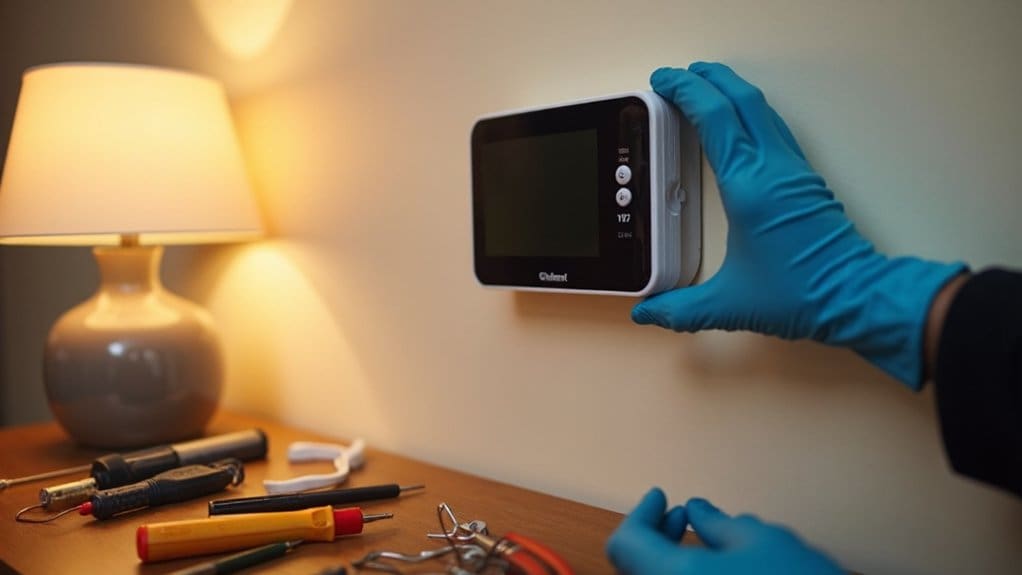
When your thermostat fails, first check if the display’s powered on and verify your circuit breaker hasn’t tripped. Replace the thermostat batteries and confirm your system settings match the desired temperature. If these basic steps don’t resolve the issue, immediately shut off power to your HVAC system at the circuit breaker to prevent further damage. For complex wiring problems or persistent malfunctions, you’ll need a licensed HVAC technician who can safely diagnose and repair the underlying electrical issues causing your system’s failure.
Key Takeaways
- Immediately shut off power to your HVAC system at the circuit breaker to prevent further damage or safety hazards.
- Check for simple fixes like dead batteries, tripped breakers, dirty air filters, or incorrect thermostat settings before calling professionals.
- Avoid attempting complex electrical repairs yourself and call a licensed HVAC technician for persistent temperature issues or wiring problems.
- Clear the area around your thermostat and HVAC equipment while preparing detailed information about the malfunction for technicians.
- Choose licensed, insured HVAC professionals who offer warranties and can respond quickly during extreme weather emergencies.
Recognizing Common Thermostat Problems and Warning Signs
When your home suddenly feels like an icebox in winter or a sauna in summer, your thermostat might be sending you a distress signal. Recognizing these warning signs can help you determine if you’re facing an emergency situation requiring professional intervention.
Watch for unresponsive controls when adjusting your temperature setting – if your HVAC system doesn’t respond to changes, internal components may have failed. A blank or flickering display indicates potential electrical issues with power sources or connections. Check your breaker box if the thermostat appears completely dead, as tripped circuits often disrupt functionality.
Erratic temperature swings throughout your home suggest sensor problems that prevent accurate readings. Your system might run continuously without reaching the desired comfort level, or cycle on and off unpredictably. These symptoms warrant immediate troubleshooting to prevent further damage to your HVAC equipment and restore proper climate control to your living space.
Basic Troubleshooting Steps Before Calling a Professional
Before spending money on professional repairs, you can perform several simple diagnostic steps that might resolve your thermostat issues completely. Check Your Thermostat display first—guarantee it’s powered on and showing current temperature readings. Verify your thermostat settings are correct by confirming the system mode matches your needs (heat/cool) and the temperature setpoint is appropriate.
These basic troubleshooting steps can save you time and money. Examine your electrical panel for a tripped circuit breaker that might’ve cut power to your HVAC system. Replace dirty air filters, as clogged filters can cause system failure and make your thermostat work improperly.
For gas systems, inspect the pilot light to ascertain it’s lit. If these troubleshooting steps don’t resolve the problem, don’t hesitate to call a professional. Attempting complex electrical repairs without proper knowledge can be dangerous and may void your equipment warranty.
Understanding When DIY Fixes Are Appropriate Vs Professional Repair
How do you determine whether a thermostat problem requires your hands-on approach or professional expertise? The key lies in distinguishing between minor issues and complex system failures.
You can tackle minor problems like replacing batteries, adjusting settings, or cleaning dust from the unit. These troubleshooting tips often resolve minor thermostat glitches without professional intervention. Check loose wiring connections if you’re comfortable working with electrical components, but never attempt repairs on live wires.
However, it’s best to consult HVAC technicians when you encounter persistent temperature inconsistencies, complete system shutdowns, or damaged internal components. If your heating or cooling system doesn’t respond after basic fixes, you need professional assessment. Wiring issues beyond loose connections require expert handling.
When facing a serious issue during extreme weather, don’t hesitate to call for emergency HVAC repair. Professional technicians have specialized tools and knowledge to diagnose complex problems safely, preventing further damage to your system.
Emergency Safety Measures and System Shutdown Procedures
Beyond basic troubleshooting, certain thermostat malfunctions pose immediate safety risks that demand swift action. If your thermostat is creating safety concerns, shut off power to your HVAC system immediately at the circuit breaker or disconnect switch. Don’t attempt any repair or modifications yourself—this can cause further damage or create dangerous situations.
Once you’ve secured the power, clear the area around your thermostat and HVAC equipment. Remove any obstacles that might block a technician’s access to the system. Guarantee the work area is well-lit so the professional can safely assess and repair the problem.
While waiting for help, prepare detailed information about the malfunction and any recent changes to your system. This preparation helps the technician diagnose issues more efficiently. Remember, safety always takes priority over comfort—a temporarily disabled system is better than risking injury or property damage from faulty equipment.
Selecting the Right HVAC Technician for Thermostat Repair
When your thermostat requires emergency repair, selecting the right HVAC technician can mean the difference between a quick resolution and prolonged discomfort. Choose a licensed and insured professional with proven experience handling HVAC emergencies and diagnosing complex HVAC problems that affect heating and cooling performance.
Verify your emergency contact technician understands your specific thermostat model and can address related electrical problems, including issues with tripped breakers at the breaker panel. They should offer warranties on their repair work and provide transparent pricing through detailed quotes.
Compare multiple HVAC service providers to guarantee fair rates for emergency repairs. Look for technicians who respond promptly when your system fails, especially during extreme weather conditions when HVAC performance is critical.
Confirm they’ll thoroughly test the repaired thermostat before completing the job. A qualified technician will verify proper functionality across all heating and cooling modes, validating your system operates efficiently after addressing the underlying HVAC problems.
Conclusion
When your thermostat fails, you’ve got the power to handle minor issues yourself, but don’t bite off more than you can chew. Remember that an ounce of prevention is worth a pound of cure—regular maintenance prevents most emergency situations. You’ll save time and money by knowing your limits and calling professionals for complex electrical work. Keep safety first, follow proper shutdown procedures, and choose qualified technicians when you’re in over your head.