
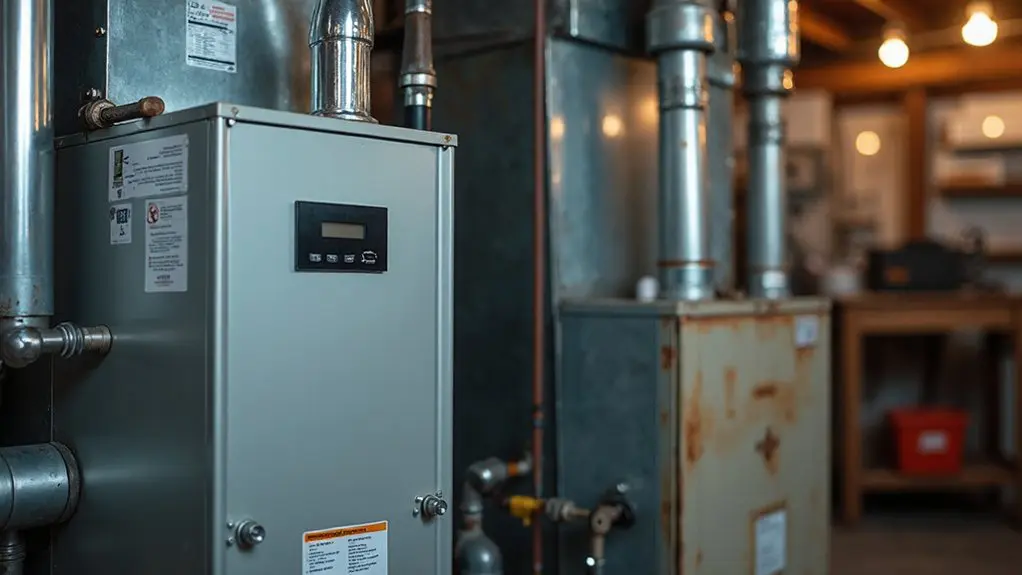
Your inefficient furnace wastes 20% of fuel energy through poor combustion, driving up heating costs while delivering inconsistent temperatures. High-efficiency models achieve 90%+ AFUE ratings, reducing fuel consumption and slashing energy bills by up to 15% annually. Variable-speed blowers and modulating gas valves eliminate temperature fluctuations, while sealed combustion chambers prevent toxic gas intrusion. Government rebates offset initial investment costs, and smart thermostat integration delivers additional 8% savings through optimized scheduling and monitoring capabilities.
Key Takeaways
- High-efficiency furnaces achieve 90%+ AFUE ratings, reducing annual heating bills by up to 15% compared to standard 80% efficiency models.
- Variable-speed blowers and modulating gas valves eliminate temperature fluctuations, providing consistent indoor comfort and precise heat output control.
- Advanced combustion technology and sealed chambers prevent toxic gas intrusion while integrated air purification systems improve indoor air quality.
- Smart thermostat integration enables remote monitoring and occupancy-based scheduling, achieving up to 8% additional annual energy cost reductions.
- Government rebates and utility incentives help offset initial investment costs while reducing household CO2 emissions by over 2 tons annually.
How High-Efficiency Furnaces Slash Your Energy Bills
When your aging furnace struggles to maintain consistent temperatures while driving up monthly utility bills, upgrading to a high-efficiency unit delivers measurable cost reductions through superior fuel utilization. High-efficiency heating systems achieve AFUE ratings of at least 90%, converting nine-tenths of consumed fuel into usable heat compared to standard furnace models that waste 20% of energy input.
This enhanced efficiency translates directly into reduced energy costs, with homeowners experiencing up to 15% annual heating bill reductions versus older, inefficient units. Your HVAC system’s improved performance stems from advanced combustion technologies and superior heat exchangers that maximize thermal transfer while minimizing waste.
The cumulative energy savings become substantial over time, especially when paired with smart thermostat integration for optimized heating cycles. Government rebates and incentive programs further offset initial investment costs, making high-efficiency furnace replacement a financially sound decision that delivers immediate and long-term benefits to your household budget.
Understanding AFUE Ratings and Their Impact on Savings
Although furnace efficiency ratings might seem like technical specifications buried in product manuals, AFUE (Annual Fuel Utilization Efficiency) ratings directly determine your heating system’s operational costs and long-term performance. The AFUE rating represents the percentage of fuel energy your furnace converts into usable heat for your home.
Understanding efficiency thresholds reveals significant operational differences:
- Standard efficiency furnaces achieve 80% AFUE, meaning 20% of fuel energy escapes through venting
- High-efficiency furnaces deliver 90%+ AFUE, reducing fuel consumption by 1/8 compared to standard units
- Premium energy-efficient furnace models maximize fuel energy conversion, minimizing waste heat loss
In Colorado’s heating-dominant climate, where home energy usage dedicates 52% to heating, upgrading to high-efficiency furnaces can slash energy bills by up to 1/16 annually. Beyond monetary energy savings, improved annual fuel utilization efficiency delivers consistent indoor temperature control, eliminating temperature fluctuations that compromise comfort and force thermostat adjustments.
Enhanced Home Comfort Through Precise Temperature Control
Beyond the quantifiable energy savings that high-efficiency furnaces deliver, these advanced heating systems fundamentally transform your home’s thermal environment through sophisticated temperature regulation technologies. Variable-speed blowers eliminate the temperature fluctuations that plague conventional single-stage units, maintaining consistent indoor air quality throughout your living space.
Modulating gas valves provide precise heat output adjustments, addressing hot and cold spots that compromise home comfort. These ENERGY STAR-certified systems feature improved efficiency through enhanced airflow distribution, ensuring uniform heating across all zones. You’ll experience greatly reduced operational noise compared to traditional equipment.
Smart thermostats integrate seamlessly with energy-efficient HVAC systems, enabling granular control over heating schedules and temperature setpoints. This automation optimizes comfort while maximizing energy conservation. An HVAC professional can configure these advanced controls to match your specific comfort preferences, eliminating the temperature swings and uneven heating that characterize older furnace technology.
Improved Indoor Air Quality With Advanced Combustion Systems
While conventional furnaces draw combustion air from your home’s interior and risk introducing harmful byproducts into living spaces, high-efficiency models utilize sealed combustion chambers that create complete separation between indoor air and the combustion process.
This advanced HVAC technology delivers three critical Indoor air quality improvements:
- Combustion isolation – Sealed chambers prevent carbon monoxide and other toxic gases from infiltrating your home’s breathable air supply
- Enhanced filtration – Integrated air purification systems capture allergens, particulates, and pollutants before they circulate through living spaces
- Controlled ventilation – Smart airflow management maintains ideal air exchange rates without compromising Energy Efficiency
These sophisticated furnaces address the fundamental problem plaguing older homes: contaminated indoor environments. Advanced combustion systems work seamlessly with modern Air Conditioning units to maintain consistent air purity year-round. For homeowners with respiratory conditions, this HVAC technology transformation proves invaluable, creating healthier living environments while maximizing energy performance across all seasons.
Environmental Benefits of Upgrading to Energy-Efficient Models
Switching from older models to newer models utilizing advanced natural gas combustion technology eliminates over 2 tons of CO2 emissions annually per household. This reduction considerably minimizes your carbon footprint while generating reduced energy bills through optimized fuel efficiency ratios.
Utility companies and government agencies recognize these environmental advantages, offering targeted rebates and incentives for high-efficiency HVAC installations. These programs offset initial investment costs while supporting climate change mitigation efforts. Your furnace replacement decision creates measurable environmental benefits that extend beyond lower utility bills, contributing to sustainable residential energy consumption patterns.
Smart Thermostat Integration for Maximum Energy Savings
Modern high-efficiency furnaces frequently achieve ideal performance when paired with smart thermostat technology that leverages advanced algorithms to maximize energy savings. These systems create a thorough energy management solution that delivers lower utility bills through precise heat distribution control.
Smart thermostats optimize modern furnaces with variable-speed blowers and modulating capabilities by implementing:
- Occupancy-based scheduling – Automatically adjusts heat output when rooms are unoccupied, meaning less energy consumption during peak utility rate periods
- Geo-fencing integration – Reduces furnace operation when you’re away, delivering lower energy costs without sacrificing comfort upon return
- Remote monitoring capabilities – Tracks system performance data to identify inefficiencies before they impact utility expenses
ENERGY STAR estimates this integration achieves up to 8% annual cost reductions. The automated adjustments guarantee consistent comfort while saving money through intelligent climate control that eliminates energy waste from manual thermostat management.
Signs Your Current Furnace Needs Replacement
Smart thermostat integration maximizes your new furnace’s capacity, but determining when replacement becomes necessary requires recognizing specific performance indicators that signal system failure.
Your 15+ year-old furnace likely consumes much energy while delivering inconsistent thermal distribution. Monthly utility bills escalating despite regular maintenance indicate declining heat exchanger efficiency and compromised combustion processes. When heating costs exceed projected seasonal averages, it’s time to replace your aging system.
Frequent service calls generating substantial repair expenses signal impending component failure. Uneven temperature zones throughout your residence indicate inadequate airflow regulation and compromised ductwork compatibility. Mechanical noise emissions—rattling, banging, whistling—suggest deteriorating internal components requiring immediate attention.
Calculating long-term operational expenses versus upfront cost demonstrates replacement value. Energy-efficient models greatly reduce your energy consumption, offsetting initial investment through decreased bills. Making the right choice involves evaluating current system performance against modern efficiency standards. Professional load calculations and energy audits provide data-driven replacement recommendations, ensuring appropriate heating system selection for your specific residential requirements.
Choosing the Right High-Efficiency Furnace for Your Home
The ideal high-efficiency furnace selection requires thorough evaluation of AFUE ratings, combustion technology, and airflow control mechanisms that directly impact your home’s energy consumption patterns. Choosing the right system demands precise analysis of your home’s needs against available efficiency ratings.
High-efficiency models with 90%+ AFUE ratings deliver exemplary performance when properly matched to your residence’s thermal load requirements. HVAC technicians must calculate accurate sizing parameters to prevent short-cycling and efficiency degradation.
Consider these critical specifications when replacing your furnace:
- Variable-speed blower motors – Adjust CFM output dynamically, eliminating temperature stratification and reducing electrical consumption
- Two-stage or modulating gas valves – Provide precise BTU modulation, preventing overshooting setpoint temperatures
- ENERGY STAR certification – Guarantees compliance with federal efficiency mandates and qualifies for utility rebates
Professional load calculations determine whether a furnace replacement or heat pump installation better suits your application. Furnace is a smart investment when properly engineered for your specific heating requirements and ductwork configuration.
Available Rebates and Incentives for Energy-Efficient Upgrades
Available rebates and incentives considerably reduce your upfront investment when upgrading to high-efficiency furnace systems, making advanced HVAC technology financially accessible for residential applications.
You’ll find multiple funding sources to offset energy-efficient HVAC equipment costs. Local energy providers typically offer rebates ranging from $100 to $500 for qualifying high-efficiency furnace installations. The federal tax credit program provides up to $300 through the 25C credit for ENERGY STAR® certified furnaces, boilers, and air conditioning units.
For premium efficiency solutions, geothermal heat pumps qualify for a substantial 30% federal tax credit, greatly reducing the higher capital expenditure associated with ground-source heat pump technology. This incentive addresses the primary cost barrier preventing adoption of these superior-efficiency systems.
Maximizing your savings requires thorough research across all available programs. An experienced HVAC professional can identify applicable rebates and tax credits specific to your installation parameters, ensuring you capture every available financial benefit during your energy-efficient upgrade project.
Professional Installation Services for Optimal Performance
Beyond securing financial incentives for your energy-efficient upgrade, proper installation determines whether your high-efficiency furnace delivers its rated performance specifications. The right professional installation guarantees your furnace can make ideal use of advanced combustion technologies and heat exchange systems.
HVAC experts conduct thorough load calculations and ductwork assessments to help you select the correct BTU capacity. Making your home’s heating system properly sized prevents short-cycling and efficiency losses that plague oversized units.
Professional installation services include:
- Proper venting configuration – Sealed combustion systems require precise flue sizing and intake air pathways
- Integration with existing HVAC systems – Zoning controls and smart thermostats maximize the amount of heat distribution efficiency
- Code compliance verification – Local regulations govern installation practices that greatly improve safety and air quality
When it comes time for replacement, skilled technicians use less guesswork through systematic commissioning procedures. Warranties on parts and labor protect your investment while ensuring peak performance from day one.
Conclusion
You’ve examined AFUE ratings, analyzed combustion efficiency, and assessed system performance metrics. Now you’ll implement the upgrade, capture available rebates, and optimize installation parameters. Your aging furnace creates operational inefficiencies, increases utility expenditures, and compromises thermal regulation. You’ll eliminate these deficiencies through strategic equipment selection, professional installation protocols, and performance verification procedures. Your investment delivers measurable BTU optimization, reduces carbon footprint calculations, and enhances indoor environmental quality standards for sustained operational excellence.