
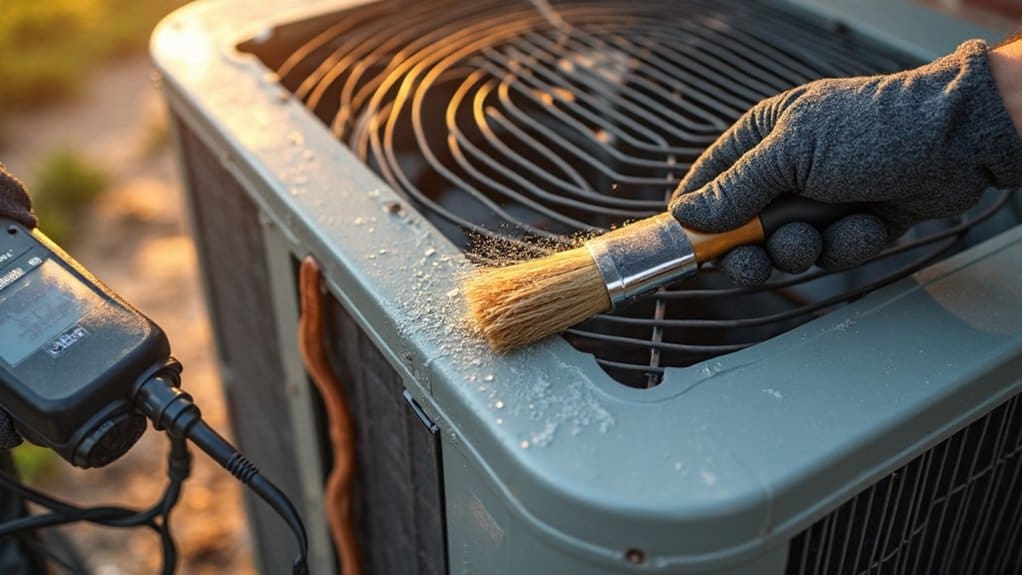
Your heat pump’s lifespan can extend from the typical 10-15 years to over 20 years with consistent maintenance. Regular upkeep prevents premature component wear, catches issues before they become costly repairs, and maintains ideal efficiency. Essential tasks include replacing air filters every 1-3 months, cleaning condenser coils, and scheduling biannual professional inspections. Well-maintained systems deliver 15% better energy efficiency and can save you $200-$500 annually while preventing thousands in repair costs through proactive care strategies.
Key Takeaways
- Regular maintenance can extend heat pump lifespan from 10-15 years to over 20 years through preventative care.
- Essential components like air filters, condenser coils, and refrigerant levels require consistent attention to prevent premature failures.
- Professional biannual servicing identifies issues early and can add up to 5 years to system lifespan.
- Well-maintained heat pumps operate 15% more efficiently, saving $200-500 annually on utility bills.
- Proactive maintenance prevents up to 95% of potential breakdowns and costly repair bills reaching thousands.
The Impact of Regular Maintenance on Heat Pump Lifespan
While heat pumps typically operate for 10-15 years under standard conditions, you can extend their lifespan well beyond 20 years through consistent maintenance and professional care. Regular maintenance directly impacts your heat pump’s lifespan by preventing premature component wear and ensuring efficient operation.
Routine maintenance catches issues before they escalate into costly repairs. When you schedule professional inspections, technicians check refrigerant levels, clean your outdoor unit, and examine electrical connections. These preventive measures maintain ideal energy efficiency and reduce strain on critical components.
Without proper care, minor problems compound into major failures. Dirty filters force your system to work harder, while low refrigerant levels damage compressors. Neglected outdoor units accumulate debris that restricts airflow and overheats components.
Professional maintenance isn’t optional—it’s essential. Licensed HVAC technicians perform complex tasks like refrigerant checks and electrical inspections that homeowners can’t handle safely. Extend the lifespan of your investment through consistent professional servicing.
Essential Components That Benefit From Consistent Care
Three critical components determine your heat pump’s longevity and require consistent attention to prevent costly breakdowns. Your air filters need replacement every 1-3 months to maintain proper airflow and prevent overheating that strains the blower motor. This simple maintenance task considerably impacts your HVAC system’s performance.
Your condenser coils demand regular cleaning to remove debris buildup that hampers efficient heat exchange. Clean coils guarantee ideal HVAC efficiency and reduce energy consumption, making your air conditioning system work less harder.
Electrical connections represent another essential area requiring routine inspection and tightening. Loose connections can trigger complete system failures, leaving you without heating or cooling when you need it most.
These heat pump components work together to deliver reliable performance. Consistent heat pump maintenance of these elements prevents minor issues from escalating into expensive repairs. By addressing refrigerant levels, cleaning coils, and performing these crucial maintenance tasks, you’ll maximize your system’s lifespan while maintaining peak efficiency.
Professional Servicing vs. DIY Maintenance Approaches
Although proper heat pump care involves both professional and DIY approaches, understanding which tasks you can handle yourself versus when to call certified HVAC technicians makes the difference between extending your system’s life and accidentally causing expensive damage.
You can safely handle basic DIY upkeep like replacing air filters regularly. However, complex tasks including refrigerant checks and electrical inspections require expert technicians with specialized tools and training. Attempting internal repairs yourself risks voiding warranty coverage and creating costly long-term problems.
Professional maintenance delivers extensive system inspections that identify issues before they become major failures. Certified technicians properly lubricate moving parts, check refrigerant levels, and perform electrical safety tests that homeowners can’t execute safely.
Biannual professional servicing can extend your heat pump’s lifespan by up to five years compared to systems receiving only DIY upkeep. While basic maintenance tasks help, expert technicians provide the thorough care necessary for maximum system longevity and superb performance.
How Routine Maintenance Enhances Energy Efficiency and Performance
Regular maintenance transforms your heat pump from an energy-draining appliance into an efficient powerhouse that delivers consistent comfort while slashing utility costs. Through proper heat pump maintenance, you’ll boost energy efficiency by up to 15% compared to neglected systems.
Annual tune-ups focusing on cleaning and adjustments of critical components—filters, coils, and refrigerant levels—maximize your system performance while reducing energy consumption by 10-20%. This preventative maintenance approach optimizes airflow and guarantees your heat pump operates at peak capacity.
Routine inspections during hvac maintenance visits catch minor issues before they compromise efficiency or trigger costly breakdowns. By addressing these problems early, you’re protecting your heat pump lifespan while maintaining ideal performance levels.
The financial benefits are substantial. Well-maintained systems deliver annual cost savings of $200-$500 compared to poorly serviced units. This makes regular maintenance an investment that pays for itself through reduced utility bills and extended equipment life.
Preventing Costly Repairs Through Proactive System Care
While most homeowners view maintenance as an expense, proactive heat pump care actually prevents repair bills that can reach thousands of dollars. Regular Heat Pump Maintenance catches minor issues before they escalate into major failures. When you address problems like clogged filters or small refrigerant leaks promptly, you’ll avoid catastrophic compressor replacements that can cost more than a new system.
The Importance of Regular Heat pump maintenance is essential for preventing premature wear and tear on critical components. Biannual professional inspections prevent up to 95% of potential breakdowns by identifying problems early. Without proper care, you’re risking a 30-50% reduction in efficiency and considerably shortened equipment life.
Regular maintenance directly impacts your heat pump’s lifespan, extending it from 10-15 years to potentially 20 years. This proactive approach to pump maintenance saves you hundreds or thousands in both energy costs and major repairs, protecting the lifespan of your heat investment.
Frequently Asked Questions
Do Heat Pumps Need Regular Maintenance?
Yes, you’ll need annual cleaning, air filter inspection, refrigerant level checks, condenser coil cleaning, evaporator coil cleaning, thermostat calibration, ductwork inspection, electrical connections review, compressor operation monitoring, and fan motor lubrication for ideal performance.
How to Extend Heat Pump Lifespan?
You’ll extend your heat pump’s lifespan by replacing air filters regularly, cleaning condenser coils, monitoring refrigerant levels, inspecting electrical connections, lubricating moving parts, cleaning the outdoor unit, and scheduling annual tune-ups.
What’s the Average Life Expectancy of a Heat Pump?
Your heat pump’s average life expectancy is 15 years, but proper installation, ideal refrigerant charge levels, regular air filter cleaning, outdoor coil cleaning, correct thermostat settings, and monitoring compressor performance can extend it considerably.
What Happens if You Don’t Service Your Heat Pump?
Without servicing your heat pump, you’ll face potential problems including reduced efficiency, increased energy costs, decreased comfort, more frequent breakdowns, air quality degradation, shortened component life, higher repair bills, and increased carbon footprint.
Conclusion
You’re the guardian of your heat pump’s future, and regular maintenance is your shield against premature failure. By staying proactive with professional servicing and routine care, you’ll stretch your system’s lifespan like a rubber band—maximizing its elasticity and resilience. Don’t let neglect snap that potential. When you invest in consistent maintenance, you’re not just preventing costly repairs; you’re ensuring your heat pump runs efficiently for years to come.