
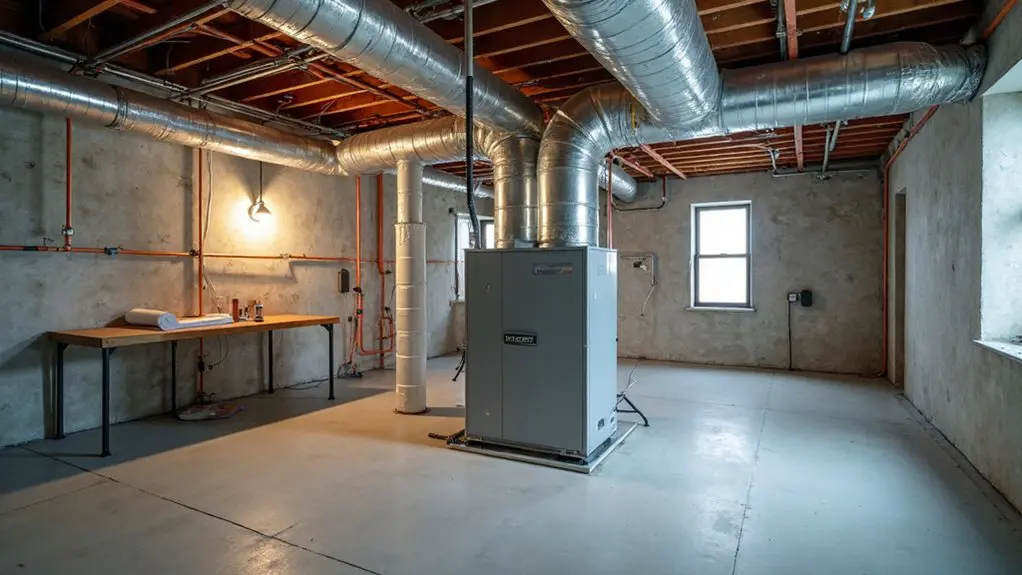
You’ll need permits for new furnace installations and capacity upgrades, but direct replacements may have streamlined requirements while routine maintenance doesn’t require permits. Submit detailed technical specifications, equipment data sheets, and load calculations to your local building authority. Expect rough and final inspections covering gas lines, electrical work, and venting systems. Installing without permits violates municipal codes, voids warranties, creates safety hazards, and causes costly fines plus remediation work. Understanding these regulatory requirements guarantees compliant installation from start to finish.
Key Takeaways
- New furnace installations always require permits and safety inspections, while direct replacements may have streamlined requirements.
- Submit detailed technical specifications, equipment data sheets, and load calculations to avoid approval delays and inspection failures.
- Inspections occur in two stages: rough inspection for behind-the-wall work and final inspection for functionality and code compliance.
- Unpermitted installations violate municipal codes, void warranties, create safety hazards, and cause costly remediation work.
- Local permit requirements vary extensively, so verify regulations with your building authority before starting any furnace work.
Understanding Permit Requirements for Furnace Installation
Furnace installation permits serve as mandatory legal requirements that guarantee your heating system installation complies with local building codes and safety standards. When you’re planning a furnace installation, you’ll discover that permits are generally required for both new installations and complete system replacements. These permit requirements exist to protect your investment while verifying your HVAC systems operate safely and efficiently.
Local authorities establish specific permit requirements that vary extensively by jurisdiction, so you must confirm the exact documentation needed for your project. Typically, you’ll need to obtain a building permit and may require additional mechanical permits specifically for HVAC systems. The permit process ascertains your installation adheres to all applicable safety and building regulations.
Understanding these requirements before beginning work prevents costly complications, including potential fines, failed property inspections, or the expense of redoing non-compliant installations. A permit required approach assures regulatory compliance from project start to completion.
When Permits Are Required vs. When They’re Not
Determining when permits are required versus when they’re not depends on the scope and nature of your HVAC work. Furnace installation typically requires permits regardless of whether you’re replacing an existing unit or installing a new system. Local building authorities mandate these permits to validate code compliance and safety standards are met throughout the installation process.
Minor maintenance tasks generally don’t require permits, but major installations do. Understanding these requirements safeguards you from potential legal complications and validates proper inspection protocols are followed.
- New furnace installations always require permits and thorough safety inspections
- Direct replacement units of same capacity may have streamlined permit requirements
- Routine maintenance like filter changes and thermostat replacements typically need no permits
- System upgrades to larger capacity units require full permit compliance and code verification
- Local requirements vary extensively – always verify specific regulations with your building authority before beginning work
The Application Process and Required Documentation
Most permit applications require detailed documentation that demonstrates your furnace installation meets local building codes and safety regulations. You’ll need to submit extensive technical specifications including your furnace’s type, capacity, and installation details for local authority approval.
Your contractor must provide equipment data sheets, load calculations, and wiring diagrams as part of the application package. These documents verify compliance with current building standards and guarantee proper system sizing for your property. Even furnace replacement projects typically require permits to maintain regulatory compliance with updated codes.
Application fees vary considerably by location, with pricing determined by project type, property characteristics, and local regulations. Some jurisdictions charge flat rates while others use tiered pricing structures.
Submitting accurate, complete documentation is crucial for avoiding approval delays and passing required inspections. Incomplete applications often result in project setbacks and additional costs. Work with licensed contractors familiar with local permit requirements to streamline the process and ensure regulatory compliance throughout your furnace installation.
Inspection Stages and What Inspectors Look For
The inspection process unfolds in distinct stages, each designed to verify specific safety and code compliance elements of your furnace installation. During the rough inspection, inspectors examine behind-the-wall installations including gas lines, electrical connections, and venting systems to guarantee compliance with local regulations and safety standards. This stage occurs before walls are closed up, allowing access to critical infrastructure components.
The final inspection focuses on operational verification, where inspectors test for gas leaks, confirm proper airflow, and validate thermostat functionality. They’ll verify adherence to building codes and manufacturer specifications while identifying potential safety hazards that could jeopardize safety and efficiency.
Key inspection focus areas include:
- Gas line connections and pressure testing for leak detection
- Electrical wiring compliance with local electrical codes
- Proper venting installation and clearance requirements
- Thermostat calibration and system operational testing
- Overall installation compliance with manufacturer specifications
If non-compliance issues arise, additional required inspections become necessary before approval. Your permit fees cover these inspection costs.
Consequences of Installing Without Proper Permits
Installing a furnace without securing proper permits exposes you to significant financial and legal risks that extend far beyond the initial cost savings. When you skip the permit to install process, you’re violating municipal codes that require permits for HVAC installations. This can lead to fines ranging from hundreds to thousands of dollars, depending on your jurisdiction’s enforcement policies.
The legal ramifications extend beyond monetary penalties. If your installation fails inspection later, you’ll face costly remediation work to guarantee the system complies with regulations. Operating without proper permits creates potential hazards since uninspected work bypasses critical safety verifications. Your equipment warranty becomes void without a permit, eliminating manufacturer protection.
When selling your home, unpermitted work requires disclosure and often demands retroactive permitting or complete reinstallation. Most jurisdictions require permits to validate installations comply with local building codes. Personal liability increases substantially if accidents occur from work performed without proper authorization, making permit compliance essential for protecting your investment and safety.
Conclusion
You’ll face serious repercussions if you skip permit requirements—from hefty fines to insurance claim denials. Don’t telegraph your installation plans to inspectors without proper documentation; they’ll shut down non-compliant work immediately. You’re legally obligated to follow municipal codes, obtain required permits, and schedule mandatory inspections. Non-permitted installations violate building standards, potentially creating safety hazards and reducing property values. Always verify local requirements before beginning work—compliance isn’t optional, it’s mandatory for safe, legal furnace installations.