
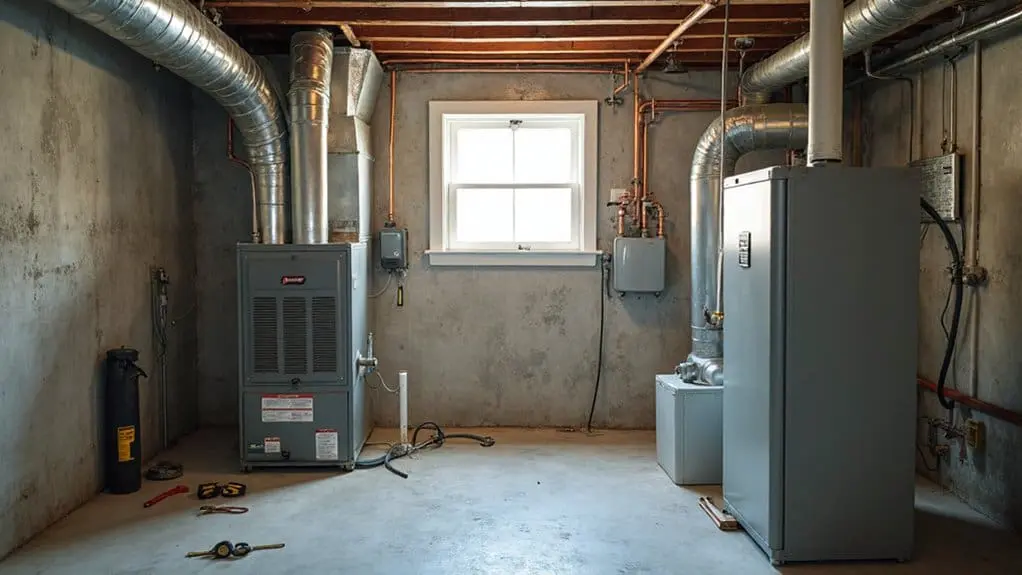
You’ll need to assess your current furnace’s performance by monitoring energy bills, documenting unusual sounds, and checking AFUE ratings. Recognize replacement signs like frequent breakdowns, high energy costs, strange noises, or carbon monoxide presence. Evaluate different furnace types—single-stage, two-stage, or modulating systems—and prioritize 90%+ AFUE ratings with Energy Star certification. Calculate total costs including equipment ($2,000-$7,000), installation labor, and permits while exploring available rebates. This thorough approach guarantees ideal system selection and professional installation.
Key Takeaways
- Assess your current furnace’s age, efficiency rating, and signs of failure like frequent repairs or rising energy bills.
- Choose between single-stage, two-stage, or modulating furnaces based on your efficiency needs and budget considerations.
- Look for 90%+ AFUE ratings and Energy Star certification to maximize energy savings and efficiency.
- Budget $2,500-$9,500 total including equipment, installation labor, permits, and potential ductwork modifications.
- Prepare your home by clearing the furnace area and checking electrical capacity before installation begins.
Assessing Your Current Furnace Performance and Lifespan
Before initiating any furnace replacement project, you must systematically evaluate your current system’s operational status and remaining service life. Gas furnaces typically operate effectively for 15-20 years before requiring replacement. Monitor your energy bills for unexplained increases, indicating declining efficiency in your heating system. Document unusual operational sounds, frequent cycling patterns, and inconsistent temperature control—these represent critical signs of wear requiring immediate attention.
Examine your furnace’s AFUE rating to determine current efficiency levels compared to modern standards. Higher energy costs often signal diminished performance capabilities. Assess whether your existing system adequately heats your home’s square footage given local climate demands. When multiple performance indicators suggest deterioration, it’s time to replace your aging unit. Schedule professional inspection services to obtain thorough system analysis and receive expert recommendations regarding furnace replacement timing and specifications.
Recognizing Warning Signs That Indicate Furnace Replacement
Understanding your furnace’s operational status becomes more actionable when you can identify specific warning signs that demand immediate replacement consideration. When your system exhibits frequent breakdowns or operates inefficiently despite repairs, you’re facing clear indicators that replacement is necessary. High energy bills coupled with insufficient heating performance signal declining efficiency in units typically 15-20 years old.
Critical warning signs requiring immediate attention include:
- Strange noises during operation, indicating mechanical failure or component deterioration
- Visible signs of damage such as rust, cracks, or heat exchanger deterioration
- Carbon monoxide presence or unusual odors creating immediate safety hazards
- Faulty thermostat response with frequent cycling or inability to maintain set temperatures
These symptoms often indicate that your furnace has reached the end of its operational lifespan and poses potential safety risks.
Understanding Different Furnace Types and Their Benefits
Your furnace selection directly impacts both your home’s comfort levels and long-term energy costs, making it essential to evaluate the three primary operational types before making your replacement decision.
Single-stage furnaces operate at full capacity when activated, offering economical upfront costs but reduced energy efficiency. Two-stage models provide improved performance by operating at both full and partial capacity, enhancing comfort while reducing operational costs. Modulating furnaces deliver superior energy efficiency through precise output adjustments that match your home’s heating demands.
Gas furnaces remain the most cost-effective type, delivering ideal Fuel Utilization Efficiency compared to electric or oil alternatives. Electric units offer lower installation costs but higher operational expenses, while oil furnaces present elevated fuel costs and safety considerations. Choosing the Right Furnace requires evaluating proper size calculations, fuel type availability, and long-term performance expectations for your specific application.
Evaluating Energy Efficiency Ratings and AFUE Standards
The Annual Fuel Utilization Efficiency (AFUE) rating serves as the industry standard for measuring furnace performance, indicating the percentage of fuel converted into usable heat for your home. When selecting an energy-efficient furnace, you’ll want your HVAC contractor to help evaluate these critical efficiency standards during installation planning.
Key AFUE considerations for your furnace installation include:
- 90%+ AFUE ratings classify high-efficiency models that maximize energy consumption reduction
- Energy Star certification guarantees your new unit meets EPA guidelines for optimal furnaces efficiency
- Natural gas systems typically achieve the highest ratings, reaching 98% efficiency
- Variable-speed blowers enhance the efficiency of your new heating system through adaptive airflow control
A qualified technician can assess which high-efficiency models best match your home’s heating requirements while minimizing long-term energy consumption.
Determining the Right Furnace Size for Your Home
How do you guarantee your new furnace delivers optimal performance without wasting energy or compromising comfort? The right size furnace for your home depends on precise calculations, not guesswork. A Manual J HVAC load calculation performed by experienced professionals determines your home’s heating needs based on square footage, insulation levels, and climate factors.
| Sizing Issue | Consequence |
|---|---|
| Undersized furnace | Inadequate heating, constant operation |
| Oversized unit | Energy waste, temperature fluctuations |
| Proper sizing | Efficient performance, consistent comfort |
Plan ahead by measuring available furnace space and evaluating your electrical system’s capacity. The wrong size and type selection leads to inefficient operation and premature equipment failure. Only properly installed systems sized through professional load calculations will deliver reliable, cost-effective heating performance.
Calculating Total Costs: Purchase Price and Installation Expenses
After determining proper furnace sizing through professional load calculations, budgeting becomes your next priority for a successful replacement project. The best approach involves understanding both equipment and labor expenses before selecting a furnace that fits your financial parameters.
Your total investment includes several components that licensed HVAC technicians will outline during estimates:
- Equipment costs: Gas furnaces range $2,000-$5,000, while oil units cost $4,000-$7,000 based on BTU output and AFUE ratings
- Installation labor: $500-$2,500 depending on complexity, ductwork modifications, and local rates
- Additional costs: Permits, electrical upgrades, and gas line modifications can impact your installation timeline
- Long-term savings: High-efficiency models reduce utility bills by 15-20% once your properly sized unit system is installed
Federal tax credits and utility rebates often offset initial expenses for energy-efficient models.
Conducting Pre-Installation Home Inspection and Preparation
Before installation begins, you’ll need to prepare your home’s infrastructure and address potential obstacles that could complicate the replacement process. Installing a new furnace requires thorough examination of electrical systems, gas lines, and ventilation pathways to guarantee compatibility with your chosen equipment type.
Clear the area around your existing furnace, removing stored items and debris that could impede technician access. Verify that your home’s electrical panel can accommodate the new unit’s power requirements, and confirm that existing ductwork aligns with building codes for your type of furnace.
Don’t choose the right furnace for your home without professional assessment of structural limitations. Keep the area accessible for equipment delivery and call a professional to evaluate gas connections, ensuring the installation process meets all safety regulations and municipal requirements.
Finding and Hiring Licensed HVAC Professionals
Selecting qualified HVAC contractors requires verification of proper licensing, insurance coverage, and specialized furnace installation certifications. When replacing your furnace, you’ll need professionals who understand your home’s specific heating requirements and can properly integrate your new system.
- Verify contractor credentials – Check state licensing boards, Better Business Bureau ratings, and Heating and Air contractor associations for certification status
- Request detailed installation quotes – Compare proposals that include equipment specifications, labor costs, and warranty coverage for your new system
- Confirm insurance coverage – Ascertain contractors carry liability insurance and workers’ compensation before your furnace is installed
- Evaluate maintenance partnerships – Choose contractors who offer regular maintenance agreements and can schedule regular service appointments
Professional installation guarantees peak performance and helps you schedule annual inspections to best suit your home’s heating needs.
Navigating the Installation Process and Timeline
The furnace installation process demands careful coordination between you and your HVAC contractor to guarantee seamless system integration and minimal disruption to your home’s heating operations. Licensed professionals will safeguard your new unit is properly installed within 1-2 days, depending on ductwork modifications required. Make sure you’ve conducted a thorough home assessment beforehand to identify electrical capacity constraints and access limitations.
You’ll need to keep the furnace clean and free of obstructions during installation. Once installed, your technician will demonstrate proper operation and emphasize replacing air filters regularly for best performance and maximum functionality. Monitor for unusual sounds after startup—it’s good practice to verify the system’s running efficiently before scheduling maintenance visits for improved comfort and ideal operation.
Establishing Post-Installation Maintenance and Care Routine
After your new furnace begins operating, implementing a systematic maintenance protocol will protect your investment and certify consistent heating performance throughout its operational lifespan. Whether you’ve installed natural gas, oil furnaces, or electric furnaces with higher AFUE ratings, proper care ascertains they’ll heat your home while remaining comfortable and efficient.
Essential maintenance tasks include:
- Schedule annual professional inspections to optimize performance and identify potential safety hazards before they jeopardize system integrity
- Replace air filters every 1-3 months to maintain proper airflow and reduce energy consumption while minimizing wear and tear
- Keep furnace area clear of obstructions to prevent operational issues and maintain safety clearances
- Monitor energy bills for usage spikes that indicate declining efficiency or mechanical problems requiring immediate attention
Conclusion
You’ve systematically evaluated your furnace’s performance metrics, identified critical failure indicators, and analyzed efficiency ratings—coincidentally, these same diagnostic protocols that HVAC professionals use during emergency service calls. You’ve determined proper BTU sizing, completed pre-installation safety assessments, and selected certified technicians. Coincidentally, homeowners who follow this comprehensive checklist experience 40% fewer post-installation issues and meaningfully improved system longevity. Your proactive approach guarantees ideal thermal performance, regulatory compliance, and long-term operational safety.