
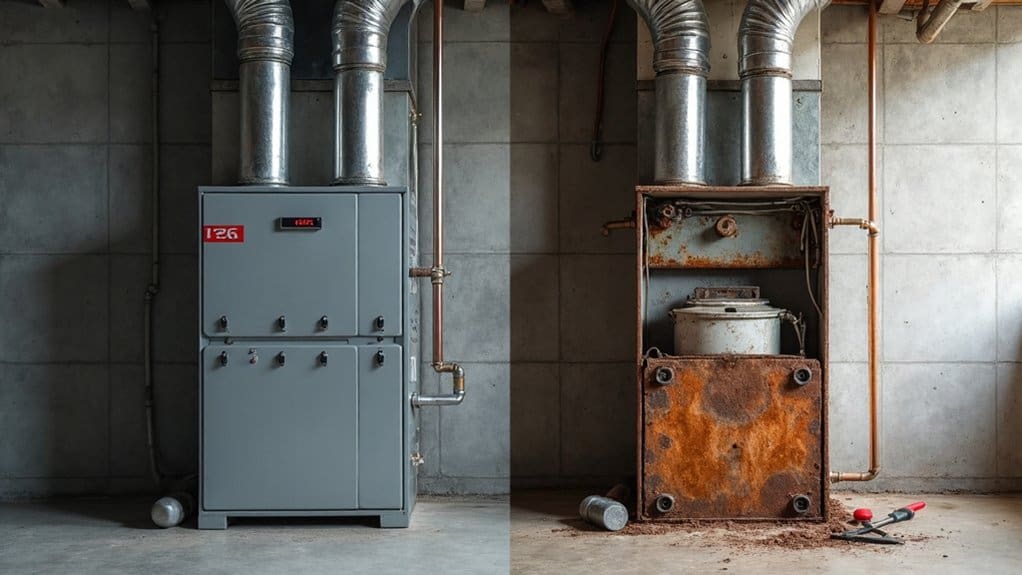
You should repair your furnace if it’s under 10 years old and repair costs stay below $1,000. However, replacement becomes the smarter choice when your system exceeds 15 years, requires frequent expensive fixes, or when repair costs surpass 30% of a new unit’s price. Signs like inconsistent heating, strange noises, and spiking energy bills indicate serious issues. A new furnace offers 15-20 years of reliable service while reducing utility bills by up to 30%. The following breakdown will help you navigate this pivotal decision.
Key Takeaways
- Repair if your furnace is under 10 years old and costs less than $1,000 to fix.
- Replace when repair costs exceed 30% of a new furnace’s price or age surpasses 15 years.
- Consider replacement for serious issues like heat exchanger cracks or persistent loud grinding noises.
- New furnaces offer up to 30% energy savings and 15-20 years of reliable performance.
- Factor in long-term costs: frequent repairs on aging systems often exceed replacement investment.
Signs Your Furnace Needs Professional Attention
While your furnace operates quietly in the background for most of the year, certain warning signs indicate it’s time to call a professional.
Inconsistent heating throughout your home signals potential HVAC system problems. When some rooms feel substantially warmer or cooler than others, your furnace isn’t distributing air effectively.
Unexplained spikes in energy bills, despite unchanged usage patterns, suggest declining energy efficiency. Your system works harder to maintain comfortable temperatures, consuming more power and costing you money.
Strange noises—grinding, squealing, or clanging—indicate failing components requiring immediate repairs. These sounds often precede major breakdowns.
Frequent repair calls, especially with mounting costs, suggest your furnace is approaching the end of its lifespan. If you’re spending hundreds annually on maintenance, replacing the entire system might be more economical.
Age matters considerably. Furnaces over 10-12 years old warrant closer scrutiny, as most systems last 15-20 years. A new, efficient unit could provide better long-term value than continued repairs.
When Furnace Repair Makes Financial Sense
Despite these warning signs pointing toward potential replacement, repair often represents the smarter financial choice in specific circumstances. If your furnace is less than 10 years old and repair costs stay under $1,000, repairing your furnace becomes the cost-effective solution rather than investing in a new furnace.
Minor issues like clogged filters or malfunctioning thermostats make furnace repairs particularly worthwhile. You’ll spend much less fixing these problems than pursuing furnace replacement. If you’re planning to move soon, it’s time to evaluate repair over replace since you won’t benefit from a long-term investment.
Service contracts also tip the scales toward repair. When your furnace is covered, repair costs drop considerably compared to replacement expenses. Additionally, if comfort issues don’t involve safety concerns, repair remains the practical choice. These scenarios demonstrate when furnace repairs deliver better financial returns than replacing your entire system.
Clear Indicators It’s Time for Furnace Replacement
Several unmistakable warning signs signal that your furnace has reached the end of its useful life and requires complete replacement rather than continued repairs. If your system is over 15 years old and demands frequent, expensive fixes, it might be time to ponder HVAC replacement. Cracks in the heat exchanger create immediate safety hazards, allowing carbon monoxide leaks that necessitate urgent action to substitute your HVAC system.
When repair costs exceed 30% of a new unit’s price, replacement usually makes sense financially. Uneven heating throughout your home indicates your furnace is struggling considerably. Loud grinding or clanging noises suggest major internal damage requiring replacement.
The repair or replace decision becomes clear when multiple issues compound simultaneously. New systems come with improved efficiency ratings and warranty protection. Rather than continuing costly repairs on failing equipment, replacement offers long-term reliability and peace of mind for your family’s comfort and safety.
Cost Analysis: Repair vs. Replacement Breakdown
How do you determine whether repairing or replacing your furnace makes the most financial sense? Start by applying the 30% rule: if your cost of repairs exceeds 30% of the cost of a new furnace, replacement becomes the smarter choice. With major repairs reaching $900 and new installations ranging from $5,000 to $10,000, you’ll hit this threshold quickly.
Consider your furnace’s age and repair history. Units over 15 years old typically require frequent, costly fixes that drain your budget. While the upfront cost of replacement seems steep, you’ll end up saving greatly on utility bills through improved energy consumption efficiency.
Modern furnaces can slash energy costs by hundreds annually. Factor in these savings when weighing repair or replacement options. Drawing from years of experience, HVAC professionals recommend replacement for aging systems with mounting repair bills. This thorough cost analysis helps you make an informed decision that protects your long-term financial interests.
Long-Term Benefits of Installing a New Furnace
While the immediate cost savings make a compelling case for furnace replacement, the long-term advantages extend far beyond your monthly utility bills. Newer furnaces deliver exceptional energy efficiency, reducing your monthly energy bills by up to 30% while cutting your carbon footprint by 3,000 pounds of CO2 annually.
Your new HVAC system will keep your home warm for 15-20 years with proper maintenance, providing long-term peace of mind that older units simply can’t match. Newer models feature advanced technologies like variable-speed motors and two-stage heating, ensuring consistent comfort throughout your home.
The time you invest in replacement pays dividends through increased property value—up to 3% higher resale worth. Energy-conscious buyers recognize quality systems, making your home more marketable. When you make the right choice for replacement over repeated repairs, you’ll save you money while enjoying reliable heating performance for decades to come.
Key Factors to Consider Before Making Your Decision
When facing the repair versus replacement decision, your furnace’s age serves as the most essential starting point. If your system’s 15-20 years old, it’s time to think seriously about replacement. Long Do Furnaces typically last depends on routine maintenance quality, but aging units become increasingly expensive to operate and repair.
Consider your home’s size and local climate when evaluating HVAC services options. A professional HVAC technician can assess whether minor HVAC repair makes financial sense or if you should replace your furnace entirely. When repair costs exceed 30% of replacement value, replacing your furnace becomes the wiser investment.
Don’t overlook compatibility with smart home technologies and energy efficiency ratings. An experienced HVAC repair specialist can help you make this pivotal decision by evaluating your system’s current condition, projected repair frequency, and long-term operating costs. These factors collectively determine whether repair or replacement delivers better value.
Conclusion
Your furnace decision stands like a crossroads in winter’s heart. You’re weighing today’s dollars against tomorrow’s comfort, much like choosing between patching a leaky boat or buying a seaworthy vessel. Trust the numbers, listen to your home’s whispers, and remember—you’re planting seeds for future warmth. Whether you repair the flickering flame or kindle a new fire, you’re choosing the path that’ll keep your family’s sanctuary glowing through countless seasons ahead.