
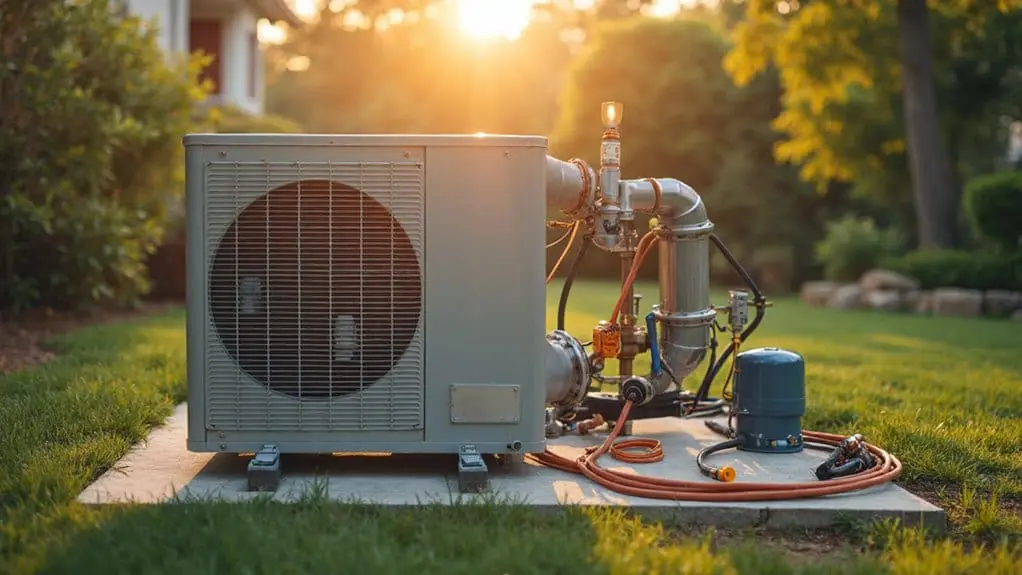
Your heat pump installation timeline varies markedly by system type and complexity. Air-source units typically require 3-8 hours for complete installation, while ground-source systems demand several weeks due to excavation and loop field preparation. Installation duration depends on existing infrastructure condition, electrical panel upgrades, ductwork modifications, and system sizing requirements. The process includes system assessment, component integration, refrigerant charging, and commissioning procedures. Understanding these variables helps you plan effectively for your specific installation requirements.
Key Takeaways
- Air-source heat pump installations typically take 3-8 hours, while ground-source systems require several weeks due to excavation requirements.
- Installation duration increases when electrical panel upgrades, ductwork modifications, or additional features like smart thermostats are needed.
- Installer expertise, site accessibility, and existing infrastructure condition significantly impact the overall installation timeline and workflow efficiency.
- The installation process includes system assessment, component installation and integration, followed by commissioning and testing phases.
- System testing and commissioning requires 45 minutes to 2 hours to validate performance and ensure optimal energy efficiency.
Typical Timeframe for Heat Pump Installation
When planning your heat pump installation, you’ll need to allocate different timeframes depending on the system type and complexity. Air-source heat pump installations typically require 3-8 hours, involving mounting the outdoor unit, positioning the indoor unit or air handler, and connecting refrigerant lines with electrical wiring. Your HVAC technician will complete the installation process more efficiently when replacing an existing system versus first-time installations.
Ground-source heat pump installations extend to several weeks due to extensive excavation and loop field preparation. Larger systems demand additional preparation time for proper sizing and integration with your existing system infrastructure. Installation duration increases when electrical panel upgrades or ductwork modifications are necessary. The complexity of refrigerant line routing and electrical wiring connections directly impacts your project timeline, making proper planning essential for successful heat pump deployment.
Factors That Affect Installation Duration
Several variables directly influence your heat pump installation timeline beyond the basic system type considerations. The size of existing system immensely impacts preparation requirements, with larger units demanding extended setup procedures. Ease of access to your installation site determines workflow efficiency—clear pathways and adequate workspace minimize delays. Installer expertise proves indispensable, as seasoned technicians execute installations faster through refined methodologies and troubleshooting capabilities. Additional features like smart thermostats, zoning controls, or advanced monitoring systems extend timeline parameters through configuration complexity. Your existing infrastructure condition presents the most variable factor—aging ductwork modifications, electrical panel upgrades, or structural reinforcements can significantly prolong installation duration. Each component requires assessment during pre-installation evaluation to establish accurate timeline projections.
What to Expect During the Installation Process
Professional heat pump installation follows a systematic sequence that unfolds across multiple phases, each demanding specific technical protocols and safety measures. Your HVAC system replacement requires methodical execution, as installing a heat pump involves coordinating indoor and outdoor units through precise technical procedures.
The installation process you’ll witness includes:
- System Assessment and Preparation – Installers evaluate existing connections, conduct manual J load calculation verification, and establish workspace protocols with drop cloths before disconnecting your current system.
- Component Installation and Integration – Technicians position new indoor and outdoor units, run and braze the line set, establish electrical connections, and integrate with existing ductwork configurations.
- System Commissioning and Testing – Professionals charge refrigerant, pressurize the system, verify operational parameters, and conduct thorough performance testing to meet your heat pump needs.
Preparing Your Home for Heat Pump Installation
Your home preparation directly impacts installation efficiency and system performance outcomes. Begin by clearing the installation area of obstacles and clutter, guaranteeing technicians have unobstructed access to work zones. Communicate any concerns or preferences regarding the installation process to your HVAC contractor beforehand. You’ll need to grant property access and provide thorough information about your existing HVAC system, including electrical configurations and ductwork specifications. Secure pets during the installation process to maintain safety protocols and prevent workflow disruptions. Be available for post-installation testing procedures, where technicians will verify system performance parameters and address any operational issues with the new heat pump unit. This preparation phase streamlines the installation timeline and optimizes equipment performance.
System Testing and Commissioning Requirements
Once installation concludes, thorough system testing and commissioning begins—a critical 45-minute to 2-hour process that validates your heat pump’s operational integrity across all functional modes.
Technicians with specialized training utilize diagnostic equipment to verify proper heating and cooling performance, defrost cycles, and emergency heat activation. The testing process requires 15-20 minutes of continuous operation to stabilize refrigerant flow before final validation takes place.
Critical commissioning components include:
- Functional verification – Testing heating, cooling, defrost, and emergency heat sequences
- Performance maximization – Calibrating controls to enhance energy efficiency
- User education – Demonstrating thermostat operation and routine maintenance procedures
This all-encompassing commissioning guarantees peak system performance, prevents premature failures, and maximizes your heat pump’s operational lifespan while maintaining optimal energy efficiency throughout its service life.
Conclusion
Your heat pump installation timeline depends on system complexity and site conditions. A typical residential retrofit with ducting modifications requires 2-3 days, while new construction installations complete in 6-8 hours. Consider Sarah’s 2,400 sq ft home: her HVAC contractor needed two days for the mini-split system installation, including refrigerant line runs and electrical connections. You’ll face commissioning delays if electrical upgrades are required, so schedule your electrical inspection early to avoid workflow disruptions.