
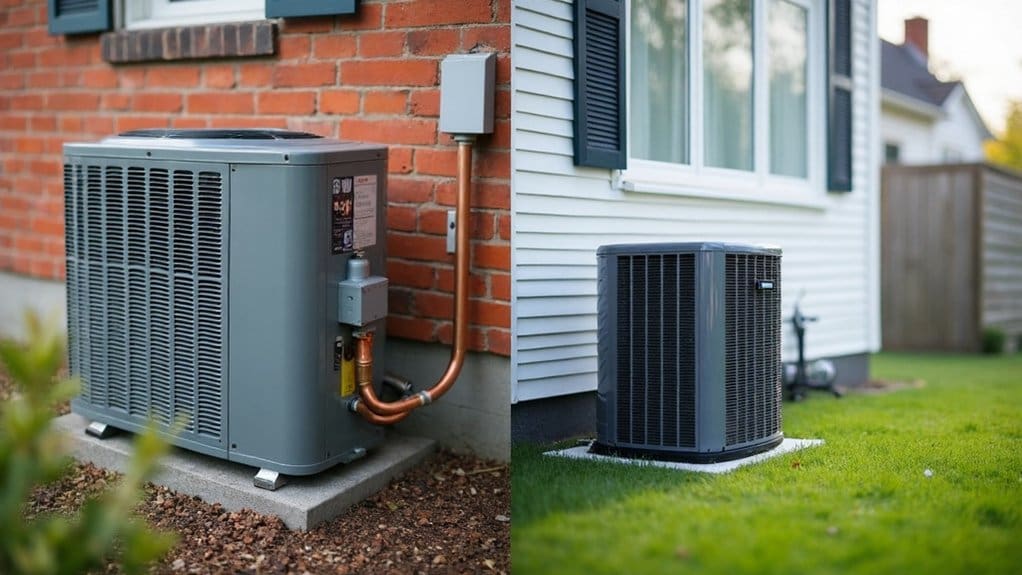
You’ll need a heat pump if you want both heating and cooling in one system, while central air conditioning only provides cooling and requires a separate heating source. Heat pumps use up to 50% less electricity for heating and achieve higher SEER ratings, making them more energy-efficient long-term. However, they cost $4,200-$7,900 versus $3,900-$7,900 for central AC. Your climate, heating needs, and budget will determine which system works best, and there’s more to ponder for your specific situation.
Key Takeaways
- Heat pumps provide both heating and cooling in one system, while central air only cools and requires separate heating.
- Heat pumps use 50% less electricity for heating than traditional systems, offering greater long-term energy savings.
- Installation costs are similar ($3,900-$7,900), but heat pumps qualify for $2,000 federal tax credits versus $600 for AC.
- Heat pumps perform best in moderate climates, while central air works effectively in all temperature conditions.
- Heat pumps offer higher SEER ratings and better dehumidification, making them more energy-efficient overall.
Understanding Heat Pump Systems
When you’re weighing your HVAC options, heat pumps stand out as dual-purpose systems that handle both heating and cooling by moving heat rather than creating it from scratch. This heat transfer technology makes them remarkably efficient compared to traditional HVAC system alternatives.
You’ll encounter two primary types: air-source heat pumps that extract heat from outdoor air, and geothermal heat pumps that tap into stable ground temperatures. During winter, your heat pump pulls warmth from outside air or soil and transfers it indoors. When summer arrives, the system reverses its refrigerant flow to provide cooling by moving indoor heat outside.
While heat pumps excel in moderate climates, their energy efficiency can decline during extreme temperatures. That’s why proper installation by certified technicians is crucial—they’ll guarantee correct sizing and setup to maximize your system’s performance year-round, helping you achieve optimal heating and cooling efficiency.
Central Air Conditioning Explained
While heat pumps offer year-round climate control, central air conditioning systems focus exclusively on cooling your home during warmer months. These central AC systems work by removing heat and humidity from indoor air, circulating cool air throughout your house via ductwork.
Your central air conditioner vs heat pump operates through two main components: an outdoor unit containing the condenser coil and compressor, and an indoor unit housing the evaporator coil and air handler. The outdoor unit releases captured heat outside, while the indoor unit’s evaporator coil absorbs heat from your home’s air.
Central air conditioning systems integrate seamlessly with existing furnaces, creating a complete HVAC system for year-round comfort. The air handler circulates cooled air through your ductwork, maintaining consistent temperatures across all rooms. Unlike heat pumps, central AC units don’t provide heating capabilities, requiring separate heating systems during colder seasons.
Key Differences Between Heat Pumps and Central AC
Although both systems circulate conditioned air through your home’s ductwork, heat pumps and central AC units serve distinctly different purposes in your HVAC setup. Your air conditioner exclusively provides cooling and requires a separate heating system for year-round comfort. In contrast, your heat pump functions as a dual-purpose system that can both heat and cool your home through its reversing valve technology.
The energy efficiency differences are substantial. Your heat pump transfers existing heat rather than generating it, using up to 50% less electricity for heating compared to traditional electric resistance systems. While your central AC system typically costs less upfront, you’ll face higher ongoing utility expenses.
Your heat pump’s ability to switch between heating and cooling modes makes it an all-encompassing HVAC solution. However, your choice depends on your climate, heating requirements, and long-term operating costs rather than just initial installation expenses.
Energy Efficiency Comparison
The energy efficiency ratings between heat pumps and central air systems reveal significant performance differences that directly impact your monthly utility bills. Heat pump systems typically achieve higher SEER ratings than traditional air conditioner units, delivering up to 50% greater energy savings for heating applications. This enhanced energy efficiency stems from your heat pump’s ability to transfer existing heat rather than generate it from scratch.
Your heat pump also excels at dehumidifying indoor air more effectively than standard AC systems, reducing overall energy consumption. However, the actual performance depends on your specific climate conditions and usage patterns. Cold climates may reduce heat pump efficiency, while moderate regions maximize their potential.
Though upfront costs for heat pump installation exceed central air expenses, the superior energy efficiency translates into substantial long-term cost-effectiveness. You’ll typically recover the initial investment through reduced utility bills, making heat pumps financially advantageous over their operational lifespan.
Installation Costs and Long-Term Investment
Breaking down the financial investment reveals that heat pump installations typically range from $4,200 to $7,900, while central air systems cost between $3,900 and $7,900 upfront. When comparing heat pump vs AC system costs, you’ll notice the higher initial cost for heat pump installation can be deceiving.
Your HVAC system choice becomes cost-effective through long-term savings. Heat pumps deliver up to 50% energy savings on heating costs compared to electric resistance systems, making them both energy-efficient and cost-effective over time. This lower energy consumption directly impacts your monthly utility bills.
Government incentives further tip the scales in the Heat Pumps vs Air conditioner debate. You can claim a $2,000 federal tax credit for heat pumps versus only $600 for traditional air conditioner cost installations. Your heating and cooling system investment pays dividends through reduced utility bills and available rebates, often offsetting the higher upfront installation costs within the system’s lifespan.
Climate Considerations for Your Location
Beyond the financial considerations, your local climate plays a major role in determining which system will serve you best. Heat pumps excel in moderate climates by extracting heat from outdoor air even during cold months, though their efficiency drops in extreme temperatures. If you’re dealing with harsh winters, you might struggle with inadequate indoor heat when outdoor air becomes too cold for effective operation.
In very hot, humid regions, central air conditioning systems outperform most heat pump or air conditioning combinations. These cooling systems are specifically designed to remove moisture while maintaining comfortable temperatures. However, geothermal heat pumps offer consistent performance regardless of outdoor conditions by extracting heat from underground sources.
Consider your area’s average winter and summer temperatures when making climate considerations. HVAC experts typically recommend heat pumps for regions with milder winters, where you’ll benefit from year-round efficiency without needing separate heating systems for extreme weather conditions.
Heating and Cooling Performance Analysis
How do heat pumps and central air systems actually compare when it comes to keeping your home comfortable year-round? When choosing between a heat pump vs AC system, you’ll find significant performance differences that affect your HVAC system’s effectiveness.
Heat pump systems excel at dual functionality – they heat and cool your home using the same equipment. The air pump mechanism with a reversing valve changes refrigerant flow direction, making heat pumps and air conditioning capabilities seamless in one unit. Central air conditioners only cool your home, requiring separate heating systems.
- Energy Efficiency: Heat pumps provide energy efficient cooling plus heating with up to 50% savings over electric resistance heating
- Year-Round Comfort: Heat pump vs air conditioner versatility means consistent temperature control regardless of season
- Climate Dependency: Heat pump systems perform ideally in moderate climates, while central AC works universally for cooling
When choosing between a heat pump and central air, consider your complete comfort needs.
Maintenance Requirements and Lifespan
Understanding the long-term maintenance demands of your HVAC investment helps you budget effectively and maximize system performance. Heat pumps require more frequent attention than central air conditioners, needing annual tune-ups to maintain peak efficiency. You’ll need professional maintenance that includes cleaning coils, checking refrigerant levels, and replacing air filters regularly for both systems.
Central air conditioners typically outlast heat pumps, offering 15-20 years of service compared to 10-15 years for heat pumps. Your climate and usage patterns greatly impact these lifespans—if you live in colder regions, your heat pump’s effective lifespan may decrease due to increased workload during heating seasons.
Proper maintenance extends both systems’ longevity and prevents costly premature failures. You can’t overlook routine professional servicing, as it’s essential for maintaining energy efficiency. While heat pumps demand more frequent attention, consistent care for either system protects your investment and guarantees reliable year-round comfort.
Making the Right Choice for Your Home
The decision between a heat pump and central air system hinges on your specific home circumstances and priorities. Your climate plays the most vital role in determining which HVAC system will serve you best.
Consider these key factors when making your choice:
- Climate and heating requirements – If you live in moderate climates, a heat pump’s reversing valve technology provides exceptional energy efficiency for both heating and cooling capabilities. However, extreme temperatures reduce heat pump performance.
- Installation costs versus long-term energy savings – While heat pumps require higher upfront investment than a standard air conditioner, they typically deliver greater energy efficiency and cost savings over time.
- Dual functionality needs – Heat pumps eliminate the need for separate heating and cooling systems, making them ideal if you’re replacing both components of your current HVAC system.
Evaluate your budget, local climate conditions, and existing infrastructure to determine which option maximizes comfort and value for your home.
Frequently Asked Questions
What Is Better, a Heat Pump or Central Air?
You’ll find heat pumps offer better energy efficiency comparisons and heating cost considerations, while central air excels in cooling capacity differences. Your climate suitability debates and homeowner preference factors ultimately determine what’s best.
Why Don’t Contractors Like Heat Pumps?
Like traversing uncharted waters, you’ll find contractor skepticism stems from installation complexity, maintenance challenges, and contractor training needs. They’re concerned about technological limitations, climate suitability questions, and workforce adaptability affecting their reputation.
What Is the Major Disadvantage of a Heat Pump?
You’ll face reduced efficiency in extreme temperatures as heat pumps’ major disadvantage. They struggle with limited heating capacity in cold climates, requiring backup systems when temperatures drop below freezing, increasing your energy costs.
Do Heat Pumps Work in 100 Degree Weather?
Yes, you’ll find heat pumps work in 100-degree weather, though heat pump efficiency decreases slightly. Heat pump performance remains reliable, but heat pump limitations may require supplemental cooling for ideal effectiveness in extreme temperatures.
Conclusion
You’ll make the best choice by weighing your climate, budget, and long-term goals. If you’re like Sarah in Minnesota, who switched from central AC to a heat pump, you’ll save 40% on energy costs while getting year-round comfort. Heat pumps work best in moderate climates, while central AC excels in hot regions. Consider your heating needs, installation costs, and local weather patterns. You can’t go wrong when you match the system to your specific situation.