
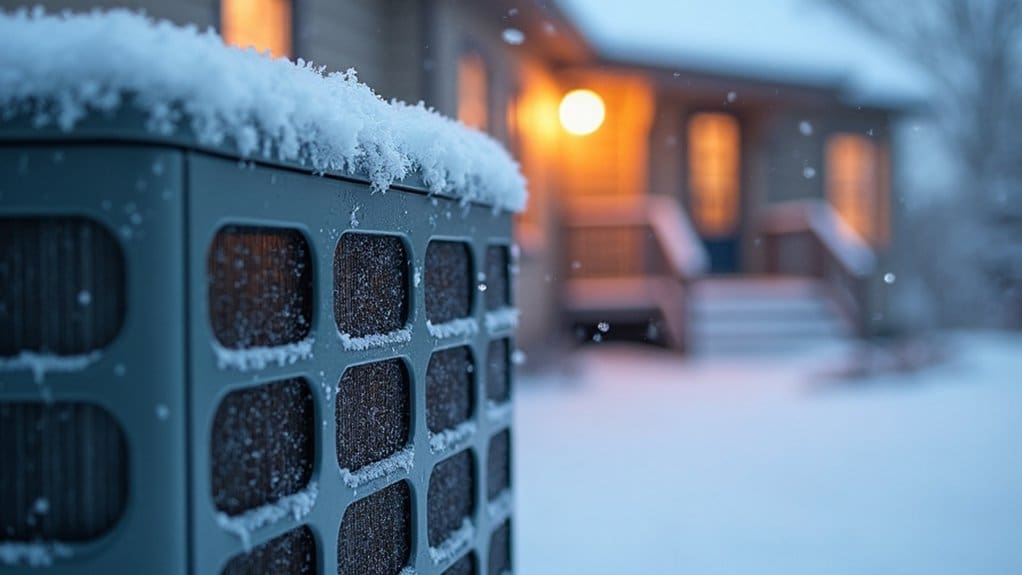
When your heat pump isn’t heating, you’re likely dealing with thermostat calibration issues, tripped circuit breakers, clogged air filters, or reversing valve malfunctions. Check your thermostat settings first, then inspect the electrical panel and replace dirty filters that restrict airflow. Low refrigerant levels from leaks and ice buildup on the outdoor unit can also prevent proper heating. While you can handle basic troubleshooting, complex issues require professional diagnosis to restore your system’s reliable performance.
Key Takeaways
- Check thermostat settings and calibration, as incorrect mode or faulty wiring can prevent proper heating operation.
- Inspect for electrical issues like tripped breakers, disconnected power switches, or loose connections affecting system function.
- Replace clogged air filters and clear debris from outdoor unit to restore proper airflow throughout the system.
- Address reversing valve malfunctions that prevent switching between heating and cooling modes through professional repair services.
- Have professionals check refrigerant levels and repair leaks, as low refrigerant reduces heating efficiency and damages components.
How Heat Pumps Work to Provide Warmth
When your heat pump isn’t heating properly, understanding how it’s supposed to work helps you troubleshoot the problem more effectively. Your heat pump operates by extracting heat energy from outside air and transferring it indoors through a refrigerant cycle. Unlike traditional HVAC systems that generate heat, your pump simply moves existing heat from one location to another.
In heating mode, the outdoor unit functions as an evaporator, where refrigerant absorbs heat from the outside air. The refrigerant then travels to your indoor unit, which acts as a condenser. Here, the refrigerant releases the absorbed heat into your home’s air supply. The system compresses and condenses the refrigerant to increase its temperature before distribution.
This heat transfer process makes heat pumps incredibly energy-efficient since they don’t create heat from scratch. When functioning properly, your pump can extract heat even from cold outdoor air, providing consistent indoor heating throughout winter months.
Thermostat Settings and Calibration Issues
Even when your heat pump’s mechanical components work perfectly, thermostat problems can leave you without heat. An incorrect thermostat setting is often the simplest culprit – you might’ve accidentally left it set to cool mode instead of switching it to heat mode for the season.
- Wrong mode setting – Check the thermostat to guarantee it’s set to heat mode, not cool or auto
- Calibration problems – A faulty thermostat may not accurately read room temperature or communicate the desired temperature to your heat pump
- Wiring issues – Poor connections between the thermostat and heat pump can disrupt proper mode switching
A malfunctioning thermostat won’t properly signal your heat pump to switch into heating mode, even when temperatures drop. If checking basic settings doesn’t resolve the issue, call a professional. An HVAC professional can diagnose whether you need thermostat recalibration, rewiring, or complete replacement.
Power Supply and Electrical Problems
Electrical issues rank among the most common reasons your heat pump won’t produce heat. Start by checking your circuit breaker panel for a tripped breaker that’s cutting power to your HVAC system. Reset any tripped circuits and see if this restores heating function.
Next, examine the outdoor unit’s power switch. If it’s turned off, your heat pump can’t operate. Flip the switch to the “on” position and test your system.
Faulty wiring or loose electrical connections between your thermostat, indoor unit, and outdoor unit can disrupt power flow. These issues require professional attention from an HVAC contractor due to safety concerns.
Internal electrical components like contactors, compressor relays, and starter capacitors can also fail. When these parts malfunction, your compressor won’t start properly, leaving you without heat. Since diagnosing these problems requires specialized knowledge, contact an HVAC service professional to inspect and replace defective components safely.
Dirty Air Filters and Airflow Restrictions
Although electrical problems often get the most attention, dirty air filters and airflow restrictions cause just as many heat pump heating failures. Your heat pump depends on unrestricted airflow to function properly, and a clogged air filter severely limits performance.
When dirt buildup accumulates, airflow can become completely blocked, forcing your system to work harder and potentially overheat. This creates a cycle where airflow can become increasingly restricted until your heat pump shuts down entirely.
To restore proper operation:
- Replace your indoor air filter – Check monthly and replace when dirty air filters show significant dirt and debris accumulation
- Clean the outdoor unit – Clear away leaves, snow, and vegetation from around your system since buildup on the outdoor coil reduces efficiency
- Inspect air pathways – Guarantee nothing blocks air outside flow around the unit, as your outdoor coil is best maintained with proper clearance
If airflow restrictions persist after these steps, contact an HVAC professional for diagnosis.
Reversing Valve Malfunctions
Malfunctions in your heat pump’s reversing valve can leave you scratching your head when cold air blows from your vents instead of warm comfort. This critical component controls refrigerant flow, switching your system between heating and cooling modes. When you’re experiencing a faulty reversing valve, your heat pump is operating but stuck in the wrong mode.
Basic heat pump troubleshooting starts when you check to see if the reversing valve receives appropriate electrical power. However, mechanical problems within the valve often require specialized diagnosis. A bad reversing valve prevents your system from entering heating mode effectively, making professional intervention necessary.
Don’t attempt complex reversing valve repairs yourself. These issues need to be diagnosed and resolve by trained technicians who understand refrigerant systems. Contact a professional HVAC service immediately when you suspect valve problems. Proper heat pump service guarantees your reversing valve functions correctly, and most malfunctions can only be remedied by a professional technician.
Low Refrigerant Levels and Leaks
Something as simple as low refrigerant levels can transform your heat pump from a reliable heating source into an ineffective system that struggles to warm your home. When your heat pump has a low refrigerant charge, it can’t adequately heat your living space, leaving you cold and frustrated.
Refrigerant leaks are the primary culprit behind declining refrigerant levels, but they’re difficult to detect without proper equipment. Here’s what you need to know:
- Professional diagnosis is indispensable – Only trained technicians can accurately identify and fix refrigerant leaks using specialized detection tools
- Complete system service is required – Repairs involve sealing leaks and recharge the system with the correct refrigerant type and amount
- Prompt action prevents costly damage – Ignoring a leak leads to compressor damage and expensive repairs
Properly charging your heat pump is vital for ideal performance. Don’t attempt DIY repairs – professional repair ensures your system operates efficiently and safely.
Frozen Outdoor Unit and Ice Buildup
When ice encases your heat pump’s outdoor unit, the system loses its ability to extract heat from the outside air and transfer heat into your home. A frozen outdoor coil severely compromises your heating system’s performance, leaving you with inadequate warmth during cold weather.
Ice buildup typically signals that your heat pump’s defrost mode isn’t working correctly. Several factors can cause this malfunction, including low refrigerant levels, a faulty reversing valve, or extreme cold weather conditions overwhelming the system’s capacity.
You can try basic troubleshooting tips like gently clearing snow and ice with warm water to temporarily restore function. However, don’t use hot water or sharp tools that could damage the coil fins.
If ice buildup persists after clearing, it’s time to contact an HVAC professional. They’ll diagnose whether you’re dealing with refrigerant leaks, defrost control issues, or other mechanical problems requiring expert repair.
Cold Weather Performance Limitations
Below 32°F, your heat pump faces significant challenges extracting enough heat from the frigid outdoor air to warm your home effectively. Cold weather dramatically reduces your heat pump’s efficiency, forcing it to work harder while delivering less heating capacity.
When your outdoor unit struggles in extreme temperature conditions, you’ll need supplemental heating to maintain comfort:
- Electric resistance heating – Your backup heating system automatically activates when the heat pump can’t meet demand
- Emergency heat setting – Switch your thermostat to this mode when the heat pump fails completely
- Gas furnace integration – Some systems use gas as the supplemental heating source for better efficiency
Relying heavily on electric resistance heating will spike your energy costs compared to normal heat pump operation. If you’re frequently using emergency heat or experiencing inadequate heating performance, consult an HVAC professional. They’ll guarantee your system is properly sized and configured for your local climate conditions.
When to Contact a Professional HVAC Technician
How do you know if your heat pump problem requires professional expertise? If you’ve tried basic troubleshooting steps without success, it’s time to contact a professional HVAC technician. Complex issues requiring specialized knowledge shouldn’t be tackled through DIY methods, as improper repairs can worsen problems and damage your heat pump system.
HVAC experts possess the necessary tools and experience to accurately diagnose root causes and implement appropriate solutions. Professional service providers can troubleshoot persistent issues, perform essential maintenance, and repair components safely. When your heat pump experiences recurring problems or complete system failures, consulting qualified HVAC company representatives becomes vital.
Attempting complex repairs yourself risks further damage and potential safety hazards. Professional intervention guarantees proper operation, maintains energy efficiency, and prevents costly breakdowns. Contact a Carrier HVAC dealer or other certified service providers when facing issues beyond basic troubleshooting. Their expertise protects your investment and restores reliable home comfort.
Frequently Asked Questions
What Would Cause a Heat Pump Not to Heat?
You’ll find heat pumps won’t heat due to refrigerant leaks, thermostat malfunctions, air filter blockages, compressor failures, fan motor problems, ductwork issues, electrical control faults, coil freezing, or outdoor unit problems affecting refrigerant charge levels.
What Is the Most Common Part Failure That Causes No Heat?
You’ll most commonly encounter compressor failures causing no heat. However, thermostat calibration problems, reversing valve malfunctions, and refrigerant charge issues also frequently prevent heating. Air filter blockages and electrical control board faults rank closely behind.
What Is the Average Lifespan of a Heat Pump?
While some units fail prematurely, your heat pump’s average unit life spans 12-15 years with proper installation impact and regular maintenance needs. Climate conditions, refrigerant levels, airflow restrictions, thermostat settings, compressor issues, and electrical components affect replacement timing.
Why Is My Heat Pump Blowing Cold Air When the Heat Is On?
Your heat pump’s blowing cold air due to refrigerant leaks, coil icing issues, thermostat malfunctions, compressor failure, heat exchanger problems, electrical issues, air filter blockages, low airflow, ductwork leaks, or improper refrigerant charge level requiring professional diagnosis.
Conclusion
When your heat pump isn’t warming your home, don’t let it become the elephant in the room. You’ve got several troubleshooting options at your disposal—from checking thermostat settings to inspecting air filters. While you can handle basic maintenance yourself, refrigerant issues and electrical problems require professional expertise. Remember, your heat pump’s a reliable workhorse when properly maintained, so don’t hesitate to call an HVAC technician when you’re out of your depth.