
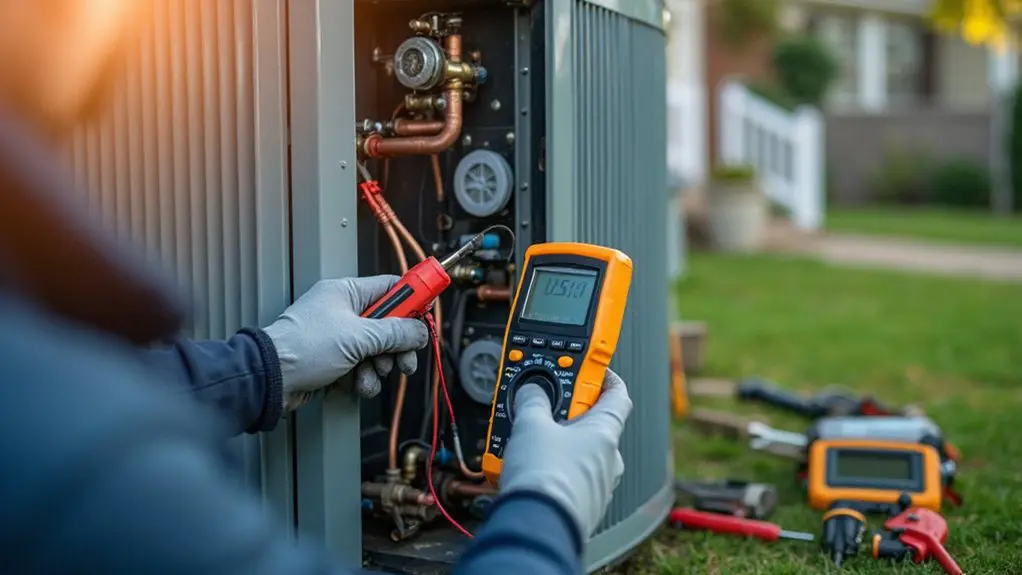
You’ll typically pay between $150 and $3,500 for heat pump repairs in 2025, depending on what’s wrong with your system. Minor issues like thermostat problems cost $150-$400, while major compressor repairs can reach $1,500-$3,500. Most homeowners spend $300-$1,500 for common repairs like refrigerant leaks or reversing valve replacements. Labor costs range from $50-$150 per hour, plus parts and potential emergency service fees. Understanding these cost factors will help you budget effectively for your repair needs.
Key Takeaways
- Heat pump repair costs typically range from $150-$3,500 depending on the specific issue and complexity of the repair needed.
- Common repairs include refrigerant leaks ($300-$1,500), reversing valve replacement ($400-$1,000), and compressor issues ($1,500-$3,500).
- Labor costs range from $50-$150 per hour, with diagnostic fees of $75-$150 often applied toward total repair costs.
- Emergency service calls add $100-$300 surcharge, while trip fees typically cost $100-$300 for basic service visits.
- Professional repairs are recommended over DIY due to safety risks, warranty protection, and proper installation requirements.
Factors That Affect Heat Pump Repair Costs
When your heat pump breaks down, several key factors will determine how much you’ll pay for repairs.
The type of heat pump you own drastically impacts costs. Air-source units typically cost less to repair than geothermal systems due to accessibility and parts availability. The specific repair needed affects pricing enormously—a faulty reversing valve repair differs vastly from blower motor replacement.
The complexity of the problem drives major cost variations. Simple fixes like thermostat adjustments run $100-$300, while complex issues requiring system replacement can reach $1,500 or more. Labor costs ranging from $50-$150 per hour add up quickly for intricate repairs.
Replacement parts represent another major expense factor. Inexpensive components like capacitors won’t break your budget, but major parts like compressors can cost hundreds. Before considering pump replacement, weigh repair costs against a new system. Heat pump repair decisions should factor in your unit’s age and overall condition.
Average Repair Costs for Common Heat Pump Issues
Understanding these cost factors helps you prepare for specific repair expenses you might face. Common Heat Pump issues have varying pump repair costs depending on complexity and parts needed.
Refrigerant leaks typically cost $300-$1,500 to repair, including leak detection and recharging. A faulty reversing valve replacement ranges $400-$1,000, affecting your system’s heating and cooling modes. Compressor issues represent the most expensive repairs, where cost can range from $1,500-$3,500.
Thermostat problems are among the cheapest fixes at $150-$400. Fan motor replacements average $300-$600, while capacitor issues cost $150-$400. Heat pump service calls for electrical problems typically range $200-$800.
Your typical heat pump’s blower motor repair averages $400-$700. Defrost control board replacements cost $300-$600. Labor costs can range from $75-$150 per hour, greatly impacting average costs. The average heat pump repair falls between $300-$750, though complex issues exceed this range extensively.
DIY Heat Pump Repair vs. Hiring a Professional
While DIY heat pump repairs might seem like a money-saving opportunity, you’ll face significant risks that often outweigh the potential savings. Though parts cost $100 to $3,000, attempting complex HVAC repairs can void warranties and compromise your system’s Seasonal Energy Efficiency Ratio. Professional technicians charge $50-$150 per hour but guarantee proper diagnosis and reduce safety hazards.
Key considerations when choosing between DIY and professional repairs:
- Safety risks: High voltage exposure and fire hazards make professional repairs worth the investment
- Trip fees: Minimum service calls cost $100-$300, equivalent to 1-2 labor hours
- Complex repairs: 4-5 hour jobs cost $400-$1,500 professionally but prevent system failure
- Warranty protection: Professional repairs maintain coverage on new heat pumps and ductwork
- Factors Affect outcomes: Proper installation preserves indoor air quality and prevents costly Replacement Cost scenarios
Professional HVAC service protects your investment while guaranteeing reliable performance.
Additional Costs and Service Add-Ons
Beyond standard repair fees, you’ll encounter several additional costs that can drastically impact your total heat pump service bill. Emergency service calls typically carry surcharges of $100-$300, especially during peak heating and cooling seasons. Diagnostic fees range from $75-$150, though many contractors apply this toward repair costs.
Factors That Influence your final bill include ductwork issues requiring separate repairs ($200-$2,000) and system efficiency upgrades. When facing the repair or replacement decision, experts advice suggests evaluating your current system’s age and condition. If your 14-15-year-old unit needs extensive work, the cost to replace ($4,500-$8,000) might offer better energy savings long-term.
Service add-ons like refrigerant top-offs, filter replacements, and thermostat upgrades can add $50-$500 to your bill. Proper maintenance contracts ($150-$400 annually) help prevent costly breakdowns. Consider these additional expenses when budgeting for heat pump services to avoid surprise costs.
Ways to Save Money on Heat Pump Repairs
Since heat pump repairs can quickly drain your budget, implementing smart cost-saving strategies will help you minimize expenses without compromising your system’s performance. These proven approaches will keep your HVAC systems running efficiently while protecting your wallet.
- Book repairs immediately when you notice problems – early intervention prevents minor issues from becoming major replacement costs that cost around thousands more
- Compare quotes from multiple professionals to guarantee you’re getting competitive pricing for your specific system type and repair needs
- Seal ductwork leaks to boost efficiency, reduce energy costs, and minimize future repair requirements that strain your pump’s components
- Invest in maintenance packages offering annual inspections and service discounts to keep your system operate smoothly year-round
- Research local tax credits for energy-efficient upgrades when considering replacement – these incentives work alongside manufacturers warranty coverage to reduce overall expenses
Smart planning keeps your heat pump reliable without breaking your budget.
Conclusion
You’ll find heat pump repair costs vary considerably based on your system’s age, the complexity of issues, and your location. You can save money by maintaining your unit regularly, comparing multiple quotes, and addressing problems early. You’ll spend less on minor repairs than major component replacements, you’ll benefit more from professional service than risky DIY attempts, and you’ll protect your investment better through preventive care than emergency fixes.