
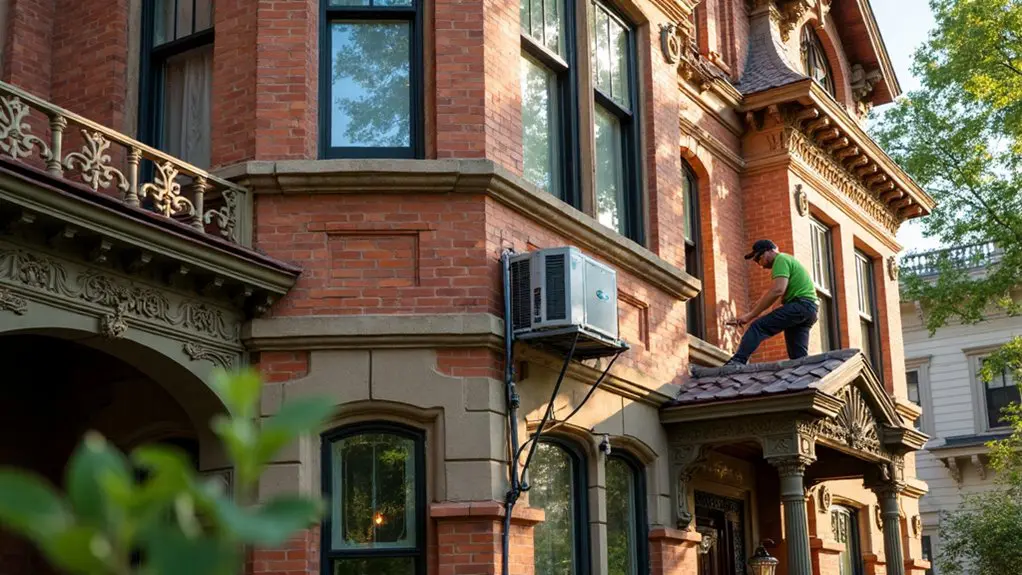
You can successfully install AC in your historic St. Louis home while preserving its architectural charm through strategic placement of ductless mini-split systems and careful ductwork planning. Professional installers understand how to navigate heritage property regulations, protect original features, and maximize energy efficiency without compromising your home’s character. They’ll guarantee proper SEER ratings, code compliance, and financing options make the upgrade affordable. Continue exploring how expert techniques seamlessly blend modern comfort with timeless architectural integrity.
Key Takeaways
- Ductless mini-split systems provide efficient cooling while preserving original architectural features in historic St. Louis homes.
- Strategic placement of compact indoor units maintains visual appeal without compromising the home’s historical character.
- Expert installation navigates complex heritage property regulations and ensures compliance with local preservation standards.
- Professional technicians address unique challenges like limited electrical capacity and unconventional layouts in older homes.
- Financing options make quality HVAC upgrades affordable for historic homeowners seeking modern comfort solutions.
Evaluating Your Historic Home’s Structure for Modern AC Compatibility
Before installing modern air conditioning in your historic St. Louis home, you’ll need to thoroughly assess your property’s structural compatibility with contemporary HVAC systems. Start by examining your home’s architectural features, as unique elements like decorative moldings, original windows, or period-specific layouts can complicate AC installation routes and equipment placement.
Evaluate your home’s structural integrity to determine if it can support the weight and size requirements of modern conditioning equipment. Historic homes often have different framing systems that may need reinforcement before accommodating heavy HVAC components.
You’ll likely need modifications to integrate an air system while preserving your property’s character. Consider how ductwork routing might affect original features and whether exterior units will impact your home’s aesthetic appeal.
Consult with an HVAC contractor specializing in historic home renovations. They’ll provide essential insights about your specific property’s suitability for AC installation and help develop strategies that balance modern comfort with preservation goals.
Essential Energy Efficiency Upgrades Before AC Installation
Once you’ve confirmed your historic St. Louis home can accommodate modern cooling Systems, you’ll want to prioritize energy efficiency upgrades before your new AC unit installation. These improvements directly impact your heating and cooling system’s performance and your indoor air quality.
Start by sealing air leaks throughout your home – this prevents up to 30% of cool air from escaping and substantially improves your new air conditioning unit’s efficiency. Next, add insulation with an R-value of R-38 or higher to reduce energy costs by 15-30%. Consider upgrading single-pane windows to energy-efficient double-pane versions, which can cut cooling costs by 12-24%.
These thermal performance improvements are essential before installing your unit. When you implement these upgrades first, your properly-sized cooling system won’t work as hard to maintain comfortable temperatures, reducing long-term energy bills and maximizing your investment in modern comfort.
Choosing the Right AC Unit Size for Optimal Performance
Nothing affects your historic St. Louis home’s cooling performance more than selecting the proper system size for your Air Conditioning System. You’ll need a comprehensive load calculation that evaluates your square footage, insulation quality, window placement, and unique architectural features. This assessment determines your exact cooling needs and prevents the costly mistakes of oversized or undersized equipment.
When planning your AC Installation In St. Louis home, consider a mini split system that adapts to historic layouts without extensive ductwork modifications. Your new air conditioner should match your home’s specific requirements—not generic sizing charts. An incorrectly sized new installation wastes energy and creates uncomfortable temperature fluctuations.
Focus on the Seasonal Energy Efficiency Ratio (SEER) ratings when comparing units. Higher SEER ratings deliver better performance in St. Louis’s humid climate. Consult HVAC professionals who understand historic home challenges to guarantee your system size delivers ideal comfort while preserving your home’s character and minimizing energy consumption.
Overcoming Installation Challenges in Older St. Louis Homes
Historic St. Louis homes present unique installation challenges that you’ll need to address strategically. Your older homes often feature intricate architectural details that complicate standard AC placement, requiring careful professional assessment to preserve character while adding comfort.
You’ll likely discover your electrical system needs upgrades to handle modern AC units’ power demands. Historic Homes weren’t designed for today’s cooling requirements, creating a need for extensive planning and modifications.
Finding space for piping and ductwork poses significant obstacles in homes lacking original HVAC infrastructure. You might consider ductless mini-split systems as viable alternatives that minimize structural modifications while delivering efficient cooling.
Air leakage and inadequate insulation will compromise your system’s performance, so you’ll want to address these issues first. HVAC contractors serving Maryland Heights and Creve Coeur understand these specific needs. They’ll help you navigate installation complexities while maintaining your home’s historic integrity and ensuring ideal comfort.
Ductless Mini-Split Systems: The Perfect Solution for Historic Properties
When preserving your historic St. Louis home’s architectural integrity, ductless mini-split systems offer the perfect HVAC solution. These systems require minimal impact on your home’s structure, making them ideal for historic homes where traditional ductwork isn’t feasible.
Ductless systems consist of outdoor compressor units connected to indoor air handlers through small refrigerant lines, eliminating extensive structural modifications. You’ll enjoy zoned heating and cooling that adapts perfectly to your home’s unique layouts and room configurations.
- Preserve original architectural features without compromising comfort
- Install with just a small hole connection between indoor and outdoor units
- Control temperature independently in different rooms or areas
- Maintain historic character with compact and discreet design units
- Choose an affordable alternative to costly traditional ductwork installation
The indoor units’ compact and discreet design guarantees minimal visual impact while seamlessly blending with your historic property’s character, providing modern comfort without sacrificing authenticity.
Latest AC Technologies and Trends for Heritage Homes
Beyond ductless mini-splits, today’s AC manufacturers are developing cutting-edge technologies specifically designed to meet the unique challenges of heritage home cooling. Smart inverter technology now adapts to your home’s specific thermal characteristics, automatically adjusting output to maintain consistent temperatures while minimizing energy consumption. These energy-efficient systems feature advanced sensors that learn your historic home’s heating and cooling patterns, optimizing performance without compromising architectural integrity.
Modern manufacturers are creating ultra-compact units that blend seamlessly with period aesthetics. Variable-speed compressors work quietly, respecting the peaceful ambiance historic homeowners cherish. The installation process has become increasingly streamlined, with wireless controls eliminating the need for extensive wiring that could damage original materials.
Zoned heating and cooling capabilities now include smartphone integration, allowing you to control individual room temperatures remotely. Historic preservation specialists increasingly recommend these advanced ductless mini-split systems because they deliver superior comfort while maintaining your property’s authentic character and historical significance.
Professional Installation Benefits and Cost Considerations
Three critical factors make professional HVAC installation essential for your historic St. Louis home: proper sizing, architectural preservation, and long-term performance optimization. Expert HVAC systems installation guarantees your modern AC system integrates seamlessly without compromising your property’s character.
Professional cooling services in St. Louis deliver measurable benefits that justify the investment:
- Accurate sizing calculations based on square footage, insulation, and window placement prevent over or under-sizing your HVAC unit
- Architectural sensitivity ensures ductwork and electrical upgrades don’t damage historic features
- Energy efficiency maximization through proper configuration reduces utility costs over time
- Code compliance expertise navigates complex regulations for heritage properties
- Financing solutions make quality New HVAC installations affordable for historic homeowners
Your cooling system’s performance depends on expert installation. Professional technicians understand the unique challenges older homes present, from limited electrical capacity to unconventional layouts. They’ll recommend appropriate AC units and central air solutions that preserve your home’s integrity while delivering reliable comfort.
Preserving Architectural Integrity During HVAC Upgrades
Since historic St. Louis homes demand special consideration, you’ll need the right approach when installing an AC system that won’t compromise their character. A ductless heat pump offers the perfect solution, requiring only a small hole to connect indoor and outdoor components while preserving your home’s original structure.
When choosing the right new system, focus on compact indoor units that can be strategically placed to maintain visual appeal. Your new unit should blend seamlessly with existing architectural features rather than dominating room aesthetics. A leading AC contractor will help determine the suitable SEER rating for efficiency without oversizing equipment.
Professional installation guarantees work completed meets preservation standards. Ductless mini-splits provide zoned climate control, perfect for historic homes’ unique layouts and room configurations. This minimally invasive approach protects original features while delivering modern comfort, making it the ideal choice for maintaining your property’s historical integrity during HVAC upgrades.
Conclusion
You’ve discovered how to blend modern comfort with classic charm in your cherished St. Louis home. By carefully considering structural compatibility, selecting suitable systems, and prioritizing preservation, you’ll achieve perfect climate control without compromising character. Don’t delay in consulting qualified contractors who understand historic homes’ unique demands. Your dwelling deserves dedicated attention to detail, ensuring generations can enjoy both timeless beauty and contemporary convenience in your treasured historic residence.