
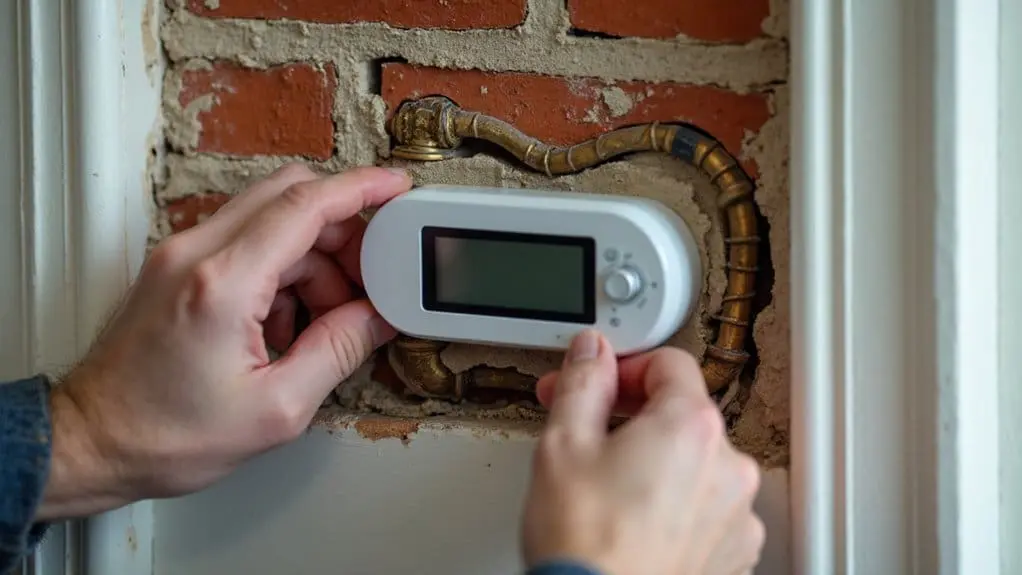
Installing a modern thermostat in your historic St. Louis home presents unique challenges including outdated wiring systems, missing C-wires for digital units, and incompatible voltage requirements between vintage HVAC equipment and contemporary controls. You’ll need to preserve original architectural features while maneuvering strict permit processes for modifications. Wireless thermostat solutions can eliminate visible wiring concerns, while electrical upgrades may require replacing knob-and-tube systems with modern conductors. Professional expertise guarantees compliance with preservation standards and prevents costly equipment damage.
Key Takeaways
- Historic St. Louis homes often lack modern thermostat wiring, requiring extensive installation behind original walls and architectural features.
- Outdated HVAC systems use incompatible voltage requirements and lack C-wires needed to power modern programmable thermostats.
- Structural constraints from thick masonry walls and ornate elements limit thermostat placement and complicate new wiring installation.
- Wireless thermostat solutions eliminate visible wiring while preserving architectural integrity and providing smart climate control features.
- Electrical upgrades replacing knob-and-tube wiring and installing dedicated circuits ensure code compliance without compromising historic character.
Understanding Wiring Challenges in Historic Properties
Why do thermostat installations in historic St. Louis homes present unique wiring challenges? You’ll encounter outdated or completely absent thermostat wiring that requires extensive additional installation. In historical buildings, existing wiring is often concealed behind original walls, floors, and ceilings, making access extremely difficult without compromising historical integrity.
Your current wiring likely won’t support modern programmable or smart thermostat technology, necessitating complete system rewiring. However, you must preserve the aesthetic value of historical features while installing new wiring infrastructure. This creates complex routing challenges around original architectural elements.
Ensuring all work maintains historical integrity requires specialized expertise. You’ll need professional HVAC technicians experienced specifically with historical buildings who understand preservation requirements and can navigate wiring installations without damaging irreplaceable historical features.
Compatibility Issues Between Old Systems and Modern Thermostats
Three fundamental compatibility barriers prevent modern thermostats from functioning properly with historic St. Louis homes’ aging infrastructure. Your heating and air conditioning systems likely use outdated control protocols that can’t communicate with smart thermostats requiring digital signals. Different types of HVAC equipment installed decades ago operate on voltage requirements incompatible with today’s low-voltage thermostats, creating potential safety hazards.
You’ll encounter electrical services complications when your historic building’s wiring lacks the common wire (C-wire) that powers modern units. Installing incompatible thermostats violates current codes and safety standards, risking equipment damage through short-cycling. Your HVAC system’s mechanical relays and pneumatic controls won’t interface with digital programming features. Professional assessment guarantees your thermostat upgrade meets compatibility requirements while maintaining your historic building’s operational integrity and safety compliance.
Structural Constraints and Architectural Preservation
Historic St. Louis homes present unique challenges when installing modern thermostats due to structural constraints that demand careful architectural preservation. You’ll encounter limited space for routing new wiring through century-old walls without compromising load-bearing elements or damaging ornate plasterwork.
The permit process becomes critical when working on a historical building, as you must secure necessary permits from preservation committees before making any visible modifications. Your installation strategy should prioritize preserving historical integrity while ensuring minimal disruption to original features.
- Thick masonry walls require specialized drilling techniques to avoid structural damage
- Ornate crown molding and decorative elements limit thermostat placement options
- Original electrical systems may lack adequate power supply for modern devices
- Historic district regulations restrict visible modifications to building exteriors
Plan extensively using 3D modeling to identify safe installation routes.
Wireless Thermostat Solutions for Heritage Buildings
Given these structural limitations and preservation requirements, wireless thermostat systems offer an ideal solution that bypasses many installation challenges while maintaining your historic home’s architectural integrity. These systems eliminate visible wiring that would otherwise compromise original design elements in historic homes.
Wireless thermostats integrate seamlessly with modern HVAC systems while providing remote programming capabilities for suitable indoor air quality management. Programmable thermostats with smart features deliver real-time usage reports and maintenance alerts, enhancing energy efficiency without aesthetic disruption.
Professional installation guarantees proper configuration with existing infrastructure. When paired with zoned systems, wireless thermostats enable precise climate control across different areas of your heritage property. This technology respects preservation requirements while delivering contemporary comfort and energy management capabilities that protect both your investment and historical significance.
Professional Wiring Services for Outdated Infrastructure
Two critical electrical challenges await homeowners when installing thermostats in St. Louis historic properties: knob-and-tube wiring and aluminum conductors. These outdated systems can’t safely support modern heating and cooling controls, requiring professional electrical installations before any type of HVAC integration.
Experienced electricians identify infrastructure deficiencies and implement solutions that preserve your home’s architectural integrity while enabling energy-efficient thermostat operations. Professional repair services guarantee code compliance and obtain necessary permits for upgrading HVAC systems.
Essential electrical upgrades include:
- Replacing knob-and-tube wiring with modern copper conductors
- Installing dedicated circuit breakers for thermostat power requirements
- Upgrading electrical panels to handle increased energy demands
- Integrating new wiring with existing systems without compromising historic features
Professional wiring services provide the technical expertise needed for safe, reliable thermostat functionality in heritage buildings.
Energy Efficiency Upgrades in Period Homes
How can you maximize energy efficiency in your period home without sacrificing its architectural authenticity? You’ll need strategic upgrades that address common deficiencies while preserving your building’s historical integrity. Most period homes lack proper insulation, creating drafts that compromise comfort and increase costs. Add insulation to attics and basements without damaging original structural elements or historic features.
Replace inefficient windows with energy-efficient models that match your home’s architectural style. Install programmable thermostats to meet modern efficiency standards while maintaining precise temperature control. Consider ductless HVAC systems that provide superior climate control without extensive modifications to original construction.
LED lighting upgrades are considerably more efficient than older incandescent fixtures. Professional contractors with decades of experience understand how to implement these improvements while respecting your home’s historical character and ensuring safety compliance.
Compliance With Historic Preservation Standards
When installing thermostats in historic St. Louis homes, you’ll encounter strict compliance requirements that can’t be navigated without thorough preparation. Local regulations require special attention to preserving the building’s historical integrity while implementing necessary upgrades for energy consumption control and humidity levels management.
Historic preservation committees mandate detailed renovation plans before approving any visible exterior modifications. You’ll need to:
- Submit extensive installation blueprints showing concealed mounting locations
- Demonstrate how thermostat placement won’t compromise original architectural features
- Specify custom housing solutions that blend with period-appropriate materials
- Provide documentation ensuring minimal impact on historic fabric
The approval process demands patience and expertise. You must balance modern HVAC functionality with preservation standards, often requiring creative mounting solutions behind existing fixtures or within original millwork to maintain the property’s authentic appearance.
Expert Installation Techniques for Vintage Properties
Once you’ve secured the necessary approvals, installing thermostats in vintage St. Louis homes requires specialized expertise to protect historic integrity while integrating modern systems. You’ll need a team of experts who understand both preservation requirements and contemporary heating and air conditioning technologies.
Start by identifying existing wire pathways to minimize wall penetration. Run new wiring through original conduit routes when possible. For homes lacking adequate electrical infrastructure, you’ll require careful planning to accommodate new HVAC systems without damaging original materials.
Professional services should include thorough system compatibility assessments. Your technicians must verify that vintage ductwork can support modern thermostat controls. Install surge protection to safeguard sensitive electronics from older electrical systems. Proper calibration ensures ideal performance while protecting historic heating equipment. These expert techniques help maintain your home’s authenticity while delivering reliable climate control.
Conclusion
You’re balancing cutting-edge smart technology against century-old electrical systems—a delicate dance between innovation and preservation. While modern thermostats demand precise wiring specifications, your historic home’s aged infrastructure requires careful assessment before installation. You can’t simply retrofit without considering structural integrity and code compliance. Wireless solutions offer elegant workarounds, but you’ll need professional evaluation to guarantee safe integration. Your home’s character deserves protection while achieving ideal climate control efficiency.