
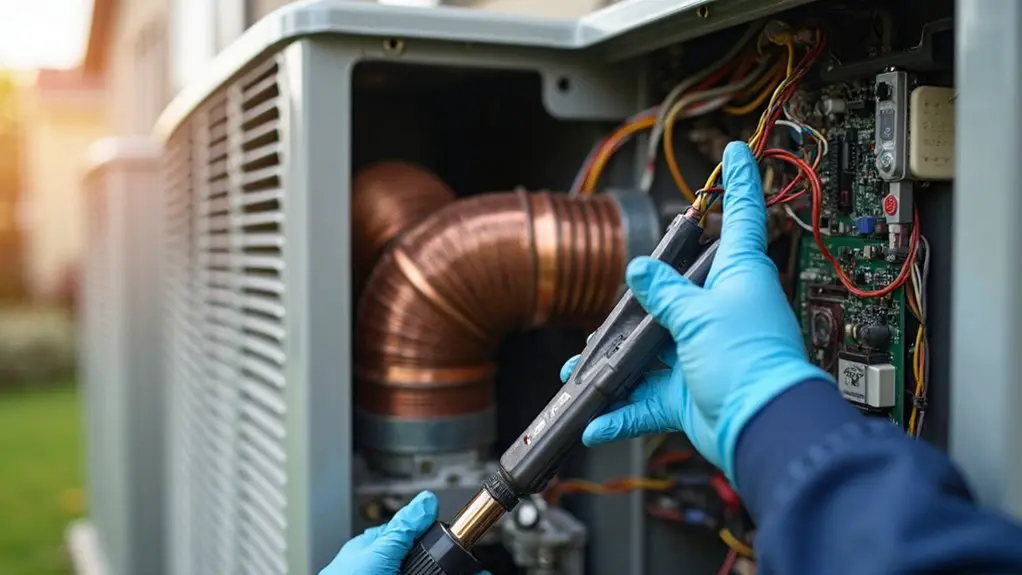
You’ll spend anywhere from $75 for a simple clogged drain repair to $2,400 for major component replacements when your air conditioner breaks down in 2025. Most common issues like capacitor problems cost $100-$250, while refrigerant leaks range from $200-$1,500. Your final bill depends on factors like your system’s age, location, repair complexity, and whether you need emergency service. Below, we’ll explore everything you need to know about making smart AC repair decisions.
Key Takeaways
- Common AC repairs range from $75-$150 for clogged drains to $800-$2,000 for compressor replacements.
- Refrigerant leaks cost $200-$1,500 to repair, while capacitor issues typically run $100-$250.
- Repair costs are influenced by system age, brand, location, complexity, and emergency service timing.
- Consider replacement over repair when costs exceed 50% of new unit price, especially for 12+ year systems.
- Always hire licensed, insured HVAC professionals for refrigerant, electrical, and major component repairs.
Average Air Conditioning Repair Costs by Type of Issue
Understanding what you’ll pay for AC repairs depends heavily on the specific problem your system faces. Different air conditioner repairs come with varying repair costs based on complexity and required components.
If you’re dealing with a refrigerant leak, expect to pay $200 to $1,500 depending on severity and detection methods. AC Capacitor issues are more affordable, with capacitor replacement cost ranging from $100 to $250 including parts and labor.
Evaporator coil replacement represents a significant expense, costing $650 to $2,400 without warranty coverage or $400 to $1,000 with warranty protection. Recharging an AC unit varies by refrigerant type – R410A costs $100 to $320, while older R-22 freon runs $180 to $600.
Thermostat replacement falls on the lower end at $150 to $300. These price ranges help you budget appropriately and understand whether you’re getting fair quotes from HVAC professionals.
Factors That Influence AC Repair Pricing
Several key variables determine how much you’ll spend on air conditioning repairs beyond the specific issue itself.
Your system’s age greatly impact the cost, as older units often require specialized parts that cost more. The brand and model also affect repair costs—premium manufacturers typically charges more to service than standard brands. Your location plays a pivotal role, with urban areas generally charging higher labor rates than rural regions.
The complexity of repairs involving electrical components or refrigerant systems increases pricing due to specialized expertise requirements. Emergency service calls during weekends or holidays can double standard rates. Your unit’s size and capacity influence cost to repair, as larger systems need more expensive components.
Several factors like accessibility also matter—rooftop or cramped installations cost more to service. The cost of repairs depends on factors including warranty coverage, which can reduce out-of-pocket expenses depending on the issue and your system’s age.
Common AC Problems and Their Repair Costs
When your air conditioner starts malfunctioning, you’ll likely encounter one of several common issues that vary enormously in repair costs. A clogged drain represents one of the most affordable fixes, typically costing $75 to $150 to clear and restore proper drainage.
Capacitor replacement falls in the mid-range at $100 to $250, helping your AC unit start and run efficiently. Refrigerant leak repairs present a wider cost spectrum, ranging from $200 to $1,500 depending on leak severity and location within your HVAC system.
More expensive repairs include evaporator coil replacement, which can cost $650 to $2,400 if your warranty doesn’t cover it. The most costly common repair involves compressor replacement, ranging from $800 to $2,000 due to the complexity and importance of this component.
Understanding these repair costs helps you budget appropriately and decide whether fixing your air conditioner makes financial sense compared to replacement.
When to Repair vs. Replace Your Air Conditioning Unit
How do you determine whether to invest in costly repairs or bite the bullet on a complete AC replacement? The key is evaluating your unit’s age in years against repair costs. If you’re facing repair expenses exceeding 50% of replacement costs, especially with systems over 12 years old using outdated R-22 refrigerant, replacing an AC unit makes financial sense.
Consider a new air conditioner if your current system requires frequent repairs or has major component failures like compressor issues. The cost of AC replacement becomes worthwhile when your unit reaches the end of its lifespan or operates inefficiently compared to modern models.
However, repair minor issues like clogged drains or capacitor failures if your system’s under 12 years old. Replacement costs vary considerably, so you’ll expect to pay different amounts based on your system size and efficiency ratings. Costs can vary, but weigh the cost to replace against your unit’s remaining lifespan when making this repair or replace decision.
DIY Repairs vs. Hiring a Professional HVAC Technician
Two distinct paths emerge when your air conditioner needs attention: tackling the repair yourself or calling in a professional HVAC technician.
DIY repairs can save money on minor issues like replacing air filters, cleaning condenser coils, or checking thermostat batteries. These simple tasks don’t require specialized training and cost only the price of replacement parts. However, major repairs involving refrigerant, electrical components, or compressor issues need professional HVAC expertise.
Professional HVAC technicians bring years of training, proper tools, and safety knowledge. They guarantee repairs are done correctly the first time, preventing costly mistakes that could damage your system further. A repair technician also provides warranties on their work and can spot potential problems before they become emergency repairs.
While hiring HVAC technicians costs more upfront, you’ll avoid expensive installation costs from botched DIY attempts. Complex electrical work, refrigerant handling, and gas line repairs always require professional intervention for safety and legal compliance.
Warning Signs Your Air Conditioner Needs Repair
Your air conditioner often telegraphs problems before complete system failure occurs, giving you valuable time to schedule repairs and avoid emergency service calls.
Watch for decreased cooling power or reduced airflow, which typically indicates issues with your compressor, condenser coil, or refrigerant level. Strange noises like grinding, squealing, or rattling suggest problems with the fan motor, blower, or other internal components that need immediate attention.
Short-cycling—when your AC turns on and off rapidly—often signals a malfunctioning thermostat, refrigerant leak, or deeper system problems. Don’t ignore water leaks around your unit or excessive moisture buildup, as these point to clogged drain lines or condensate system failures.
Pay attention to rising energy bills or units running constantly without adequate cooling. These symptoms indicate your system needs a refrigerant recharge or component replacement. Addressing these warning signs early prevents costly emergency repairs and extends your AC’s lifespan.
How to Save Money on Air Conditioning Repairs
Several strategic approaches can dramatically reduce your air conditioning repair expenses without compromising your system’s performance. Schedule annual maintenance during off-season months when HVAC technicians aren’t overwhelmed with emergency calls. This proactive approach helps identify minor issues before they affect air conditioner performance and require expensive fixes.
Replace your air filter according to manufacturer recommendations to maintain ideal system efficiency. A clean filter prevents costly breakdowns and extends equipment lifespan.
Consider enrolling in a preventative maintenance plan with local heating and cooling services near your area. These programs offer discounted repairs and priority scheduling when you need urgent assistance.
Research manufacturer rebates and utility incentives for energy-efficient HVAC upgrades, including new furnace installations. Home warranties can also offset unexpected repair costs.
Always obtain multiple quotes from licensed professionals to compare labor rates and parts pricing. This simple step guarantees you’re getting competitive pricing for quality HVAC maintenance services.
Choosing the Right HVAC Repair Company
Finding the right HVAC repair company can make the difference between a quick, affordable fix and a costly nightmare that drags on for weeks. Start by verifying that contractors are licensed HVAC professionals who are also bonded and insured – this safeguards you from liability and upholds industry compliance.
Research online reviews and request references to evaluate each company’s reputation and customer satisfaction record. Don’t settle for the first quote; compare pricing from multiple reputable HVAC contractors to identify competitive rates and transparent pricing structures.
Ask about technicians’ experience and current certifications to confirm they possess the expertise needed for your specific system. Prioritize companies offering extensive warranties on both parts and labor – this demonstrates confidence in their work quality and provides valuable protection for your investment. These steps help you avoid subpar service while securing reliable, professional repairs.
Conclusion
You’ll save hundreds by catching AC problems early and getting multiple quotes. Don’t wait until your system fails completely—that’s when costs skyrocket. Consider Sarah from Phoenix, who ignored her AC’s strange noises for months. What could’ve been a $200 fan motor repair turned into a $3,500 compressor replacement during peak summer heat. You’re better off scheduling annual maintenance and addressing issues promptly rather than facing emergency repairs when you need cooling most.