
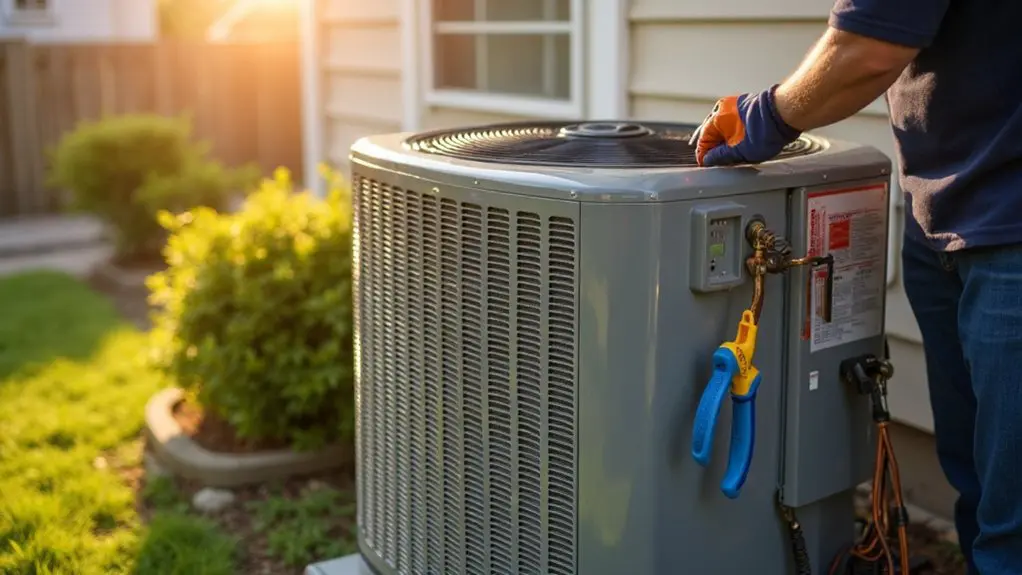
You should schedule professional heat pump maintenance twice annually—spring preparation for cooling season and fall readiness for heating operations. These biannual service appointments enable technicians to perform diagnostic procedures, refrigerant level adjustments, evaporator coil cleaning, and electrical connection testing. Between professional visits, you’ll need monthly filter replacements and quarterly outdoor unit debris removal. Neglecting this systematic maintenance protocol reduces system performance by 25%, compromising energy efficiency and increasing operational costs. Our detailed guide covers specific seasonal procedures and diagnostic requirements.
Key Takeaways
- Schedule professional heat pump maintenance twice annually during spring and fall seasonal transitions for optimal performance.
- Replace air filters monthly or quarterly depending on usage patterns and environmental conditions throughout the year.
- Clean outdoor coils quarterly using a garden hose to remove accumulated dirt and debris that restricts airflow.
- Maintain clearance around outdoor units by removing debris, leaves, and vegetation on a continuous basis.
- Neglecting regular maintenance reduces system performance by 25% and increases operational costs significantly over time.
Understanding Heat Pump Maintenance Requirements
Heat pump longevity depends on systematic maintenance protocols executed twice annually. Your system requires professional service during spring and fall changes to optimize energy efficiency and maintain peak system performance. These seasonal tune-ups involve all-encompassing diagnostic procedures including refrigerant level adjustments, component lubrication, and control system verification.
Regular maintenance encompasses critical inspection points: evaporator coil cleaning, condenser examination, and electrical connection testing. Professional technicians assess heat exchanger functionality, calibrate thermostats, and evaluate airflow dynamics. This preventive maintenance approach directly correlates with sustained HVAC maintenance standards.
You’ll supplement professional interventions with routine homeowner tasks. Monthly air filters replacement guarantees unobstructed airflow, while outdoor unit debris removal prevents operational restrictions. Neglecting these protocols reduces system performance by 25%, compromising energy efficiency and escalating operational costs.
Your heat pumps operate under demanding thermal cycles, making consistent maintenance non-negotiable. This systematic approach minimizes emergency repairs, extends equipment lifespan, and maintains manufacturer warranty compliance through documented service intervals.
Recommended Service Schedule for Optimal Performance
Establishing a thorough service schedule maximizes your heat pump’s operational efficiency and prevents costly system failures. You’ll need biannual professional maintenance appointments—spring preparations for cooling season and fall readiness for heating operations. These seasonal tune-ups enable technicians to perform detailed system diagnostics, calibrate components, and execute preventive maintenance protocols.
Between professional servicing intervals, you must maintain consistent homeowner responsibilities. Air filter replacement should occur monthly or quarterly, depending on usage patterns and environmental conditions. Regular outdoor unit care includes debris removal, coil cleaning, and clearance verification around the condenser.
Professional maintenance visits focus on identifying issues before they escalate into major system breakdowns. Technicians conduct refrigerant level assessments, electrical connection inspections, and performance optimization procedures. This systematic approach to heat pumps maintenance directly correlates with enhanced energy efficiency and extended system lifespan. Neglecting regular servicing compromises operational performance and increases repair frequency, ultimately reducing your investment’s long-term value.
Spring Heat Pump Preparation and Tune-Up
The switch from heating to cooling season requires systematic inspection protocols to verify your heat pump’s readiness for increased thermal loads. Begin your spring maintenance by conducting a comprehensive post-winter checkup to assess system components and ensure optimal cooling performance.
Clean the outdoor coils thoroughly, removing accumulated dirt and debris that restricts airflow and reduces heat transfer proficiency. This procedure directly impacts your heat pump’s cooling capacity and energy consumption.
Measure refrigerant levels using diagnostic gauges. If readings indicate deficiencies, locate potential leaks before replenishing the system. Low refrigerant compromises cooling output and increases compressor strain.
Inspect ductwork systematically for holes, gaps, and tears that create air leaks. These compromises reduce system efficiency and degrade indoor air quality. Seal identified breaches using appropriate materials to restore proper airflow distribution.
Service protocols should include filter replacement and electrical connection verification. Proper spring preparation ensures your pumps operate efficiently throughout the heating-to-cooling changeover period.
Fall System Inspection and Winter Readiness
Just as spring preparation optimizes cooling performance, fall maintenance protocols guarantee your heat pump delivers reliable heating throughout winter’s demanding operational period.
Regular inspection procedures focus on defrost control diagnostics to prevent ice accumulation on outdoor coil assemblies. Professional technicians should verify defrost cycle parameters and sensor calibration accuracy. Thermostat diagnostic protocols include battery replacement and temperature differential verification to maintain precise setpoint control.
Pre-winter system preparation requires shifting operational modes from cooling to heating configuration. Remove any debris from outdoor unit perimeter and inspect refrigerant line insulation integrity. Service Your Heat Pump components systematically, examining reversing valve operation and backup heating element functionality.
Replace filters every month during peak heating season to maintain ideal airflow rates. To maintain your heat pump effectively, address identified deficiencies immediately rather than deferring repairs. When you prepare your system proactively, Professional technicians can assure year-round operational reliability and assure optimal performance throughout winter’s thermal demands.
Year-Round Maintenance Tasks for Homeowners
While seasonal maintenance addresses specific operational demands, consistent year-round maintenance tasks form the foundation of heat pump longevity and efficiency optimization.
Replace your heat pump’s air filters monthly or quarterly, depending on usage patterns and environmental conditions. Dirty filters create airflow restrictions that force your heat pump operates under increased load conditions, reducing system efficiency.
Maintain clearance around the outdoor unit by removing debris, leaves, and vegetation within a two-foot radius. This guarantees adequate airflow for proper heat exchange processes.
Clean outdoor coils quarterly using a garden hose to remove accumulated dirt and organic matter. Clean coils improve energy efficiency by facilitating ideal heat transfer.
Monitor thermostat settings and system performance indicators continuously. Document unusual noises, irregular cycling patterns, or temperature inconsistencies for diagnostic purposes.
Regular Heat Pump inspections enable early detection of mechanical issues before they escalate into costly repairs. While preserving your heat pump through these routine maintenance tasks, schedule professional heat pump maintenance twice a year for extensive system evaluation and professional calibration procedures.
Professional Service Components and Benefits
Beyond homeowner maintenance capabilities, certified HVAC technicians perform thorough diagnostic evaluations that examine your heat pump’s internal systems and operational parameters. Professional extensive maintenance encompasses critical procedures including inspecting electrical connections for corrosion or loosening, verifying refrigerant levels against manufacturer specifications, and systematically cleaning indoor and outdoor coils to eliminate debris accumulation.
Technicians execute precision tasks like lubricating moving parts according to equipment schedules and calibrating system controls for ideal responsiveness. This preventative maintenance approach delivers measurable benefits: efficiency improvements up to 25% translate directly into reduced operational costs while maintaining consistent performance standards.
Professional servicing identifies potential component failures before they escalate into expensive repairs. Qualified technicians optimize heat exchanger function, ensuring proper indoor air quality through filtration system assessment and airflow verification. These diagnostic procedures guarantee your heat pump operates within design parameters year-round, promoting environmental responsibility through reduced energy consumption and extended equipment lifespan.
Signs Your Heat Pump Needs Immediate Attention
Vigilance in monitoring your heat pump’s operational behavior enables early detection of system malfunctions before they escalate into costly breakdowns. Unusual noises or excessive vibrations from your unit typically indicate a mechanical issue requiring immediate professional intervention to prevent component failure.
Monitor your system’s thermal output carefully. Inconsistent heating or cooling performance often signals compromised refrigerant levels or restricted airflow through the system’s air handling components. You’ll also notice higher energy bills despite unchanged usage patterns, indicating declining operational efficiency.
Examine your outdoor unit regularly for ice or frost accumulation on the coil surfaces, which suggests defrost control malfunction. This condition impairs heat transfer and system performance considerably.
Pay attention to short cycling behavior—when your heat pump rapidly turns on and off repeatedly. This operational pattern frequently indicates compressor stress or control system failures that require immediate diagnostic evaluation and corrective action to prevent catastrophic system damage.
Cost Considerations and Maintenance Plans
Professional heat pump maintenance represents a strategic investment that you’ll need to evaluate against potential repair costs and system longevity. Standard maintenance appointments typically cost $75-$150 per visit, while thorough diagnostic services may reach $200 or more depending on system complexity and geographic factors.
A comprehensive maintenance plan offers significant value through discounted rates and priority scheduling. Annual contracts range from $150-$300, providing consistent maintenance coverage that helps maintain your heat pump’s ideal performance parameters. These maintenance services include systematic inspections, component cleaning, and performance diagnostics.
Preventative maintenance directly impacts your HVAC system’s operational efficiency and heat pumps lifespan extension. Regular maintenance appointments prevent minor issues from escalating into costly repairs that could exceed $1,000. The economic analysis clearly demonstrates that consistent maintenance generates positive ROI through reduced energy consumption, fewer emergency service calls, and extended equipment life. Professional maintenance services guarantee your system maintains peak thermal transfer efficiency while minimizing unexpected breakdowns.
Choosing the Right HVAC Service Provider
Your investment in professional maintenance plans requires careful selection of qualified HVAC service providers who possess the technical expertise to optimize your heat pump’s performance metrics. Prioritize contractors employing licensed technicians with demonstrated experience in heat pump diagnostics and refrigerant system troubleshooting. You’ll need specialists who understand variable-speed compressor calibration and defrost cycle optimization protocols.
Evaluate each provider’s track record through verified customer testimonials and service reliability ratings. Don’t select based solely on lowest pricing—instead, analyze value propositions comparing diagnostic capabilities, repair methodologies, and parts availability.
Examine maintenance plans for thorough coverage including coil cleaning, electrical connection inspection, and refrigerant level verification. You’ll want robust warranties covering both labor and component replacements. Guarantee your selected provider offers 24/7 emergency response capabilities for critical system failures during peak heating seasons.
Verify technicians maintain current EPA certifications and manufacturer-specific training credentials for your heat pump model’s advanced control systems and variable refrigerant flow technologies.
Conclusion
You can’t afford to neglect your heat pump’s maintenance schedule – it’s absolutely critical for system longevity. Schedule bi-annual professional inspections without exception, perform monthly filter diagnostics, and monitor refrigerant levels religiously. Any deviation from this protocol will drastically compromise your unit’s operational efficiency and void warranty coverage. Don’t wait for catastrophic compressor failure or complete system breakdown. Implement these maintenance procedures immediately, or you’ll face exponentially higher repair costs and premature equipment replacement within years.