
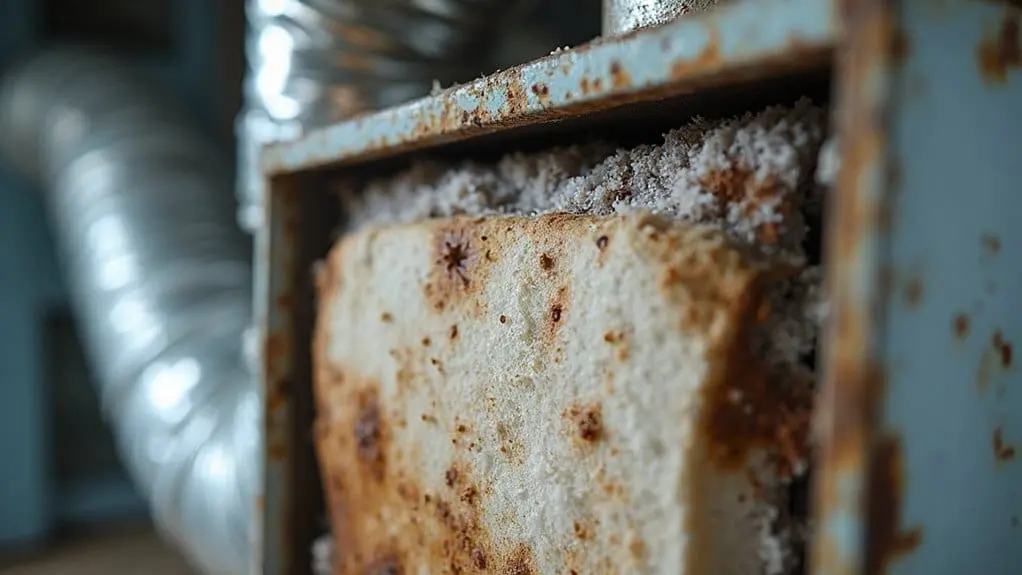
You’ll know your whole house humidifier needs repair when indoor humidity drops below 30% despite proper settings, or you notice excessive static electricity and mineral buildup on the humidifier pad. Check for reduced water flow through the drain tube, inspect the solenoid valve for proper clicking sounds, and examine electrical components like the humidistat for 24-volt signal functionality. Monitor for overheating patterns and poor air circulation in distant rooms, as these thorough diagnostic steps will reveal specific system failures.
Key Takeaways
- Indoor humidity drops below 30% despite the humidifier running, indicating inadequate moisture production or system malfunction.
- Visible mineral buildup on the humidifier pad or drain tube blockages prevent proper water flow and distribution.
- Electrical components like the humidistat or solenoid valve fail to function, causing power supply or control issues.
- Excessive static electricity and noticeably drier air throughout the home compared to previous winter seasons.
- Uneven humidity distribution with some rooms remaining dry while others near the unit stay adequately humidified.
Signs Your Humidifier Is Not Producing Adequate Moisture
When your whole house humidifier starts falling short of its moisture production goals, several telltale signs will tip you off to the problem. You’ll notice your indoor humidity dropping below 30% during winter months, indicating insufficient moisture output from your system.
Check for excessive mineral buildup on your humidifier pad—minerals in the water create deposits that restrict water flow and dramatically reduce performance. If your unit isn’t activating at all, you’re likely dealing with humidistat control or power supply issues.
Compare current moisture levels to previous years’ performance. A noticeable reduction signals declining humidifier effectiveness. Your home environment will also reveal problems: wood surfaces and furniture become noticeably drier, while static electricity increases throughout your living spaces.
These physical indicators directly correlate with your humidity system’s inability to maintain adequate moisture levels, requiring immediate diagnostic attention to restore proper indoor humidity control.
Recognizing Water Flow and Distribution Problems
Beyond moisture output deficiencies, your whole house humidifier’s water flow and distribution system requires systematic inspection to identify mechanical failures. Start by examining the drain tube for visible water flow during operation—absence indicates blocked passages or compromised water supply connections.
Inspect the water distribution tray for mineral deposits that obstruct uniform dispersal patterns across the humidifier pad surface. These crystalline accumulations create channeling effects, reducing contact area and evaporation efficiency.
Check your humidifier pad’s condition by removing it from the unit. Clogged fibers or calcium buildup prevent proper water absorption and restrict airflow penetration. Replace pads showing significant deterioration or mineral encrustation.
Test the solenoid valve‘s functionality by listening for its characteristic clicking sound during system activation. Silent operation suggests electrical failure or mechanical seizure preventing water entry.
Verify adequate water supply pressure by observing distribution tray filling rates. Insufficient pressure creates uneven pad saturation and compromised moisture transfer into your home’s airstream.
Identifying Electrical Component Malfunctions
Since electrical malfunctions frequently cause whole house humidifier failures, you’ll need to systematically diagnose your unit’s power and control circuits. Start by checking your home’s circuit breaker to guarantee proper power supply, then verify all electrical connections are secure and tight.
Test your humidistat next—this control device regulates when your humidifier adds moisture to your air. Use a multimeter to confirm it’s sending the correct 24-volt signal when humidity levels drop below the set point. If the humidistat functions properly, examine the solenoid valve, which controls water flow into the unit. A faulty solenoid won’t open when receiving power, preventing water distribution.
Finally, inspect the control board for burnt components, loose connections, or visible damage. The control board orchestrates all electrical functions, so any malfunction here affects your entire system. Replace defective components like the humidistat or solenoid valve to restore proper operation and maintain desirable humidity levels throughout your home.
Detecting Excessive Mineral Buildup and Blockages
While electrical issues represent one category of humidifier problems, mechanical obstructions from mineral accumulation create equally disruptive failures that you can identify through visual inspection and performance monitoring.
Your whole house humidifier accumulates mineral deposits throughout its water distribution system, creating blockages that prevent proper operation. You’ll notice white, chalky buildup on the humidifier pad and evaporator screen, which restricts water flow and reduces humidity levels throughout your home.
Check your drain tube for mineral obstructions that prevent proper drainage. When your system isn’t working properly, you’ll observe decreased water output and inadequate moisture distribution. The humidifier pad becomes encrusted with calcium deposits, blocking evaporation surfaces.
Monitor your system’s performance by examining internal components for mineral buildup. Gradual reduction in humidity output indicates accumulation problems requiring immediate attention. Ignoring these deposits leads to complete water blockages and internal component damage, necessitating costly repairs beyond routine maintenance procedures.
Warning Signs of Overheating and Poor Air Circulation
Although mineral buildup creates mechanical failures, thermal malfunctions and restricted airflow generate equally serious operational hazards that you can detect through temperature monitoring and ventilation assessment. Your HVAC system will exhibit abnormal heat patterns when the humidifier overheats, causing unit housing to become uncomfortably warm during operation. Monitor internal temperatures regularly—excessive heat indicates motor strain or electrical component failure.
Poor circulation manifests when your humidifier turns on but fails to effectively distribute moisture throughout your home’s ductwork. You’ll notice persistent dry air in distant rooms while areas near the unit remain adequately humidified. Check air velocity measurements at supply registers to identify circulation deficiencies.
Restricted airflow prevents your system from properly distributing conditioned air in your home, forcing the humidifier to work harder to add moisture. Inspect ductwork connections, filter conditions, and fan motor operation. Address thermal irregularities and ventilation problems immediately to prevent permanent HVAC system damage.
When Professional Service Becomes Necessary
When should you contact a professional HVAC technician instead of attempting repairs yourself? You’ll need professional service when your humidifier isn’t producing adequate moisture or when output adjustment fails completely. Check to make sure you’ve tested all basic controls first—if you don’t hear a click or audible click when adjusting settings, the control board likely requires replacement.
Water leaks causing property damage demand immediate professional attention to identify leak sources and preclude further damage. Electrical component malfunctions, particularly when you hear unusual sounds during operation or notice static electricity buildup around the unit, indicate serious issues requiring qualified technician diagnosis.
Professional service becomes essential when your humidifier produces odd smells, unusual noises, or exhibits erratic behavior patterns. If you’re uncomfortable performing maintenance tasks or lack technical expertise, contact an HVAC service provider. They’ll guarantee repairs are completed safely and correctly, preventing potential system damage or safety hazards.
Conclusion
You’ve now equipped yourself with the diagnostic tools to identify when your whole house humidifier transforms from a silent moisture guardian into a malfunctioning system. Like a skilled technician reading crucial signs, you can detect the telltale symptoms—insufficient humidity levels, erratic water flow, electrical failures, mineral crystallization, and thermal irregularities. When these warning indicators flash red across your home’s comfort dashboard, don’t hesitate to engage professional repair services immediately.