
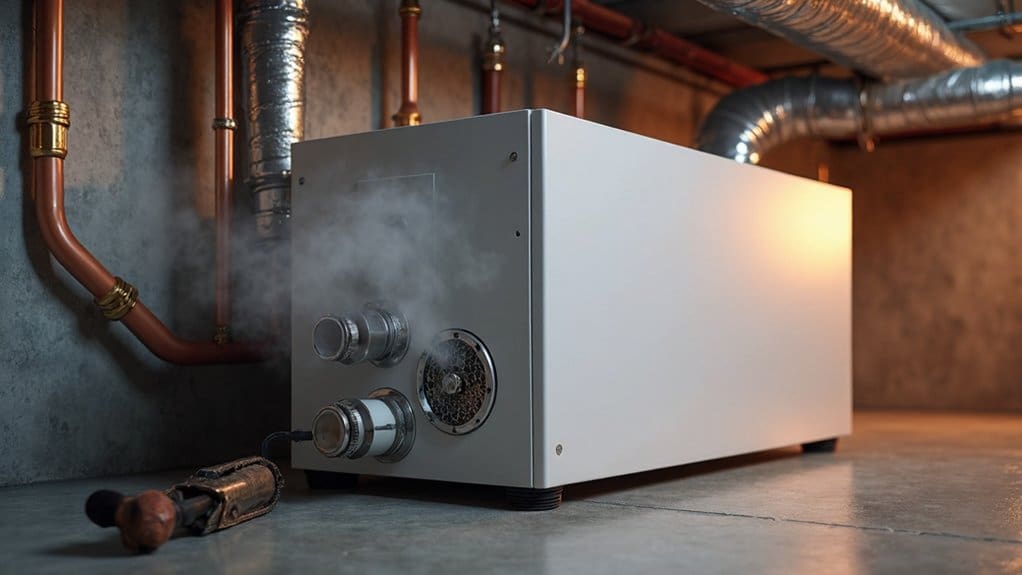
You’ll find significant allergy relief when you install a whole-home humidifier that maintains suitable 30-50% humidity levels throughout your living space. This system reduces airborne allergens by up to 30% while preventing nasal passage irritation and keeping dust particles from circulating freely. Your respiratory system functions more comfortably when humidity levels prevent extreme dryness that triggers allergic reactions. Professional installation guarantees consistent moisture regulation that transforms your indoor air quality and overall comfort.
Key Takeaways
- Proper humidifier installation maintains optimal 30-50% humidity levels, reducing nasal irritation and improving respiratory comfort for allergy sufferers.
- Whole-home humidifiers integrate with HVAC systems to provide consistent moisture regulation throughout the entire house automatically.
- Adequate humidity causes airborne dust and pollen particles to settle, removing up to 30% of allergens from breathing zones.
- Professional installation ensures humidity sensors automatically adjust moisture levels without manual intervention, preventing allergen-promoting conditions.
- Humidifiers thin mucus secretions and soothe irritated sinus passages, reducing congestion and sleep disruptions caused by dry air.
How Humidifiers Alleviate Common Allergy Symptoms
When allergies strike, your body’s natural response often leaves you dealing with uncomfortable symptoms that dry air can worsen. A humidifier directly addresses this problem by adding essential moisture to your indoor environment, creating conditions that help your body recover more effectively.
Dry air irritates your nasal passages, throat, and sinuses, intensifying congestion and coughing. By maintaining proper humidity levels, you’ll notice reduced irritation in these sensitive areas. The added moisture helps thin mucus secretions, making it easier to breathe and reducing that stuffy feeling that plagues allergy sufferers.
Your humidifier also benefits your skin, hair, and nails by counteracting the drying effects of both allergies and medications you’re taking for relief. This moisture boost prevents additional discomfort from cracked, irritated skin.
When you maintain ideal indoor air quality with consistent humidity levels between 40-50%, you’re creating an environment where your respiratory system can function more comfortably, allowing your body to better cope with allergen exposure.
Optimal Humidity Levels for Maximum Allergy Relief
Finding the sweet spot for indoor humidity makes all the difference in your allergy management strategy. Experts consistently recommend maintaining your humidity level between 30-50% for ideal allergy relief throughout your home.
A whole-home humidifier provides the most effective solution for achieving this balance. Unlike portable units, these HVAC-integrated systems regulate and sustain perfect indoor humidity levels in every room consistently. You’ll notice improved air quality as your humidifier can help prevent the extreme dryness that irritates nasal passages and respiratory systems.
Maintaining this ideal range serves a dual purpose – it keeps air from becoming too dry while preventing excess moisture that promotes allergen growth. When humidity drops below 30%, dust mites thrive and nasal tissues dry out. Above 50%, you risk mold development. Proper installation guarantees your whole-home system automatically maintains this sweet spot, letting you Improve Air quality while reducing allergy triggers year-round.
Preventing Dry and Irritated Sinus Passages
Beyond achieving the right humidity percentage, your sinus passages directly benefit from consistent moisture levels that prevent the painful irritation dry air creates. When you breathe dry indoor air, it strips moisture from your nasal passages, causing them to become inflamed and congested. A properly installed humidifier transforms your air quality by adding essential moisture that soothes these sensitive tissues.
You’ll notice immediate relief as the humidifier keeps your mucus thin and manageable, making it easier to clear congestion naturally. This improved humidity prevents your airways from becoming overly reactive to common allergens like dust, pollen, and pet dander. When your nasal passages stay properly hydrated, they’re less likely to trigger the inflammatory responses that worsen allergies.
The consistent moisture also reduces sinus-related sleep disruptions, allowing you to breathe more easily throughout the night. By maintaining suitable humidity levels, you’re creating an environment where your respiratory system can function without the constant irritation that dry air causes.
Reducing Airborne Dust and Pollen Particles
While maintaining proper sinus moisture provides immediate relief, your humidifier also tackles airborne allergens by fundamentally changing how dust and pollen behave in your home’s atmosphere. When you add moisture to dry air, you’re creating conditions that make it harder for these particles to remain suspended and circulating throughout your space.
Your humidifier works by increasing humidity levels, which causes dust and pollen to gain weight and settle onto surfaces rather than floating freely. This process considerably enhances your indoor air quality by removing allergens from the breathing zone. When you maintain ideal humidity between 40-50%, you’re also preventing dust mites and mold from thriving – two major allergen sources.
Additionally, your humidifier enhances your HVAC system’s filtration capabilities, helping air filters capture more particulates. Properly maintained units can reduce airborne allergens by up to 30%, delivering cleaner air and fewer allergy symptoms.
Relieving Dry Skin and Throat Irritation
Although your humidifier’s primary purpose might be allergy relief, it simultaneously addresses the uncomfortable dry skin and throat irritation that often accompany low humidity environments. When you install a humidifier in your home, you’re adding essential moisture to the air that directly soothes dry, irritated skin. This moisture prevents the tight, flaky feeling that makes allergy symptoms even more unbearable.
Your throat will also experience significant relief as the humidifier’s moist air reduces soreness and discomfort caused by dry conditions. This benefit becomes especially important when you’re taking allergy medications, which often have drying effects on your body. Proper humidity levels help counteract these side effects while keeping your nasal passages hydrated for easier breathing.
A whole-home humidifier provides consistent air quality improvement throughout every room, ensuring you’ll experience continuous relief from dry skin and throat irritation while managing your allergies effectively.
Whole-Home vs. Portable Humidifier Systems
When you’re ready to install a humidifier for allergy relief, you’ll need to choose between whole-home and portable systems. Whole-home humidifiers integrate directly with your HVAC system, delivering consistent moisture in the air throughout your entire house. Unlike portable units that only treat single rooms, these systems work seamlessly with your heating and cooling equipment to maintain ideal humidity levels between 30-50%.
You’ll benefit from automatic sensors that adjust humidity levels without manual intervention, while portable models require constant attention and daily maintenance. Whole-home systems distribute moisture evenly, preventing the uneven humidity that portable units often create.
Though whole-home humidifiers require professional installation, they’re more energy-efficient and last longer than portable alternatives. You’ll spend less time on maintenance while enjoying better long-term value. For comprehensive allergy relief throughout your home, whole-home systems provide superior performance compared to portable options.
Proper Water Quality and Maintenance Requirements
The quality of water you use in your humidifier directly impacts both your health and the system’s effectiveness in managing allergies. Tap water contains minerals that create white dust, potentially worsening respiratory symptoms. Use distilled or demineralized water to prevent mineral buildup and bacterial growth.
It’s important to maintain your humidifier regularly to guarantee optimal performance. Clean the tank weekly with a vinegar solution to eliminate mold and bacteria. For whole-home systems, change the filter according to manufacturer specifications—typically every three to six months. Portable units require more frequent cleaning since they operate in smaller water volumes.
Replace stagnant water in your humidifier daily to prevent microbial contamination. Empty, rinse, and refill the reservoir with fresh water before each use. These maintenance practices improve the quality of humidity output while reducing allergen circulation. Neglecting proper care transforms your humidifier from an allergy solution into a potential health hazard.
Controlling Dust Mites Through Humidity Management
Beyond maintaining clean equipment, your humidifier’s primary weapon against allergies lies in its ability to control dust mite populations through precise humidity management. These microscopic pests thrive when indoor humidity exceeds 50%, making your home their ideal breeding ground. However, you can effectively combat this allergy trigger by maintaining humidity levels between 40-50%.
Your humidifier becomes a strategic tool in this battle when properly calibrated. By adding controlled moisture to dry air, you’ll create an environment that’s comfortable for you but inhospitable to dust mites. These creatures can’t survive long-term in properly regulated humidity conditions.
Install a hygrometer to monitor your indoor humidity levels accurately. This device guarantees you’re preserving the appropriate range without creating conditions that favor dust mite proliferation. When you keep humidity within the recommended parameters, you’ll drastically reduce your exposure to dust mite allergens, providing substantial relief for allergy sufferers throughout your household.
Professional Installation Benefits for HVAC Integration
While maintaining proper humidity levels manually requires constant vigilance, professional installation transforms your humidifier into an automated ally through seamless HVAC integration. You’ll benefit from trained technicians who guarantee proper sizing based on your home’s specific requirements and occupancy needs.
HVAC-integrated systems regulate humidity levels throughout your entire home, eliminating inconsistent moisture distribution that portable units create. Professional installation assures correct water supply connections, drainage setup, and controls integration, allowing hands-off operation that adapts to your daily routine.
Your investment pays dividends through automated control that monitors and adjusts humidity year-round. Technicians configure the system to work harmoniously with your existing HVAC equipment, maximizing energy efficiency while preserving ideal air quality. This integration eliminates guesswork and constant adjustments, providing consistent humidity management that effectively reduces allergens like dust mites. You’ll enjoy improved indoor air quality without the hassle of manual monitoring or frequent maintenance interruptions.
Consulting Allergy Specialists Before Humidifier Use
Before investing in a humidifier system, you should consult with an allergy specialist to determine whether increased humidity will truly benefit your specific condition. Allergists can evaluate your symptoms of allergies and identify their root causes, helping you understand whether dry air contributes to your discomfort.
An allergy specialist will assess your medical history, conduct tests if necessary, and help you select the most suitable humidity levels for your situation. They’ll consider factors like dust mites, mold sensitivity, and seasonal allergies that might worsen with increased moisture.
Your specialist can recommend the ideal humidifier for your home based on your specific allergies and living environment. They’ll also advise on proper maintenance schedules to prevent bacterial growth and promote optimal air quality.
Don’t make humidity decisions blindly. Professional guidance will improve your chances of success and prevent potential complications. Contact us today to connect with qualified allergy specialists who understand the relationship between humidity and respiratory health.
Frequently Asked Questions
Do Humidifiers Help With Indoor Air Quality?
Yes, you’ll improve indoor air quality with proper humidifier maintenance and ideal humidity levels. You’ll prevent mold growth, gain air circulation benefits, and reduce allergens. Consider humidifier placement considerations for maximum effectiveness throughout your home.
Does a Humidifier Help With Indoor Allergies?
You’ll find humidifiers effectively minimize allergy symptoms by maintaining ideal humidity levels. They reduce pollen concentration, decrease dust mite population, and alleviate nasal congestion, which enhances respiratory function and provides significant indoor allergy relief.
Is There a Downside to Using a Humidifier?
Don’t let humidity become your enemy! You’ll face overheating concerns, mold growth risks, mineral buildup issues, filter maintenance needs, and potential humidity imbalance. These downsides can worsen allergies if you’re not careful with proper usage.
Which Is Better, an Air Purifier or a Humidifier for Allergies?
You’ll find air purifiers better remove allergens while humidifiers soothe irritated airways. Consider humidifier placement strategies, maintenance tips, ideal settings, energy efficiency, and noise considerations. Both together provide thorough allergy relief for your home.
Conclusion
You’ll transform your home into an allergy-fighting fortress by installing a properly maintained humidifier. You’re not just adding moisture—you’re creating an environment where dust mites can’t thrive, airborne particles settle faster, and your respiratory system finds relief. Don’t forget to consult your allergist first and maintain ideal humidity levels between 30-50%. You’ll breathe easier knowing you’ve taken control of your indoor air quality for lasting comfort.