
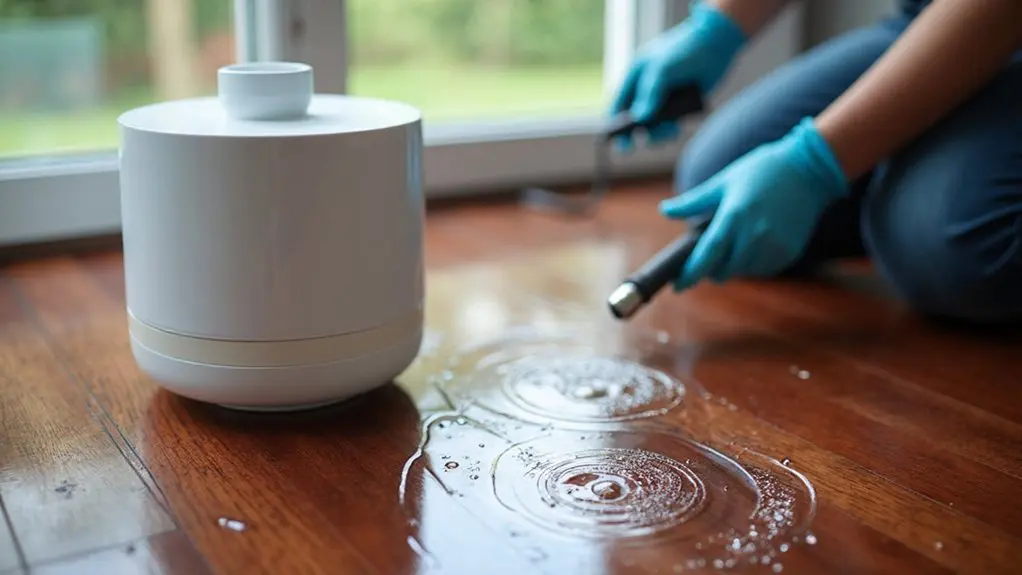
If your humidifier’s leaking water, you’re likely dealing with a cracked tank, worn seals, clogged drainage, or mineral buildup from hard water. Start by checking the solenoid valve on the side panel for damage and inspect the drain hose at the bottom for blockages. Clear minor clogs with a brush and examine your water panel for even distribution. For persistent leaks or electrical concerns, don’t hesitate to contact professional HVAC technicians who can prevent further damage and restore proper function.
Key Takeaways
- Check for cracked water tanks, worn seals, and clogged drainage systems as primary causes of humidifier leaks.
- Test solenoid valve functionality by manual operation and inspect for proper closing to prevent water overflow.
- Clear drain hose blockages using cleaning brushes and ensure secure reconnection to restore proper drainage flow.
- Replace worn water panels and inspect feed tubes for cracks or mineral buildup disrupting water distribution.
- Contact professional HVAC technicians for persistent leaks, electrical issues, or extensive damage requiring expert repair.
Common Causes of Humidifier Water Leaks
When water starts pooling around your humidifier, you’re likely dealing with one of several mechanical issues that can develop over time. A leaking humidifier typically stems from damaged internal components or improper water flow management.
The most frequent culprit is a cracked water tank or reservoir that can’t contain the amount of water needed for operation. Worn-out seals and gaskets around the water supply connections also create leaks when they lose their tight seal. Clogged drainage systems cause excessive water buildup, forcing moisture to escape through unintended pathways.
Overfilling represents another source of the leak, as too much water overwhelms the unit’s capacity. Mineral deposits from hard water can block internal passages, disrupting normal water flow patterns. Additionally, loose connections between the water supply line and the unit prevent your humidifier from functioning properly.
To identify the source effectively, examine these common issues systematically when your humidifier is leaking.
Diagnosing Solenoid Valve Problems
Among the most critical components to examine during your leak investigation is the solenoid valve, which acts as the gatekeeper for water entering your humidifier system. This valve controls water flow, and when it malfunctions, you’ll experience continuous leaking.
Start by locating the solenoid valve on your humidifier’s side panel. Inspect the valve carefully for visible signs of wear or damage. Next, manually operate the valve to test its functionality. If it doesn’t close completely when you operate it, you’ve identified your leak source.
Pay special attention to the valve’s orifice, which regulates the precise amount of water entering the system. A damaged, enlarged, or missing orifice will cause improper water flow and persistent leaks. If the orifice shows any of these issues, replacement is necessary.
When the solenoid valve fails to close properly during manual testing, complete valve replacement becomes the most effective solution for stopping your water leak permanently.
Drain Hose Blockages and Solutions
Why does water continue pooling around your humidifier even after you’ve checked the solenoid valve? The culprit might be a clogged drain hose causing water backup and leak issues.
To troubleshoot this problem, you’ll need to locate the drain hose at your humidifier’s bottom and inspect it thoroughly for blockage signs. Disconnect the hose carefully and examine it for any obstructions that might prevent proper water flow.
You can clear minor blockages by blowing through the hose or using a cleaning brush to remove stubborn debris. Once you’ve eliminated all obstructions, reconnect the drain hose securely to guarantee proper operation.
Regular maintenance prevents future drain hose problems. Check the hose monthly for buildup and clean it as needed. A properly functioning, unobstructed drain hose is vital for preventing water leakage and maintaining your humidifier’s efficiency. Don’t overlook this simple yet essential component during your repair process.
Water Panel and Feed Tube Issues
If you’ve ruled out drain hose problems but water still leaks from your humidifier, the issue likely stems from a faulty water panel or damaged feed tube. A worn water panel can’t distribute water evenly, causing leakage throughout your system. When the water panel deteriorates, it disrupts proper water flow and creates pooling.
Your feed tube carries water from the solenoid valve to the distribution system. Cracks or misalignment in this component directly cause water leakage. Additionally, mineral buildup inside the feed tube restricts water flow, compelling water to escape through unintended paths.
Improper water panel installation also contributes to uneven water distribution. If positioned incorrectly, water won’t flow where it should, resulting in leaks.
Professional humidifier repair involves replacing worn water panels and inspecting feed tubes for damage. Regular maintenance prevents these issues by detecting problems early. You’ll need to clear mineral deposits and guarantee proper alignment during installation.
When to Call Professional HVAC Technicians
Three clear indicators signal it’s time to contact professional HVAC technicians for your humidifier leak. First, if your DIY troubleshooting efforts haven’t resolved the persistent leak, experts can accurately diagnose the root cause and provide appropriate repair solutions. Second, when dealing with older humidifier units or extensive leaks where the source is difficult to identify, professional service becomes essential.
HVAC technicians possess specialized expertise to properly disassemble, inspect, and reassemble humidifier components for effective leak repair. They’ll prevent further water damage to your home by ensuring the repair is completed correctly the first time.
Professional repair services are particularly valuable when you’re uncomfortable working with electrical components or water systems. Rather than risking improper repairs that could worsen the leak or damage your HVAC system, technicians provide reliable solutions that restore your humidifier’s proper function while protecting your home’s integrity.
Preventive Maintenance to Avoid Future Leaks
While professional repairs solve immediate leak problems, establishing a consistent preventive maintenance routine will safeguard you from costly water damage and emergency service calls down the road.
Schedule annual Expert Heating and HVAC service to keep your whole-home humidifier operating efficiently. During maintenance visits, technicians will clean components, inspect the solenoid valve for wear, and replace essential parts like water panels and float assemblies before they fail.
Don’t wait until you notice water leaking around your unit. Regular preventive maintenance catches problems early, forestalling minor issues from becoming major repairs. Your technician will also focus on calibrating the humidifier’s controls to optimize performance and avert overflow situations.
Address mineral buildup immediately to avert blockages that cause malfunctions. Professionally Offering Related Humidifier Repair services includes removing scale formation that damages internal components over time.
Following manufacturer-recommended maintenance schedules guarantees your humidifier functions reliably throughout each heating season, protecting your home from unexpected leaks.
Conclusion
Like Sherlock Holmes tracking down clues, you’ve now got the detective skills to identify what’s causing your humidifier’s mysterious leaks. Whether it’s a faulty solenoid valve playing tricks or a clogged drain hose throwing a wrench in your plans, you’re equipped to tackle these water woes head-on. Remember, there’s no shame in calling Watson—or in this case, a professional HVAC technician—when the case gets too complex.