
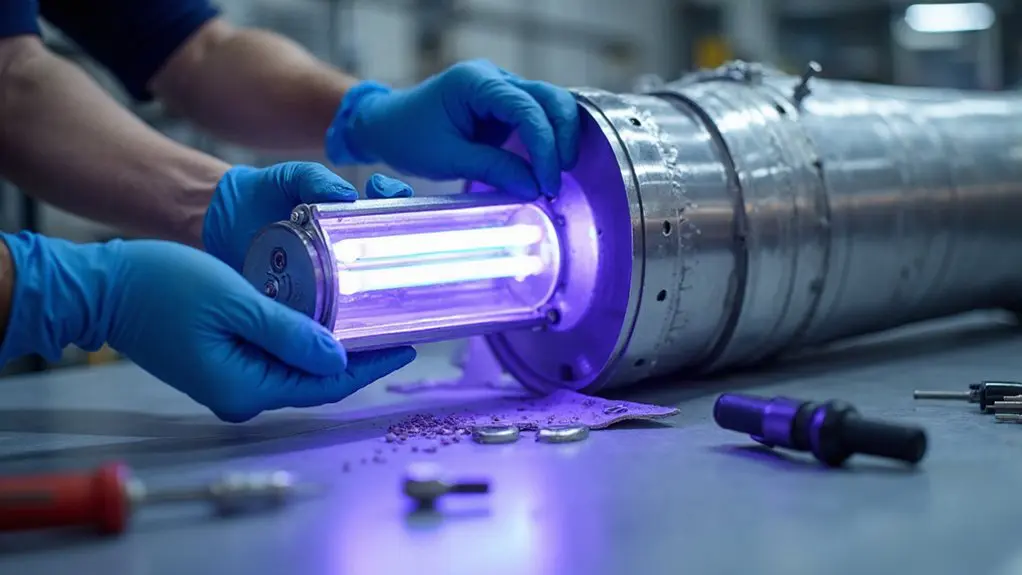
You can dramatically improve your home’s air quality by installing UV-C light systems in your HVAC unit. These germicidal lights operate at 253.7 nanometers, targeting the DNA and RNA of harmful microorganisms as air circulates through your system. They’ll eliminate up to 97% of airborne bacteria and mold while inactivating 90% of flu viruses. Two main types exist: coil-sanitizing lights that prevent microbial growth on components, and air-sanitizing systems that purify your entire home’s air circulation, ensuring you’ll discover the ideal solution for your specific needs.
Key Takeaways
- UV-C light systems eliminate up to 97% of airborne bacteria and 90% of flu viruses by damaging microorganism DNA/RNA.
- Two main types exist: coil-sanitizing lights prevent mold growth on components, air-sanitizing lights purify circulating air throughout homes.
- Professional installation by qualified HVAC technicians ensures proper placement, wiring, and system integration for optimal performance and safety.
- Coil-sanitizing UV lights improve HVAC efficiency by preventing microbial buildup, reducing energy costs and extending system lifespan.
- Air-sanitizing systems provide continuous whole-home protection by targeting airborne pathogens as air circulates through the ventilation system.
Understanding UV-C Technology and Its Germicidal Properties
When you’re considering UV light installation for your HVAC system, you’re tapping into a proven technology that harnesses ultraviolet-C (UV-C) light’s powerful germicidal properties. This specific light spectrum, ranging from 280-100 nanometers, effectively eliminates harmful microorganisms circulating through your home’s air.
UV-C light works by targeting the cellular structure of bacteria, viruses, and mold. The technology creates disruption at the molecular level, damaging the DNA and RNA of these microorganisms. This genetic damage prevents them from replicating, effectively neutralizing their threat to your family’s health.
The most effective wavelength for germicidal action is 253.7 nanometers, which represents the ideal absorption peak for microbial DNA. Medical facilities and water treatment plants have relied on this technology for decades to maintain sterile environments. When properly installed in your HVAC system, UV-C lights continuously sanitize air as it circulates, reducing airborne pathogens and improving your home’s overall air quality.
How HVAC UV Light Systems Eliminate Microorganisms
Three key mechanisms allow HVAC UV light systems to eliminate microorganisms with remarkable efficiency. First, UV-C light penetrates the cellular structure of bacteria, viruses, and mold spores, directly damaging their DNA and RNA. This genetic damage prevents these harmful organisms from reproducing, effectively neutralizing their threat to your home’s air quality.
Second, as air circulates through your HVAC system, it passes directly under the UV lights installed in the air handler or ductwork. This continuous exposure guarantees comprehensive sanitization of your home’s entire air supply. Studies demonstrate these systems can kill up to 97% of airborne bacteria and mold while inactivating 90% of flu viruses.
Third, coil-sanitizing UV lights target the evaporator coil area where moisture creates ideal breeding conditions for microorganisms. By preventing growth at the source, your system maintains cleaner air circulation and improved efficiency throughout your home’s HVAC network.
Types of UV Light Systems for Your HVAC Unit
Understanding how UV lights eliminate harmful microorganisms helps you make informed decisions about which system best suits your home’s needs. Two main types of HVAC UV lights can be installed in your system to protect your indoor air quality.
Coil sanitizing lights target your evaporator coil directly, preventing mold and bacteria growth on this moisture-prone component. These UVC lights are particularly beneficial in humid climates where microbial buildup occurs frequently. A professional technician positions these lights strategically near the coil for maximum effectiveness.
Air sanitizing lights function as a whole-house air purifier, targeting airborne contaminants as they circulate through your ductwork. These systems can be hardwired to operate with your HVAC unit, continuously inactivating viruses, bacteria, and mold spores in the air stream.
Both types require proper installation by qualified HVAC professionals to guarantee satisfactory performance and safety. Your technician will assess your specific system requirements to determine which option best addresses your home’s air quality concerns.
Coil-Sanitizing UV Lights for Enhanced System Efficiency
The strategic placement of coil-sanitizing UV lights above or beside your evaporator coil creates a continuous barrier against microbial growth that can compromise your HVAC system’s performance. These specialized lights operate around the clock, targeting mold and bacteria growth where it’s most problematic in your system.
You’ll find coil-sanitizing UV lights particularly valuable in humid climates where your air conditioning runs regularly. They protect your evaporator coil from microbial buildup that reduces airflow and forces your system to work harder. This protection directly translates to improved HVAC efficiency and lower energy costs.
Beyond performance benefits, these UV lights extend your system lifespan by preventing corrosive microbial damage to critical components. Your indoor air quality improves substantially as the lights eliminate contaminants and odors at their source, reducing volatile organic compounds throughout your home. For HVAC systems facing persistent moisture challenges, UV lights worth the investment deliver measurable returns through enhanced efficiency and cleaner air.
Air-Sanitizing UV Lights for Whole-Home Protection
While coil-sanitizing UV lights protect your HVAC system’s components, air-sanitizing UV lights extend that protection throughout your entire home by targeting airborne contaminants as they move through your ductwork. These Types of HVAC UV systems help neutralize bacteria, viruses, and mold spores before they circulate to your living spaces.
When you Install a UV Light in your ductwork, it’s hardwired to operate with your HVAC system, providing continuous protection year-round. Studies show properly installed UV lights work to reduce airborne flu virus by up to 90%. This HVAC UV Light System Improves indoor air quality by functioning as whole-home air purification.
UV Lights for HVAC complement high-quality air filters, creating healthier indoor environments. Professional UV Light Installation guarantees ideal placement and wiring for maximum germicidal efficiency. UV light air purification targets microorganisms throughout your home’s ventilation system, making it an effective solution for enhanced indoor air quality protection.
Installation Requirements and Safety Considerations
Although UV light installation may seem straightforward, it requires professional expertise to ascertain both effectiveness and safety. You’ll need a qualified professional to guarantee your UV lights in HVAC systems are installed properly. A professional HVAC technician knows the correct placement downstream of air filters and cooling coils to maximize germicidal effectiveness.
When installed improperly, UV lights pose serious risks including skin and eye damage from direct UV-C exposure. Your HVAC technician must take proper safety precautions during installation and maintenance procedures. These lights are safe when positioned correctly by experienced professionals who understand proper wiring and placement requirements.
You’ll need regular HVAC maintenance to keep your system operating effectively. UV bulbs typically last 1-5 years before requiring replacement. Annual HVAC system inspections certify your lights function properly without obstructions that could reduce UV radiation delivery. Professional installation and ongoing maintenance protect your investment while keeping your family safe.
Operating Costs and Energy Consumption
Affordability makes HVAC UV light systems an attractive option for most homeowners, as they add minimal energy consumption to your existing system. These ultraviolet lights consume only small amounts of electricity while continuously working to improve your home’s indoor air quality. The air that circulates through your system gets sanitized, creating clean and healthy indoor environments.
Several factors determine your system’s operating expenses:
- Electrical consumption – UV lights in HVAC systems typically use minimal watts and amps
- Bulb replacement costs – Primary ongoing expense for maintaining effectiveness
- System efficiency gains – Clean coils and components extend the life of your HVAC equipment
- Climate and usage patterns – Home size and regional conditions affect overall consumption
Cost-effective operation depends on proper installation by qualified technicians. When UV lights sanitizes the air passing through your system, they reduce strain on components and increase your system’s lifespan, often offsetting initial investment through reduced maintenance and energy savings.
Combining UV Lights With Proper Air Filtration
Beyond managing costs, maximizing your HVAC UV light system’s effectiveness requires pairing it with proper air filtration. Air filtration serves as your first defense against microbial circulation, while UV lights provide secondary protection by killing bacteria and viruses that pass through.
HEPA filters excel at trapping larger particles that could shield microorganisms from UV exposure, making UV lights more effective at air cleaning. This combination creates a powerful defense against airborne pathogens in your indoor environment.
Research demonstrates impressive results when you combine both systems. Studies show up to 97% reduction in microbial growth, including mold and bacteria, while airborne flu viruses decreased by 90%. The synergistic effect considerably improves air quality by addressing contaminants through multiple methods.
Your UV lights handle what filters miss, while filtration removes particles that could block UV effectiveness. Together, they create healthier indoor air by minimizing airborne pathogens and reducing overall contamination levels.
Benefits of Professional UV Light Installation
Expertise matters when installing HVAC UV lights in your system. Professional installation guarantees ideal placement and wiring that maximizes your sanitizing lights’ germicidal effectiveness. When correctly positioned downstream of your air filter and evaporator coil, ultraviolet systems effectively eliminate airborne bacteria, mold, and viruses circulating through your indoor air handler.
Quality professional installation delivers these key benefits:
- Proper positioning confirms UV lights increase their bacteria-killing potential within your clean HVAC system
- Correct wiring optimizes the lifespan of UV bulbs, which typically last 1-5 years before replacement
- Annual inspections verify your systems function properly and identify maintenance needs
- Regular cleaning prevents obstruction of UV rays, maintaining disinfection capabilities
Professional maintenance keeps your home’s indoor air quality at peak performance levels. HVAC technicians understand precise placement requirements and confirm your ultraviolet lights operate efficiently to improve indoor air quality throughout your home’s ventilation system.
Conclusion
You’ve now discovered how UV-C technology can transform your home’s air quality. When you install an HVAC UV light system, you’re eliminating up to 99.9% of harmful microorganisms that circulate through your ductwork. Consider this: a single sneeze releases approximately 40,000 droplets into the air, many containing bacteria and viruses. With professional UV light installation, you’ll neutralize these threats before they reach your family, creating a healthier indoor environment year-round.